
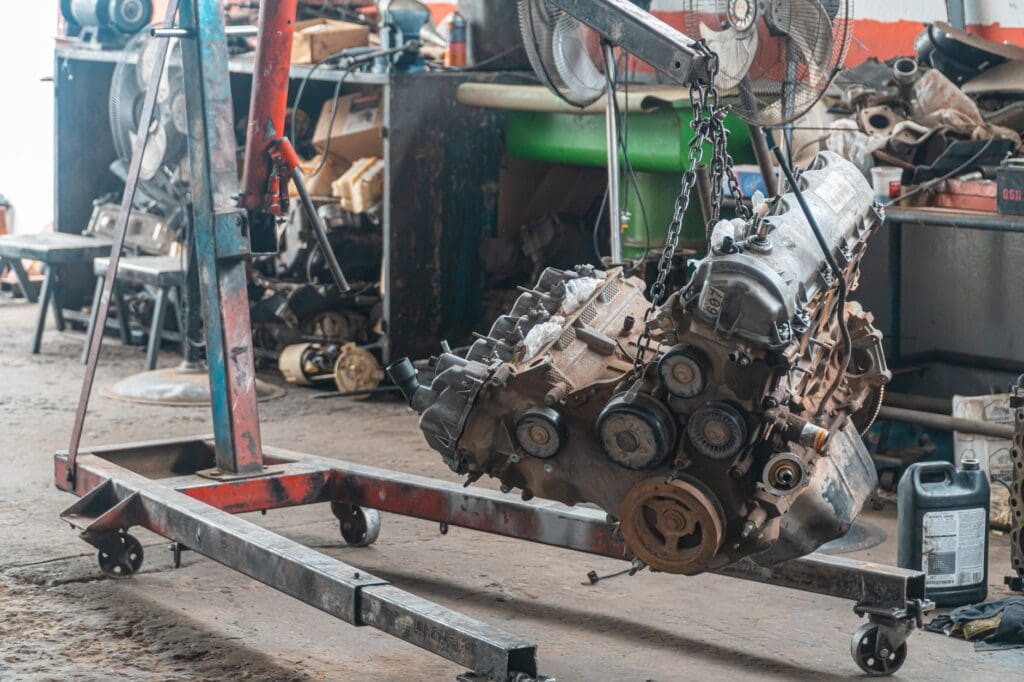
The Audi 2.0 TFSI is one of the most popular petrol engines on UK roads, powering the A3, A4, A5, Q5 and TT across a decade of production. It is also one of the most frequently diagnosed for timing chain problems at independent garages.
The issue is not the chain itself — it is the tensioner. Early versions used a plastic hydraulic tensioner that loses pressure, allowing the chain to slacken. When a timing chain loses tension, the consequences range from a worrying rattle to a bent engine.
If your Audi has started making a cold-start rattle or you have seen timing-related fault codes, this guide explains what is happening, which models are affected, and what a repair should cost.
Quick answer: Audi 2.0 TFSI timing chain problems stem from a failing plastic tensioner that allows the chain to slacken. The main symptoms are a rattling noise on cold start, engine management light, and fault codes P0016–P0019. A full chain kit replacement at a specialist typically is priced on inspection before damage escalates.
Which Audi Engines Are Affected
The EA888 engine family covers Audi and VW Group models built from 2008 onwards. The timing chain tensioner issue is most widely reported on Gen 1 (2008–2012) and Gen 2 (2012–2016) versions of the 2.0 TFSI, though Gen 3 variants have also seen tensioner faults reported.
Affected Audi models include:
- Audi A3 (8P and 8V) — 2.0 TFSI fitted across multiple trims
- Audi A4 (B8) — among the most commonly diagnosed
- Audi A5 (8T) — S-Line and standard variants
- Audi Q3 and Q5 — popular SUVs with EA888 engines
- Audi TT (8J and 8S) — particularly 2.0 TFSI versions
- Audi A6 (C7) — 2.0 TFSI variant
The same engine, four different badges
The EA888 is a VW Group engine, not an Audi one. The identical 2.0 TFSI — same chain, same tensioner, same fault — is fitted across Volkswagen, Skoda and SEAT, so if you own one of the cars below this guide applies to you even though it does not say Audi on the bonnet.
- Volkswagen — Golf GTI, Passat, Tiguan, Scirocco, Sharan
- Skoda — Octavia vRS, Superb, Kodiaq
- SEAT — Leon Cupra, Ateca
Audi owners encounter the diagnosis more often simply because the engine is fitted across so much of the Audi range, not because Audis are more prone to it. A rattling Octavia vRS and a rattling A4 are the same job.
The build date matters more than the model year. The revised tensioner entered production between late 2011 and mid-2012, so it follows the engine build date rather than the registration year. Some 2012 cars already have the updated part and some do not, which is why two apparently identical cars can behave completely differently. From 2013 onwards the revised design is effectively universal.
Worth knowing: VW Group issued a revised tensioner design for EA888 engines after widespread failures in early production vehicles. If your Audi still has the original plastic tensioner and has not had it updated, the risk of failure is higher — particularly past 80,000 miles without a timing chain inspection.
Symptoms of Audi Timing Chain Problems
Timing chain problems rarely announce themselves all at once. Most drivers notice one symptom first, then see others develop over weeks or months.
Cold-start rattle from the front of the engine
This is the most reported early symptom. A brief rattling or clattering from the front of the engine during the first few seconds after startup — then silence once oil pressure builds. This happens because the hydraulic tensioner relies on oil pressure to maintain chain tension. At cold start, pressure is momentarily low, and a worn tensioner cannot hold the chain taut during that gap.
If the rattle disappears within two to three seconds and does not return, the tensioner is still functioning — but it is a warning sign. If the rattle persists beyond five seconds, becomes louder, or appears at normal operating temperature, the tensioner is failing.
Engine management light with timing fault codes
A stretched chain or a skipped tooth registers fault codes related to cam-crank timing correlation. These are reliable indicators that the chain has moved beyond normal limits. The engine may also run rough or misfire intermittently.
Engine misfires and rough idle
When the timing chain slips even slightly, injection timing and valve timing fall out of sync. The result is misfires at idle, hesitation on acceleration, and rough running — particularly under light load. These symptoms can resemble other faults, which is why a scan alongside a timing chain inspection matters before parts are ordered.
Reduced power and hesitation
As timing correlation errors increase, the ECU adjusts fuelling to compensate. Power output drops noticeably, acceleration feels flat, and the car may enter a mild protective mode. At this point, the fault is beyond early stage.
Metal particles in the oil
In advanced cases, chain guides begin to break down and shed fragments into the sump. These show up in used oil or in the filter on an oil change. If fragments are present, the chain has been operating without adequate guiding for some time.
Fault Codes to Look For

A diagnostic scan is the fastest way to confirm a timing chain fault. These codes are specifically associated with timing chain stretch or tensioner failure on EA888 engines:
| OBD-II Code | Description | What it means |
|---|---|---|
| P0016 | Crankshaft / Camshaft Position Correlation – Bank 1, Sensor A | Cam timing advanced/retarded relative to crank; classic chain stretch fault |
| P0017 | Crankshaft / Camshaft Position Correlation – Bank 1, Sensor B | Exhaust camshaft correlation error; chain or tensioner issue |
| P0018 | Crankshaft / Camshaft Position Correlation – Bank 2, Sensor A | As P0016 on second bank (multi-bank engines) |
| P0019 | Crankshaft / Camshaft Position Correlation – Bank 2, Sensor B | As P0017 on second bank |
P0016 and P0017 are the most common on 2.0 TFSI engines and almost always point to chain stretch, a failed tensioner, or worn guides — not a sensor fault. Replacing the sensor without inspecting the chain is a common and expensive mistake.
We use dealer-level diagnostic equipment to read timing adaptation values alongside fault codes, showing exactly how far cam timing has drifted and whether the chain has jumped teeth.
Can You Drive With an Audi Timing Chain Fault?

If the only symptom is a brief cold-start rattle that disappears within two or three seconds and you have no fault codes, short-term driving is generally possible — but the tensioner should be inspected soon.
If you have any of the following, do not delay:
- The rattle persists beyond five seconds or appears at running temperature
- Fault codes P0016, P0017 or related timing correlation errors
- The engine is misfiring alongside the rattle
- Metal particles were found in your last oil change
A timing chain that has jumped teeth or is on the verge of snapping can destroy the engine in seconds. Valve-to-piston contact at engine speed is catastrophic and typically means a full engine rebuild or replacement. The difference between a priced on inspection chain job and a priced on inspection engine repair is often a matter of weeks.
Audi Timing Chain Repair Costs in the UK
| Repair | Typical UK Cost | Notes |
|---|---|---|
| Timing chain tensioner replacement (updated design) | Priced per vehicle | Viable if chain is intact and no timing jump has occurred |
| Full timing chain kit (chain + tensioner + guides + seals) | Priced per vehicle | Recommended once tensioner failure is confirmed; replaces all wear items at once |
| Chain kit + head inspection (codes suggest timing jump) | Priced per vehicle | Required if correlation faults are present; rules out bent valves |
| Engine rebuild or replacement (post-jump failure) | Priced per vehicle | If chain jumped and caused valve/piston damage |
An independent specialist will typically charge less than a franchised Audi dealer for the same work, particularly when using OEM-specification parts. The key is a garage with experience of EA888 timing chain jobs — tensioner access on these engines requires the right tooling.
According to independent garage data from Apexx Engines, tensioner failure costs can escalate beyond priced on inspection once engine damage is involved — reinforcing the case for early diagnosis.
Watch: a real Audi A5 timing chain replacement from our workshop, sped up to about a minute.
How We Diagnose Audi Timing Chain Faults at Star Garage Mansfield
We carry out a structured inspection rather than replacing parts on assumption. When a customer comes in with a rattling Audi or timing-related fault codes, our process includes:
- Full dealer-level diagnostic scan — reading fault codes, timing adaptation values and live cam-crank data
- Mechanical inspection of tensioner and accessible chain guides
- Oil condition assessment — checking for metallic contamination
- Clear explanation of findings before any work is agreed
We confirm the cause before recommending a repair. Book a diagnostic inspection if your Audi is showing any symptoms above, or visit our timing chain and belt service page for more detail. For other make-specific guides, see our posts on Volkswagen timing chain problems and Nissan Qashqai timing chain problems.
Audi Timing Chain Rattle? Get It Checked Before It Gets Worse
Early diagnosis is the difference between a manageable repair and an engine rebuild.
Timing chain services | Book a diagnostic | Contact us
Call 01623 904724 — Star Garage Mansfield, NG19 9LF
Frequently Asked Questions
What are the symptoms of Audi timing chain problems?
The most common sign is a rattling noise from the front of the engine on cold start that fades as oil pressure builds. Other symptoms include engine management light, fault codes P0016–P0019, misfires, and reduced power. Metal fragments in the oil indicate advanced wear.
Which Audi models are affected by timing chain problems?
The 2.0 TFSI EA888 engine in the Audi A3, A4, A5, A6, Q3, Q5 and TT is most commonly affected, particularly Gen 1 (2008–2012) and Gen 2 (2012–2016) variants. The original plastic tensioner and early revised versions have both been linked to premature failure.
How much does Audi timing chain replacement cost in the UK?
A full timing chain kit — chain, tensioner, guides and seals — typically is priced on inspection at an independent specialist. If the chain has already jumped and caused valve damage, costs can rise above priced on inspection. Acting on early symptoms keeps the bill lower.
Can I drive with a noisy Audi timing chain?
A brief cold-start rattle that stops within two seconds may allow short-term driving, but the tensioner should be inspected soon. A persistent rattle, fault codes, or misfires mean the risk of the chain jumping is real — continued driving risks catastrophic engine damage.
Need this looked at?
Describe the symptom and we’ll tell you whether it needs a diagnostic slot or a straight booking.
- 5.0 from 235 Google reviews
- Mon–Fri 08:30–18:00
- 2 Warsop Road, Mansfield Woodhouse