

Brake repairs · Mansfield Woodhouse
Brake Repairs in Mansfield
Pads, discs, calipers, pipes and fluid — checked properly, and replaced only where they actually need replacing.
Brakes are the easiest thing in a workshop to over-sell. We measure what’s left, show you what we’ve found, and quote for the parts that are genuinely worn rather than the full set by default.
Brake repairs Mansfield
What a brake check should actually involve
Wheels off, every corner. Pad thickness measured rather than eyeballed through the spokes. Discs checked for wear, lipping, scoring and run-out. Calipers checked for seizure, and the flexible hoses checked for perishing and swelling.
Then the parts you don’t see: fluid condition, pipe corrosion along the underside, and the handbrake mechanism, which fails an MOT far more often than people expect.
You get told what we found and what it means. If pads are getting low but have life in them, we’ll say so and tell you roughly when to come back rather than replacing them while the wheel is off.
We keep the old parts for you to look at. If we’ve told you a disc needed replacing, you get to see why.
Components
The brake parts we repair and replace
Brake work is rarely just pads. These are the parts that actually fail, and all of them are replaced here rather than sent out.
Pads and discs
Measured at every corner. Discs replaced when they are lipped, scored or below the minimum thickness stamped on the hub — not automatically.
Calipers
Seized pistons and sliders, torn dust seals and calipers that will not release. Refurbished or replaced depending on condition.
Brake lines and pipes
Corroded rigid pipes along the underside and perished flexible hoses that swell under pressure. A common MOT failure on older cars.
Master cylinder and servo
A pedal that sinks slowly, or one that suddenly needs a lot more effort. Usually the master cylinder or the brake servo rather than the brakes themselves.
Handbrake mechanism
Stretched cables, seized levers and electronic parking brake faults. Fails more MOTs than most people expect.
Fluid and bleeding
Fluid absorbs moisture over time and its boiling point drops. Changed and the system bled properly, not topped up and forgotten.
Symptoms
What your brakes are telling you
Most brake jobs start with a noise or a feeling rather than a warning light. We’ve written up the common ones — if yours is on this list, the article will tell you whether it can wait.
Squealing or squeaking
Sometimes a wear indicator doing its job, sometimes glazing or dust. Which one it is decides whether it’s urgent.
What the squeal meansBrake warning light
Could be fluid level, a worn pad sensor or a fault in the system. Not a light to drive around with while you decide.
Brake warning lightABS light on
Usually a wheel speed sensor or its wiring, occasionally the module. It’s also an automatic MOT failure.
ABS warning lightPulling to one side or binding
Often a sticking caliper or a collapsed hose. Left alone it cooks the disc and eats fuel.
Sticking calipersNot sure how much is left
Pad life depends on far more than mileage. If you’d rather know than guess, a check takes minutes.
How long pads lastGrinding or a long pedal
Metal-to-metal contact or air and moisture in the fluid. Both mean stop driving and call, rather than book for next week.
When brakes need replacing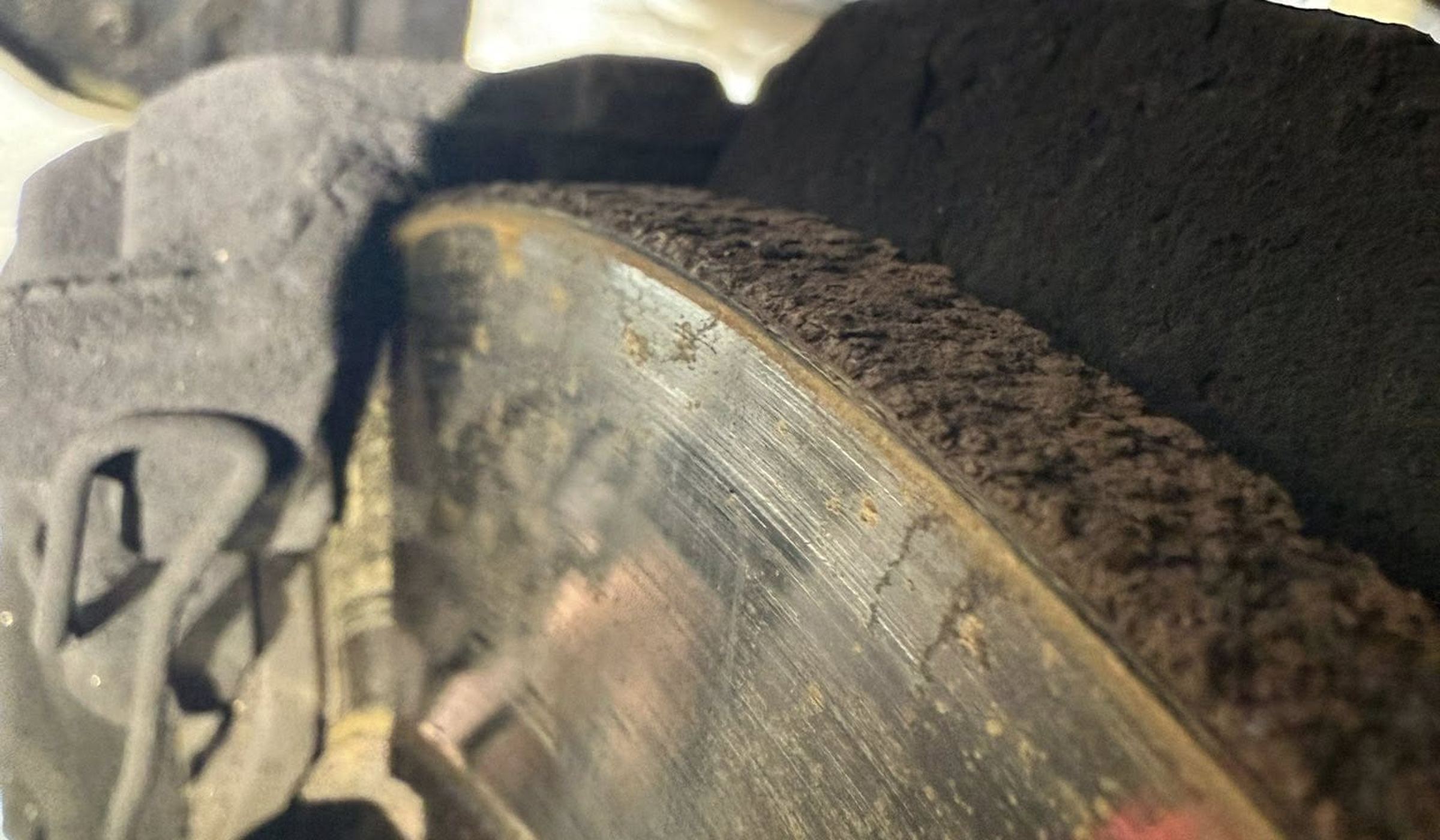
Corrosion and the MOT
The brake failures that come from standing still
Cars that do short journeys and sit for days suffer worse than cars that get used. Discs corrode at the edges, calipers seize on one side, and hoses perish from the inside where nobody looks.
It’s why a low-mileage car can fail its MOT on brakes while a high-mileage one sails through. If yours has been sitting, it’s worth checking before a test rather than after.
Reviews
Brake jobs, in their words
Audi · brakes replaced
Usually take my car to Audi directly but seeing as these were only 5 mins from home, used them as brakes needed replacing. Fantastic service! Will deffo be back again.
Demontague Property Group · Google review
Brake fluid leak · fixed same day
We had a brake fluid leak, and they helped us really quickly. They diagnosed the problem straight away and fixed it the same day. A very professional, honest and helpful team who really know what they’re doing and care about their customers.
Łukasz Kruszczyński · Google review
Brakes · unplanned, at short notice
A slightly unplanned trip in for brakes yesterday. Blaise and the team were exceptionally patient and helpful organising things for me when my car locked up on the A38, going above and beyond.
Charlotte O’Mahony · Google review
Questions
Brake questions we get asked
Do discs always need doing with pads?
No. If the discs are within tolerance and not lipped or scored, pads on their own are fine. We measure and tell you. Replacing both every time is a habit, not a rule.
Can I still drive with the brake warning light on?
We’d rather you didn’t. It can be as simple as low fluid, but low fluid usually means a leak or badly worn pads, and neither improves on its own.
Why do my brakes squeak when they’re nearly new?
Usually glazing, dust or the pad material bedding in. It’s often harmless, but it can also mean a caliper isn’t releasing, which is not.
How often should brake fluid be changed?
Most manufacturers specify every two years, because the fluid absorbs moisture and its boiling point drops. We check its condition as part of a brake inspection.
Do you work on my make?
All makes and models. Brakes are one of the few jobs where the principles are the same across everything, whatever the badge on the front.
My car failed its MOT on brakes elsewhere — can you fix it?
Yes, that’s a large part of what we do. We’re not a test centre, so we’ve no stake in what your car failed on. Bring the sheet with you.
Get the brakes checked before they get expensive
Mon–Fri 08:30–18:00. 2 Warsop Road, Mansfield Woodhouse.