
By Luke Sherwood, Senior Technician at Star Garage Mansfield • Published 8 October 2026 • Updated 8 October 2026
Most brake quotes come down to one decision: pads only, or pads and discs together. The useful thing to understand about brake pads and discs replacement cost is not the total — it is how little discs add when they go on at the same time as the pads. Once the wheel and caliper are already off, the extra is mostly the discs themselves and a little more labour, and that is why turning them down to save money so often costs more within the year.
It depends on the car, the axle and the parts, so we price it on the day rather than publishing a figure — parts prices move constantly and suppliers cannot always get the same components week to week. Pads and discs together cost more than pads alone, but far less than doing them on separate visits. Larger and premium cars cost more, mainly because their brake parts cost more, and front and rear axles are priced separately.
What Decides Your Brake Bill
We deliberately do not publish a price for this. Parts prices move constantly, suppliers cannot always get the same components week to week, and the figure that matters is the one for your vehicle once we have looked at it. A number written months ago is worth nothing to you when you ring up — and a cheap headline figure that turns into a bigger bill on collection helps nobody.
What we can do is explain exactly what decides the price, so you can judge any quote you are given — ours or anyone else’s — on whether it covers the right work.
Call 01623 904724 or message us with your registration and we will price the job properly.

The Gap That Matters — and Why Pads-Only Can Be the Expensive Option
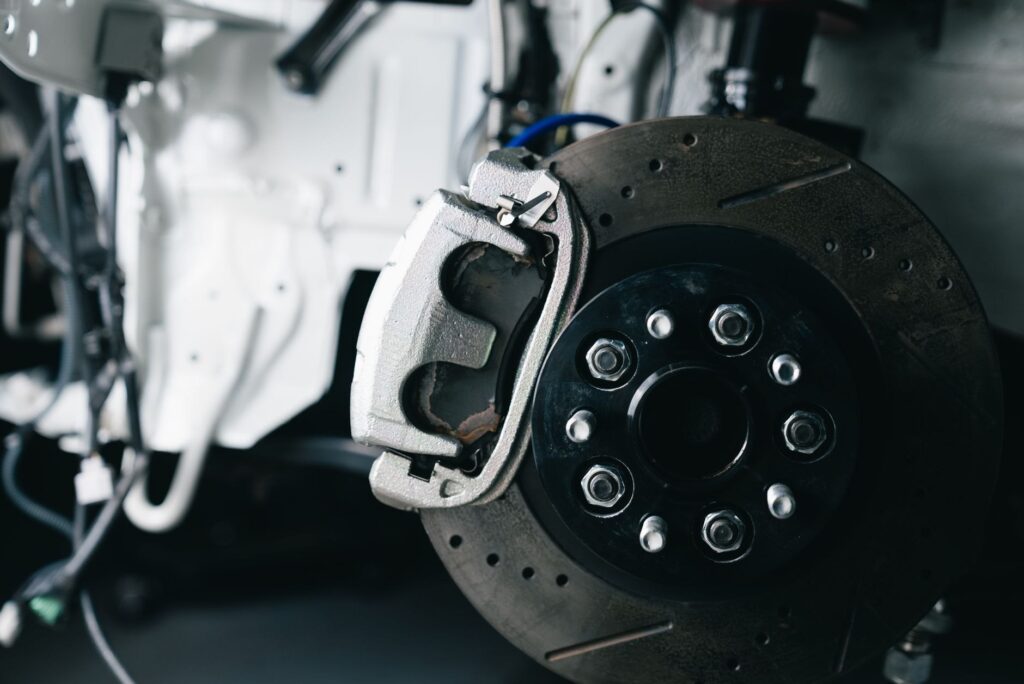
When discs are added to a pad change, the extra on the bill is mostly the discs themselves and a little more labour to fit them — not a second full job.
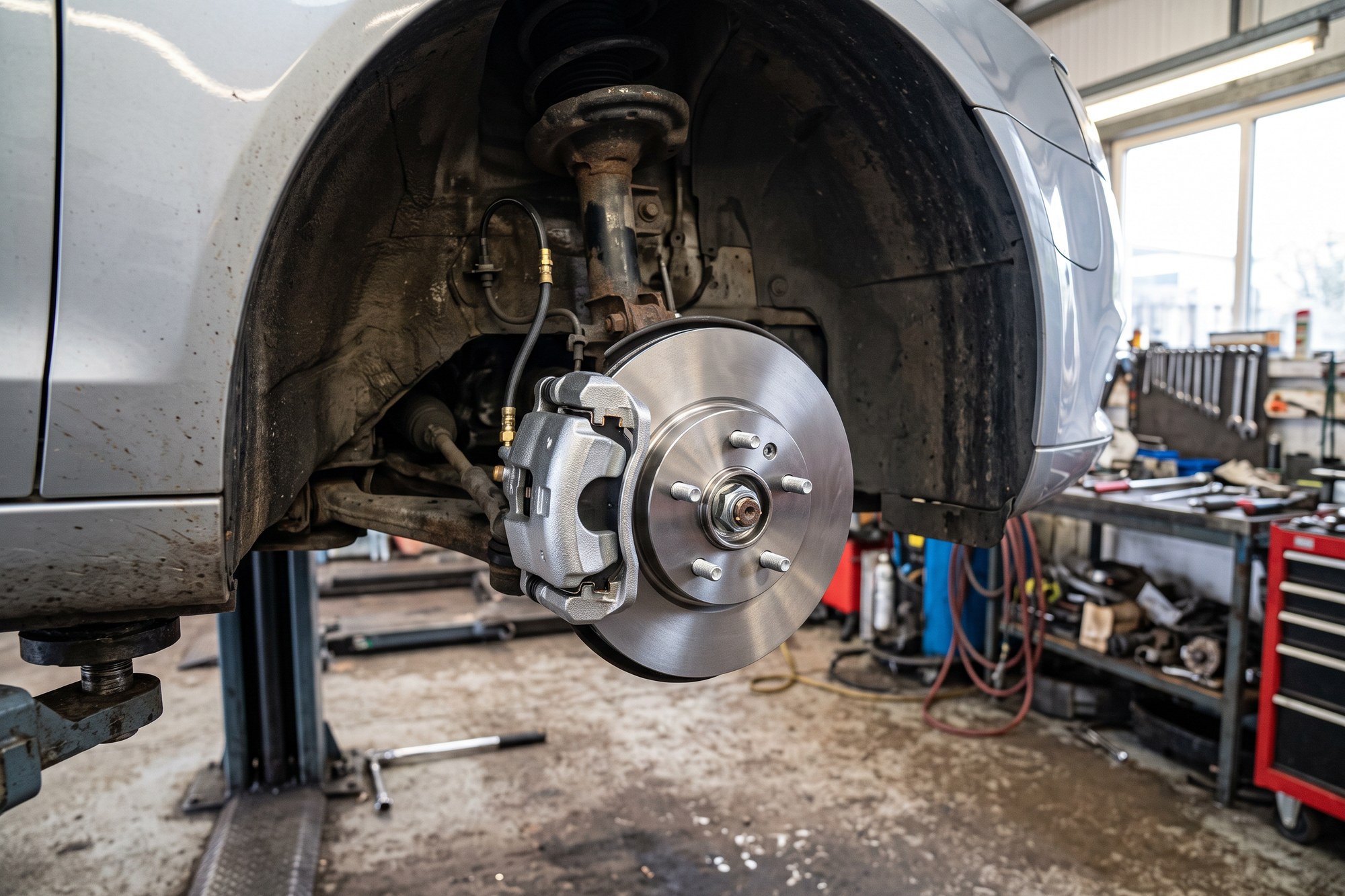
That gap is small because most of the job has already happened. The wheel is off, the caliper is off, the pads are out. Fitting discs at that point adds parts and a modest amount of extra labour. Doing them separately six months later means paying for that strip-down a second time in full.
New pads bedding onto a worn, ridged or heavily scored disc is the specific case worth avoiding. The pad cannot make full contact with a surface that is no longer flat, so you get reduced braking performance and accelerated pad wear, and you have spent money for a result that will not last a full pad life.
Do You Actually Need New Discs This Time?
Not every pad change needs discs. Brake discs typically last through two or three sets of pads — roughly 30,000 to 50,000 miles — and often reach 50,000 to 80,000 miles overall depending on how the car is driven and loaded.
Discs come off with the pads when any of the following is true.
- They are below the manufacturer’s minimum thickness. Every disc carries a minimum thickness figure specified by the manufacturer. Below it, the disc cannot dissipate heat properly and is no longer safe.
- There is a pronounced lip or deep scoring. A ridge at the outer edge means material has been lost across the braking surface.
- There is thickness variation causing judder. Uneven pad deposits produce a pulsing pedal or a shudder through the steering under braking.
- There is significant corrosion. Cars that sit for long periods, or do mostly short journeys in winter, can corrode discs well before they wear out.
How long your current set lasts and what shortens it is a separate question, and we have answered it in our guide to how long brake pads last. If you are trying to work out whether you are due at all, start with the signs your brakes need replacing.
What a Fair Brake Quote Should Itemise
A brake quote is easy to read once you know what should be on it. Ask for all of this before you agree a price.
- Which axle. Front and rear are separate jobs at separate prices. “Brakes done” is not a specification.
- Pads only, or pads and discs — and if pads only, what the measured disc thickness was and how much life is left.
- Which parts are being fitted. Budget, mid-range and OE-equivalent pads behave differently on dust, noise and wear rate.
- Whether fittings are included. Caliper slide pins, anti-rattle shims and disc retaining screws are cheap and routinely need renewing.
- Whether wear sensors are included. Many cars use single-use pad wear sensors that must be replaced with the pads.
- What happens if something is seized. A clear position on this before the work starts prevents an awkward phone call halfway through.
What Legitimately Pushes a Brake Bill Up
Seized calipers and corroded carriers
A caliper that is not sliding freely will chew through a new set of pads on one side and leave the other barely worn. It is the most common reason a brake job costs more than the quoted price — and the most common reason a cheap brake job fails early. We have written about what that looks like in practice in our post on sticking brake calipers and seized hoses.
Electronic parking brakes
On cars where the handbrake is built into the rear caliper, the piston has to be wound back electronically with a diagnostic tool and then reset afterwards. It is a straightforward job with the right equipment and an expensive mistake without it, and it adds time to a rear brake change that a front change does not have.
Performance and larger vehicles
Bigger, heavier cars use bigger, heavier brakes. When the same brake job costs more on a large BMW than on a small Toyota, that is mostly a parts difference, not a labour difference.
Fluid condition
Brake fluid absorbs moisture over time, which lowers its boiling point. If yours is due, doing it while the system is already open is sensible rather than opportunistic — but it should appear as its own line on the quote, not buried in a total.
Brakes, Discs and the MOT
Worn brake discs can and do fail an MOT. If a disc is worn below the manufacturer’s specified minimum thickness, it is recorded as a major defect and the vehicle fails immediately. A disc that is loose or cracked is classed as a dangerous defect, which means the car cannot legally be driven until it is repaired.
There is a middle ground worth knowing about. Discs close to the limit but still within specification will usually pass with an advisory note. That advisory is a useful piece of information rather than a formality — it tells you the next pad change should almost certainly include discs, which lets you budget for it instead of being surprised by it.
Frequently Asked Questions
How much does it cost to replace brake pads and discs in the UK?
There is no single figure worth quoting. The price depends on the vehicle, the axle and the parts fitted, and parts prices move constantly, so we price brake work on the day once we have measured the discs and pads. Larger and premium cars cost more, mainly because their brake parts cost more. Front and rear axles are priced separately, so a full four-corner job costs considerably more than a single axle.
Do I need to replace the discs at the same time as the pads?
Not always. Discs commonly last through two or three sets of pads, so a mid-life pad change often needs pads only. Discs should be replaced alongside pads when they are below the manufacturer’s minimum thickness, heavily scored or ridged, corroded, or causing judder under braking.
Can worn brake discs fail an MOT?
Yes. Discs worn below the manufacturer’s minimum thickness are recorded as a major defect and cause an immediate MOT failure. A loose or cracked disc is a dangerous defect, and the vehicle cannot be driven until it is put right. Discs near the limit but still in specification usually pass with an advisory.
How often do brake pads need replacing?
Around every 50,000 miles as a general guide, though the realistic range is 25,000 to 70,000 miles. Driving style, vehicle weight and the type of journeys you do all move that figure significantly — stop-start town driving and towing wear pads faster than steady motorway miles.
Is it cheaper to just do the front brakes?
Yes, and it is frequently the right call. Front brakes do the majority of the stopping and wear faster, so fronts and rears rarely reach the end of their life together. Replacing an axle that does not need replacing is money spent early for no safety benefit — but each axle should be measured rather than assumed.
Want a Brake Quote That Tells You Which Bits Actually Need Doing?
We measure discs and pads before we price the job, so you find out whether you need discs this time rather than being sold them by default. Brake pads, discs, calipers and fluid at our Mansfield Woodhouse workshop, for drivers across Nottinghamshire and north Derbyshire.
Star Garage Mansfield — 2 Warsop Road, Mansfield Woodhouse, Mansfield, NG19 9LF. Serving drivers across Mansfield, Worksop, Chesterfield, and Nottingham. Open Monday–Friday, 8:30 AM to 6:00 PM. Phone: 01623 904724
Need this looked at?
Describe the symptom and we’ll tell you whether it needs a diagnostic slot or a straight booking.
- 5.0 from 235 Google reviews
- Mon–Fri 08:30–18:00
- 2 Warsop Road, Mansfield Woodhouse


