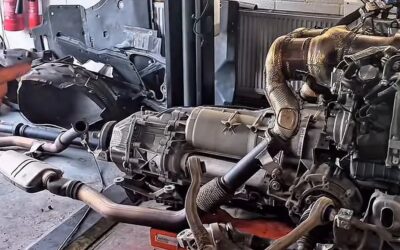

N47 Timing Chain Reputation: Why So Many Failures?
The BMW N47 diesel engine has earned a mixed reputation over the years. Known for its smooth power delivery and strong fuel economy, it also became one of the most talked-about engines in the UK for timing chain failures. Thousands of drivers have looked for guidance after hearing cold-start rattles, metallic tapping or warning lights. The chain is positioned at the rear of the engine, making access difficult and repairs expensive if a problem isn’t caught early.
On the N47, the primary chain drives the camshafts while a second chain drives the diesel pump. When the main chain stretches or wears, the tensioner can no longer maintain the correct position. This often leads to:
- Cold-start rattle on first turn of the key.
- Timing drift and camshaft correlation codes.
- Metallic noise from the rear of the engine.
- In worst cases: full chain snap and top-end destruction.
If an N47 chain fails at speed, the pistons continue rising while valves remain open. The result is bent valves, cracked rockers and damage that spreads through the top end within seconds.
For a general overview of the design and common symptoms, see our BMW N47 timing chain guide.
Customer Complaint and Initial Assessment of This 2014 BMW 320d
This case study involves a 2014 BMW 320d brought to us after a sudden engine cut-out while joining a dual carriageway. The owner reported hearing a sharp metallic snap, followed by the engine stalling instantly. They attempted a restart, but the engine spun unusually fast with no sign of compression. This is a classic red flag for a major timing chain failure.
Once the car was recovered to our workshop, we carried out initial checks:
- Oil level and oil contamination inspection.
- Hand-cranking test to confirm free rotation.
- Scan for camshaft and crankshaft correlation faults.
- Endoscope check through the oil filler area.
The behaviour during cranking told us almost immediately that the chain had failed. The engine spun too freely, with no resistance, consistent with valves stuck open and no compression.
Confirming a Snapped Timing Chain
To confirm the diagnosis, we removed the upper timing cover and found the chain completely loose, sitting collapsed at the rear of the engine. The tensioner had bottomed out, the guide rail had snapped, and the chain itself had fractured into several pieces.
The crankshaft was still turning correctly, but the camshafts were no longer connected to it. This disconnected rotation is what causes the catastrophic top-end damage associated with N47 failures.
The key findings were:
- Primary chain snapped into two major sections.
- Guide rail broken near the pivot point.
- Camshaft positions locked mid-stroke at failure point.
- Diesel pump chain intact, but heavily contaminated with broken fragments.
At this stage, a top-end inspection was essential to understand the full extent of the damage.
Head Removal: Valves and Pistons After the Failure
With the timing system collapsed, the only correct next step was to remove the cylinder head. Once lifted clear, the damage became obvious. On this 320d, the failure happened at around 55 mph, so the pistons had plenty of inertia.
The results were typical for a mid-speed N47 chain snap:
- Multiple bent intake and exhaust valves.
- Valve heads impacting piston crowns.
- Light marking on all four pistons, but no cracks.
- Damaged rocker arms and broken cam followers.
- Chain debris scattered through the timing case.
Fortunately, although the pistons had taken some contact, none were cracked or distorted. The crankshaft rotation pattern was smooth, and big-end play was normal. This meant the engine was suitable for a rebuild rather than replacement.
Skimming, Pressure Testing and Re-Valving the Cylinder Head
The cylinder head on the N47 cannot simply be refitted after a chain failure. It must be inspected properly. We sent the head to our specialist machining partner for the following work:
- Pressure test: to confirm no cracks around the valve seats or water jackets.
- Face skim: to restore a perfectly flat sealing surface.
- Valve replacement: new valves installed for every bent or damaged position.
- Seat cutting and lapping: to ensure every valve seals correctly.
- Camshaft journal inspection: to check no internal scoring had occurred.
Once the head passed all pressure tests and machining, it was returned to us ready for reassembly. This stage is critical because any hidden crack, poor seal or warped surface would lead to further issues once the engine is rebuilt.
Similar machining work was used in our BMW 120d N47 timing chain case study, which shows how common this type of repair is becoming as more N47 engines reach higher mileages.
Rebuilding the Top End and Re-Timing the N47 Engine
Rebuilding an N47 after a chain failure involves several major steps. With the head machined and new valves installed, we began the reassembly.
The rebuild included:
- Installing the rebuilt cylinder head with new gasket and head bolts.
- Fitting new rocker arms, followers and camshaft retainers.
- Cleaning the timing case thoroughly to remove any chain fragments.
- Installing a full OEM-spec timing chain kit.
- Setting correct timing using BMW locking tools and calibration fixtures.
- Replacing oil pump chain as a precaution.
- Fitting new tensioners, guides and seals.
Setting correct timing on the N47 is a precise job. Even a slight misalignment can cause rough running or future chain wear. Every measurement is checked twice, then confirmed with live data once the engine is running.
After assembly, we carried out the following tests:
- Compression check to confirm correct valve sealing.
- Oil pressure test during first start-up.
- Camshaft and crankshaft correlation check.
- Warm-up cycle to ensure smooth idle and no tapping.
Costs, Timescales and When a Rebuild Is Worth It
Timing chain failure on an N47 is one of the most expensive BMW repairs. Costs vary depending on the extent of the damage. A rebuild like this one sits in the middle range: more than a simple timing chain job, but less than a full replacement engine.
To give you a realistic picture, current UK independent specialist pricing broadly breaks down as follows:
- Preventative timing chain replacement (chain worn but not failed): a fixed £2,200 + VAT. This is a major engine-out job — the gearbox has to come out to reach the rear-mounted chain on the N47, which is why labour is a significant part of the cost.
- Top-end rebuild after chain failure (as in this case): priced on inspection. It depends on the extent of valve damage, whether the cylinder head can be repaired or needs replacing, and machining and parts lead times — none of which we can know before we look.
- Used engine replacement as an alternative: priced on the day, since engine availability and price move week to week. Buyer risk is real too, as sourced N47 units can carry the same chain wear.
Timescales: a preventative chain job typically takes 2–3 working days once the car is in. A full top-end rebuild like this one takes 7–14 days once machining schedules and parts are factored in.
A rebuild is usually worthwhile when:
- The pistons are only lightly marked and not cracked.
- The crankshaft rotates freely and evenly.
- No connecting rods are bent.
- The cylinder head can be repaired rather than replaced.
- The vehicle is in otherwise good condition and worth investing in.
There are cases where a replacement engine makes more financial sense. These include:
- Severe piston damage or cracked crowns.
- Bent connecting rods.
- Crankshaft scoring or seized bearings.
- Multiple internal cracks in the cylinder head.
- High labour cost combined with poor vehicle value.
We always discuss options with the owner before work begins. There is no point rebuilding an engine that is already beyond economical repair. In this case, the engine was a good candidate for rebuild, and the owner chose that route.
How to Reduce the Risk of N47 Timing Chain Failure
Drivers often ask how to prevent this happening again. While no timing chain lasts forever, the risk can be lowered significantly.
Early warning signs include:
- Rattle on cold start that lasts more than a second.
- Metallic ticking from the rear of the engine.
- Slow cranking and hesitation before starting.
- Engine management light with timing or correlation codes.
- Rough idle or uneven running when warm.
Maintenance habits that improve chain life:
- Frequent oil changes using the correct BMW-approved oil.
- Shortened service intervals for cars used mainly around town.
- Replacing tensioners early if starting noise develops.
- Inspecting the chain during other engine work, such as turbo or EGR repairs.
For a detailed guide to symptoms and prevention, see our timing chain replacement service.
Why Choose Star Garage Mansfield for BMW Timing Chain Repairs
Timing chain work on an N47 is complicated, and repairs vary depending on the level of damage. We have rebuilt, repaired and re-timed dozens of these engines for BMW owners across Mansfield, Nottinghamshire and Derbyshire.
When you bring your car to us, you get:
- Accurate diagnosis before major work begins.
- Honest advice on rebuild vs replacement.
- Professional machining and valve work using trusted partners.
- Precise timing setup using the correct BMW tools.
- Clear communication throughout the repair.
- A workshop experienced in chain failures on N47 and B47 engines.
The owner of this 320d now has a fully rebuilt top end, fresh timing components and a quieter, smoother engine than before the failure.
FAQ
Is timing chain failure guaranteed on every BMW N47?
No. Many engines last well if serviced correctly. But the design does make them more sensitive to poor oil quality and extended intervals.
Can an N47 be saved after a timing chain snaps?
Often, yes. If the pistons and rods survive and the head can be repaired, a rebuild is usually possible.
How long does a rebuild take?
Most top-end rebuilds take roughly one to two weeks depending on machining schedules and parts availability.
Is it cheaper to fit a used replacement engine?
Sometimes, but used engines can come with their own hidden timing chain wear. Each case needs to be assessed individually.
Will the rebuilt engine be as reliable as before?
With new valves, fresh chain components and correct timing, most engines run better and quieter than before the failure.
Book a Timing Chain Inspection
If your BMW 320d or any N47-powered model is making cold-start noise, tapping or rattle, call 01623 904724 at the first sign. Early diagnosis can prevent catastrophic failure and save thousands in repair costs.
Need this looked at?
Describe the symptom and we’ll tell you whether it needs a diagnostic slot or a straight booking.
- 5.0 from 235 Google reviews
- Mon–Fri 08:30–18:00
- 2 Warsop Road, Mansfield Woodhouse