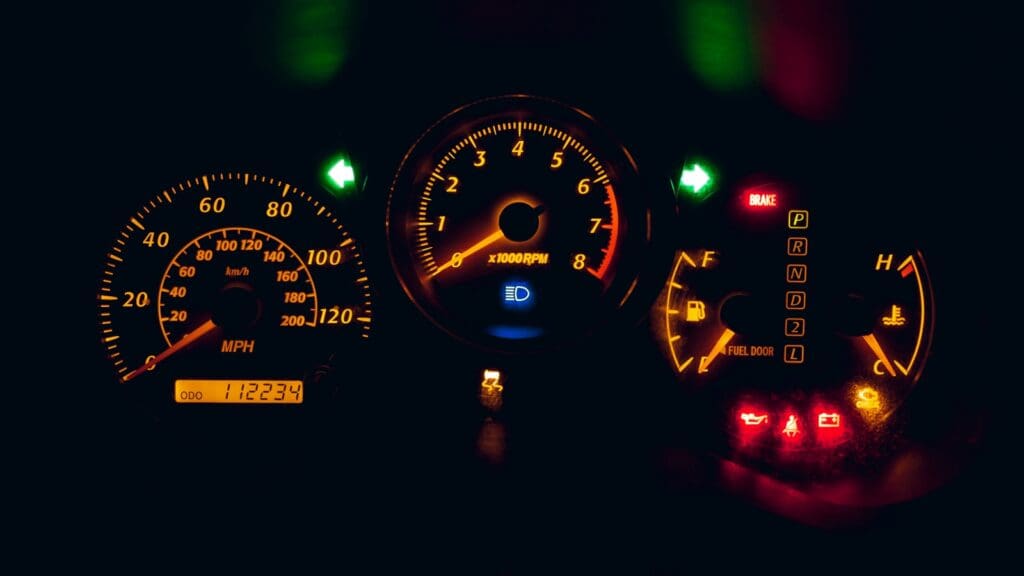
Modern cars are packed with sensors, control units, and warning systems.
When a dashboard light appears, the most common advice drivers hear is:
“Just clear the fault codes and see if it comes back.”
Sometimes the light does go out.
Sometimes the car feels fine for a while.
But in many cases, the underlying mechanical problem continues to develop quietly,
until it turns into a major and expensive failure.
This guide explains why clearing fault codes is not a fix,
what fault codes actually mean,
and why proper diagnostics matter long before mechanical damage sets in.
Warning Lights Are Symptoms, Not the Problem
A fault code is a message.
It tells you that the engine control unit has detected something outside expected limits.
It does not tell you what has physically failed.
Clearing codes only removes the message.
It does nothing to repair worn parts, oil pressure loss, air leaks, or mechanical wear.
If your warning light has appeared,
the correct first step is a
proper diagnostic inspection,
not a reset.
What a Fault Code Actually Is
A fault code is triggered when a sensor reading falls outside a programmed range.
That range is based on expected values under normal conditions.
For example:
- Camshaft position slightly out of sync
- Boost pressure lower than expected
- Oil pressure below threshold
- Exhaust emissions outside limits
- Electrical voltage irregularities
The control unit logs the event and, in many cases, turns on a warning light.
Crucially, the ECU does not know why the reading is wrong.
It only knows that something is no longer behaving as expected.
Why Clearing Codes Feels Like a Fix
Clearing codes often gives drivers a false sense of relief.
That happens because:
- The ECU resets its memory
- The warning light switches off
- The car may run normally for a short time
- No immediate symptoms are felt
But the mechanical issue remains.
Once the sensor detects the problem again,
the fault code returns.
By then, wear or damage may be worse than before.
Mechanical Problems That Clearing Codes Will Never Fix
Some faults are electrical or temporary.
Many are not.
Here are common mechanical problems that clearing codes cannot repair.
Timing Chain Wear
Timing chain stretch often triggers:
- Camshaft correlation faults
- Cold start rattle
- Intermittent engine management lights
Clearing the code does not shorten the chain.
It does not restore tension.
It does not repair worn guides.
Ignoring the fault allows wear to continue
until the chain jumps or fails completely.
Oil Pressure Problems
Low oil pressure codes are among the most dangerous.
Common causes include:
- Blocked oil pickup strainers
- Oil pump belt degradation
- Worn bearings
- Oil dilution
Clearing the code may switch the light off temporarily,
but oil starvation continues.
Engines can suffer catastrophic damage
within seconds of true oil pressure loss.
Boost Leaks and Airflow Faults
Boost-related codes often point to:
- Split boost hoses
- Loose intercooler pipes
- Vacuum leaks
- Sticking actuators
Clearing codes does not seal pipes or restore boost pressure.
Left unchecked,
these issues increase soot production,
overload the DPF,
and lead to much larger repair bills.
DPF and Emissions Problems
DPF-related fault codes are frequently cleared without investigation.
This is risky.
A DPF fault often means:
- Excess soot from an upstream issue
- Failed regeneration cycles
- Incorrect sensor readings due to real blockages
Clearing the code does not remove soot.
It does not restore airflow.
Eventually,
the DPF blocks completely,
forcing engine-out removal or replacement.
Why Code Clearing Can Make Things Worse
Clearing codes repeatedly can actively cause harm.
Here’s why.
Delayed Repairs
Drivers delay booking the car in because the light is off.
Meanwhile,
wear continues silently.
Loss of Diagnostic Data
Clearing codes erases:
- Freeze-frame data
- Fault frequency history
- Conditions under which the fault occurred
This information is vital for accurate diagnosis.
Without it,
the root cause can be harder to identify.
Repeated Stress on Components
Some systems enter limp mode to protect components.
Clearing codes can remove these protections,
allowing damaged parts to operate under full load.
This accelerates failure.
The Difference Between Code Reading and Diagnostics
Not all “diagnostics” are the same.
There is a significant difference between:
- Basic code reading
- Proper diagnostic investigation
Basic Code Reading
- Reads stored fault codes
- Clears codes
- Provides generic descriptions
- No testing performed
This is often what free or low-cost checks provide.
Proper Diagnostic Work
- Reads live data
- Analyses sensor behaviour
- Checks mechanical operation
- Confirms root cause
- Provides a repair plan
At Star Garage Mansfield,
we focus on diagnostics that explain
why a fault occurred,
not just what code appeared.
Common Myths About Fault Codes
“If the light is off, the problem is gone”
False.
The condition that triggered the fault may simply not have reoccurred yet.
“It’s just a sensor”
Sensors usually report problems.
They are rarely the cause.
“It passed an MOT so it’s fine”
MOT tests do not assess internal engine wear or early-stage faults.
“My mate cleared it and it drives fine”
Many engines drive normally until sudden failure.
Real-World Example: Cleared Codes, Big Damage
We regularly see vehicles booked in after multiple resets.
In one case,
a driver cleared camshaft correlation faults for months.
By the time the vehicle arrived,
the timing chain had stretched beyond limits.
What could have been a preventative repair
became a full engine rebuild.
The warning signs were there.
They were just ignored.
When Clearing Codes Is Acceptable
There are limited cases where clearing codes is appropriate.
- After a confirmed repair
- To verify whether a fault returns
- When advised by a technician during testing
What matters is context.
Clearing codes without understanding the cause
is never a repair strategy.
Why Proper Diagnostics Save Money
Good diagnostics are not an expense.
They are insurance.
Early investigation can:
- Prevent engine-out repairs
- Avoid component cascades
- Reduce labour time
- Stop repeat failures
Most major engine failures start with a small,
detectable issue.
Our Diagnostic Approach
When a vehicle comes in with a warning light,
we follow a structured process.
- Full system scan
- Live data analysis
- Fault history review
- Mechanical checks where needed
- Clear explanation of findings
Only once the cause is confirmed
do we recommend repairs.
Frequently Asked Questions
Can I keep driving if the light goes off?
Possibly,
but it depends entirely on the fault.
Ignoring it risks hidden damage.
Will a cheap scan tell me what’s wrong?
It will tell you what system noticed a problem,
not why it happened.
Is it safe to clear codes before selling a car?
Clearing codes does not fix faults.
Problems usually return for the next owner.
Book a Proper Diagnostic Inspection
If your car has warning lights,
intermittent faults,
or unexplained behaviour,
do not rely on code clearing.
At Star Garage Mansfield,
we specialise in identifying the real cause behind fault codes
before mechanical damage sets in.
Call 01623 904724
Star Garage Mansfield, NG19 9LF
Clearing codes hides problems.
Proper diagnostics prevent them.
Need this looked at?
Describe the symptom and we’ll tell you whether it needs a diagnostic slot or a straight booking.
- 5.0 from 235 Google reviews
- Mon–Fri 08:30–18:00
- 2 Warsop Road, Mansfield Woodhouse


