
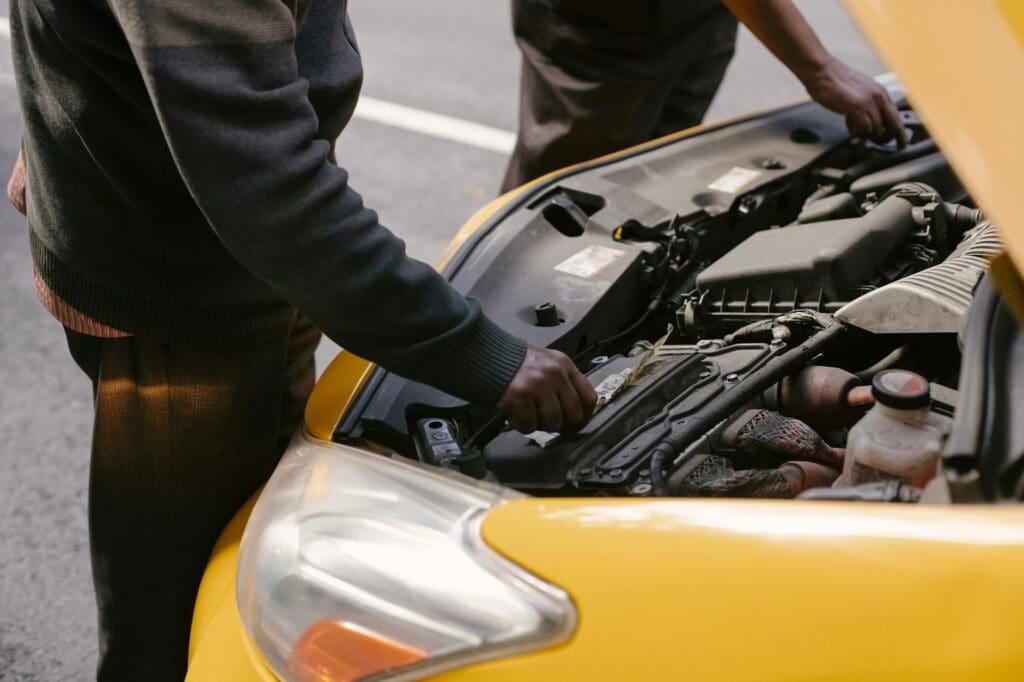
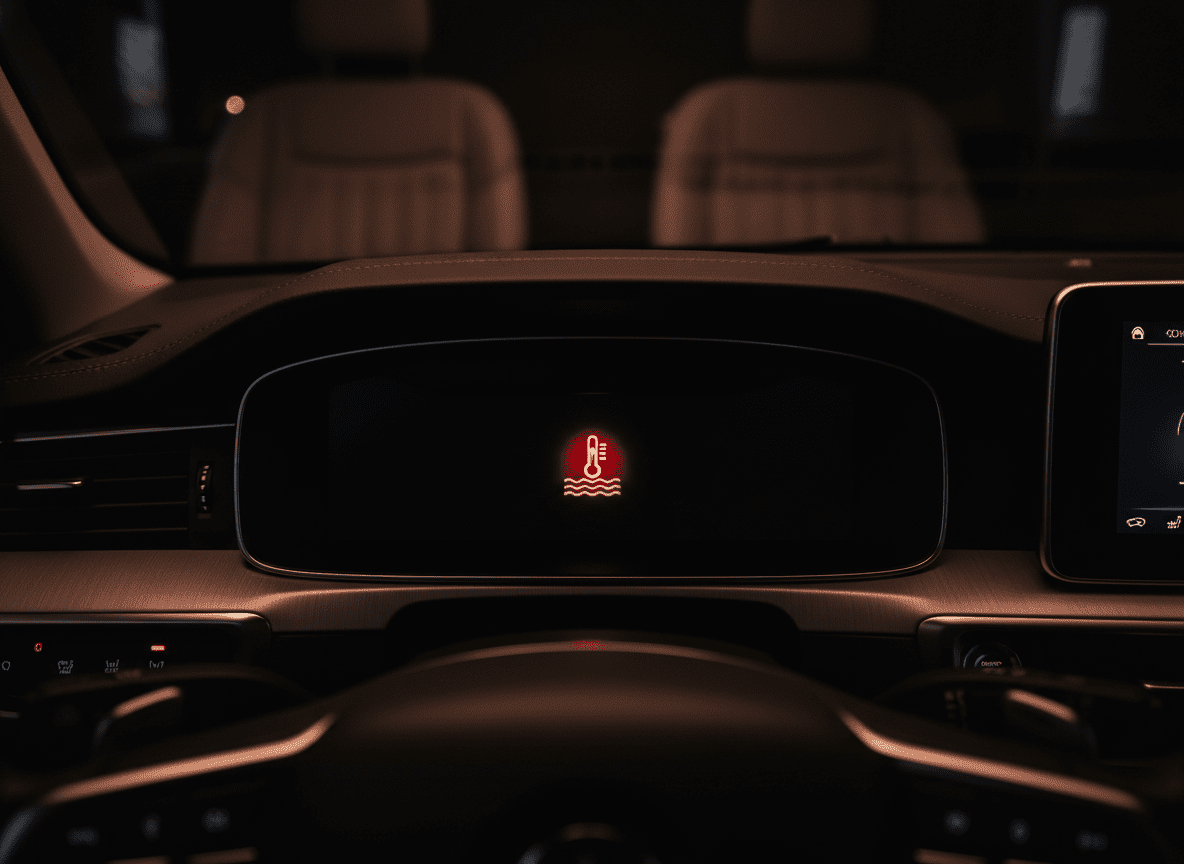
The engine temperature warning light is one of the most important alerts on your dashboard. When it illuminates — particularly if it turns red — the engine is operating outside safe thermal limits. Ignoring it even briefly can result in serious and expensive damage. This guide explains what causes the light to come on, what the different colours mean, and what you should do immediately.
Contents
- What the engine temperature warning light means
- Blue, amber and red: what the colour tells you
- Common causes of engine overheating
- Coolant leaks and low coolant level
- Thermostat failure
- Water pump failure
- Radiator and cooling fan problems
- Head gasket involvement
- What to do when the light comes on
- Frequently asked questions
What the Engine Temperature Warning Light Means
Modern engines operate within a narrow temperature range — typically between 80°C and 105°C depending on the design. The cooling system is engineered to maintain this range regardless of driving conditions, ambient temperature, or load. The engine temperature warning light activates when the system detects the engine exceeding or approaching the upper limit of safe operation.
The sensor that triggers the warning is a coolant temperature sensor immersed in the coolant circuit. When coolant temperature rises above the threshold programmed into the ECU, the warning light activates and, in some cases, the ECU begins reducing engine load to protect internal components.
Unlike some warning lights that can be left for a few days before investigation, the engine temperature warning light demands immediate attention. Sustained overheating causes warping of cylinder heads, failure of head gaskets, damage to pistons and bores, and seizure of moving parts. These are not cheap repairs — they are the kind that require significant engine work and, in severe cases, engine replacement.
Blue, Amber and Red: What the Colour Tells You
The temperature gauge or warning light uses colour to communicate urgency, and it is worth understanding what each means before you need it.
Blue indicator
Engine is below normal operating temperature. This is normal on a cold start and should disappear within a few minutes of driving. If it stays on for an extended period, the thermostat may be stuck open.
Normal position (gauge)
Temperature gauge sitting around the middle of the range indicates normal operation. The needle should settle here within a few minutes of driving and remain stable.
Amber warning light
Temperature is elevated but not yet critical. Reduce load, turn off air conditioning, and seek investigation soon. Do not ignore.
Red warning light
Temperature is critical. Stop the vehicle as safely and quickly as possible. Turn off the engine. Do not continue driving.
If the temperature gauge rises rapidly rather than gradually, this indicates a sudden loss of coolant or a sudden failure in the cooling circuit — a burst hose or water pump seizure — rather than gradual deterioration. Act more urgently in this case.
Common Causes of the Engine Temperature Warning Light
Several faults can trigger the engine temperature warning light. Some are straightforward and relatively inexpensive to repair; others indicate more serious underlying issues. The key is accurate diagnosis before any work begins.
Coolant Leaks and Low Coolant Level
Coolant loss is the most common cause of engine overheating. The cooling system operates under pressure, and even a small leak can cause the coolant level to drop below what is needed to maintain safe temperatures.
External leaks
External coolant leaks are visible as puddles under the car, often bright green, orange, or pink depending on the coolant type used. Leaks commonly occur at hose joints, the radiator itself, heater matrix connections, and the water pump housing. A pressure test of the cooling system will locate the source of an external leak accurately.
Internal leaks
Internal leaks — where coolant is entering the combustion chamber — are more serious. Symptoms include white smoke from the exhaust, a sweet smell from the engine bay, and a mayo-coloured contamination on the oil filler cap. This typically indicates a head gasket failure, which is covered in more detail below.
Slow evaporation or consumption
Some engines consume small amounts of coolant over time without obvious leaks. If you are regularly topping up the coolant reservoir, this is not normal and should be investigated. Consistent consumption without visible leaks usually points to an internal leak path.
Thermostat Failure
The thermostat is a temperature-sensitive valve that controls coolant flow between the engine and the radiator. When the engine is cold, it stays closed to allow the engine to warm up quickly. Once the engine reaches operating temperature, it opens to allow hot coolant to flow through the radiator and be cooled.
Thermostat stuck closed
This is the more dangerous failure mode. If the thermostat fails in the closed position, coolant cannot reach the radiator and the engine overheats rapidly. The temperature gauge will rise steeply, often from normal to red within minutes of driving. This situation can cause serious engine damage quickly and requires immediate attention.
Thermostat stuck open
When the thermostat fails open, coolant continuously circulates through the radiator even when the engine is cold. The engine never reaches proper operating temperature. Symptoms include the blue cold indicator staying on for longer than usual, the heater producing only lukewarm air, and the temperature gauge sitting lower than normal. While less urgent than a closed failure, it causes poor fuel economy, increased engine wear, and on diesel engines can contribute to DPF issues.
Thermostat replacement is a relatively low-cost job on most engines, but it requires the cooling system to be drained, the part accessed, and the system refilled and bled correctly. Incorrect bleeding leaves air in the system which can mimic overheating symptoms.
Water Pump Failure
The water pump is driven by the timing belt, timing chain, or a separate auxiliary belt and is responsible for circulating coolant through the entire cooling system. When it fails, coolant flow reduces or stops entirely, and the engine overheats.
Water pump failure can be gradual — a worn impeller loses efficiency over time — or sudden, as in the case of a failed bearing or seized pump. Symptoms of a failing water pump include a coolant leak from the pump housing, a high-pitched squealing noise from the belt area, and overheating during sustained driving or under load.
On vehicles where the water pump is driven by the timing belt, it is standard practice to replace the water pump when the timing belt is changed, even if the pump has not yet failed. This avoids the cost of labour if the pump fails shortly after a belt change. If you have had a timing belt replacement without a new water pump, it is worth checking the age and condition of the pump.
Radiator and Cooling Fan Problems
The radiator dissipates heat from the coolant using airflow. When stationary or in slow-moving traffic, the cooling fan maintains airflow through the radiator. Problems with either component can cause overheating, particularly in hot weather or during heavy traffic.
Blocked or damaged radiator
Radiator fins can become blocked with debris, insects, and mud over time, reducing airflow. The coolant passages inside the radiator can also corrode or scale up, reducing heat transfer efficiency. A visibly corroded or leaking radiator will need replacement.
Cooling fan failure
An electric cooling fan that fails to activate when the engine reaches operating temperature will cause overheating at low speeds and when stationary. On the motorway, sufficient airflow keeps the radiator cool, so the fault may only appear in traffic. A faulty fan relay, sensor, or fan motor can cause this symptom. On vehicles with engine-driven fans, a failed viscous coupling can have the same effect.
Head Gasket Involvement
The head gasket seals the joint between the engine block and cylinder head, preventing combustion gases from entering the coolant and coolant from entering the combustion chamber. Head gasket failures can either cause overheating or result from it — a distinction that matters for diagnosis and repair.
Overheating causing head gasket failure
Prolonged overheating causes the aluminium cylinder head to warp. As the head distorts, the gasket seal fails. This is a consequence of overheating that was not addressed promptly. The repair is significantly more expensive than the original cooling fault that caused it.
Head gasket failure causing overheating
In some cases, the gasket fails first, allowing combustion gases to pressurise the cooling system. This forces coolant out through the expansion tank and causes overheating. White smoke from the exhaust, coolant consumption without visible leaks, and a bubbling coolant reservoir are key indicators of this scenario.
Accurate diagnosis of head gasket involvement requires specific tests — including a combustion gas test on the coolant — to confirm before stripping the engine. A thorough diagnostic check is the correct starting point.

What to Do When the Temperature Warning Light Comes On
The moment the engine temperature warning light activates — particularly red — there is a specific sequence of actions that minimises the risk of damage.
- Turn off the air conditioning immediately. Air conditioning increases engine load and reduces cooling capacity. Switching it off reduces the thermal demand on the cooling system.
- Turn the cabin heater to maximum hot and blower to maximum. The heater matrix acts as a secondary heat exchanger. Running it at full blast draws heat from the coolant circuit and can buy a small amount of time.
- If the light turns red, stop safely as soon as possible. Do not continue driving. Pulling over immediately prevents damage escalating from moderate to severe.
- Turn the engine off. Do not leave the engine idling — if the cooling fan has failed, an idling engine with no airflow will overheat further.
- Do not open the bonnet or coolant cap immediately. Wait at least 30 minutes for the system to cool before investigating. Opening a hot pressurised system causes steam and boiling coolant to eject.
- Once cooled, check the coolant level in the reservoir. If it is significantly low, you have a leak. Do not top up with water alone for extended driving — it dilutes the antifreeze and reduces the boiling point of the coolant mix.
If the light cleared and the car seems fine, do not assume the problem has resolved. Have it diagnosed before driving it further. Intermittent overheating always has a cause that will recur.
Engine Temperature Light On? Don’t Risk It
Overheating that is left unresolved escalates from a straightforward repair into serious engine damage. We diagnose the cause accurately before recommending any work.
Call 01623 904724 | Star Garage Mansfield, NG19 9LF | Mon–Fri 8:30am–6:00pm
Frequently Asked Questions
Can I drive with the temperature warning light on?
If it is red, no — stop as soon as it is safe to do so. If it is amber, reduce load and investigate as soon as possible. Continuing to drive with a red temperature light risks severe engine damage within minutes.
Why is my car overheating but the coolant level is fine?
If the coolant level is correct but the engine is still overheating, the cause is likely a thermostat stuck closed, a failed water pump, a blocked radiator, or a cooling fan that is not activating. A diagnostic check will identify the specific fault.
How much does it cost to fix an overheating engine?
It depends entirely on the cause. A thermostat replacement is relatively inexpensive. A water pump job varies by engine type and accessibility. Head gasket repair is significantly more costly. Early diagnosis prevents the cheaper repairs from becoming the expensive ones.
Why does my car only overheat in traffic?
Overheating only in slow traffic or when stationary typically points to a cooling fan that is not activating. At motorway speeds, airflow through the radiator is sufficient without the fan. At low speeds, the fan is needed — if it is not working, temperatures rise in slow conditions.
Is it safe to add water to the coolant in an emergency?
Plain water can be added as a temporary measure in an emergency if the engine is cool and coolant is very low. However, it dilutes the antifreeze and should be replaced with the correct coolant mix as soon as possible. Do not use tap water long-term as it causes corrosion and scale build-up.
Need this looked at?
Describe the symptom and we’ll tell you whether it needs a diagnostic slot or a straight booking.
- 5.0 from 235 Google reviews
- Mon–Fri 08:30–18:00
- 2 Warsop Road, Mansfield Woodhouse


