
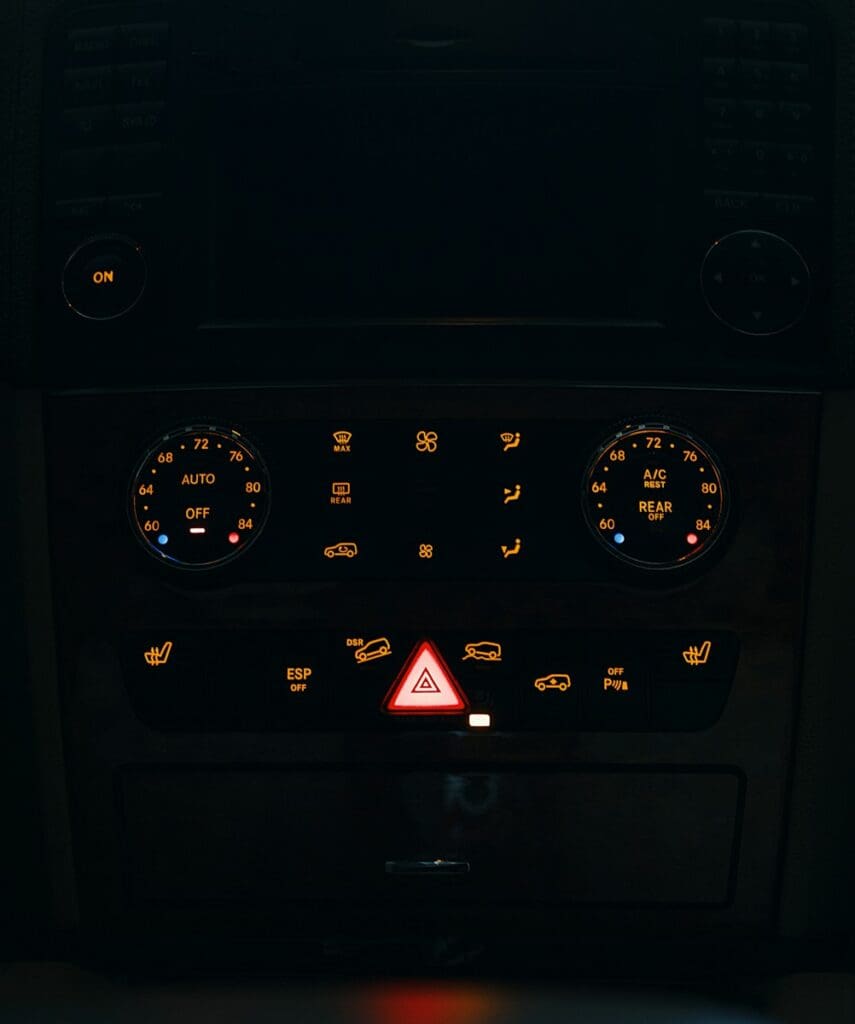
Modern cars are no longer purely mechanical.
Control units talk to each other.
Sensors share data.
Software decides how systems behave.
A basic code read only scratches the surface.
That is why we have invested in dealer-level diagnostic software across all major vehicle brands.
It allows us to test, programme, code, and confirm repairs properly.
This post explains what dealer-level diagnostics actually means, why it matters, and how it protects you from unnecessary parts and repeat visits.
What most people get when they hear “diagnostics”
Many drivers are offered a free or cheap diagnostic check.
In most cases, this is a quick code scan.
A code scan tells you:
- What fault the car has logged.
- Which system noticed the issue.
It does not tell you:
- Why the fault occurred.
- Whether the fault is current or historic.
- If the fault is mechanical, electrical, or software-related.
- What needs testing next.
Relying on codes alone leads to parts being fitted on guesswork.
That approach costs more over time.
What dealer-level diagnostics actually means
Dealer-level diagnostics goes beyond reading fault codes.
It gives access to the same depth of information used by main dealers.
This includes:
- Manufacturer-specific fault descriptions.
- Live data streams across multiple modules.
- Actuator tests and component activation.
- Guided test plans.
- Programming and coding functions.
- Reset and adaptation procedures after repairs.
Without this level of access, many modern repairs cannot be completed properly.
Why coding and programming matter after repairs
Fitting parts is no longer the final step.
Many components need coding or calibration before the car will accept them.
Common examples include:
- Battery replacements that require registration.
- Injectors that need coding.
- AdBlue components that need programming.
- Electronic parking brake servicing.
- Steering angle sensor calibration.
- DPF and emissions resets.
Without coding, the car may:
- Show warning lights.
- Enter limp mode.
- Refuse to complete regeneration cycles.
- Wear parts prematurely.
Dealer-level software allows us to finish the job properly.
Why this matters for fault finding
Fault codes rarely exist in isolation.
One system can trigger faults in another.
For example:
- A failing sensor may cause fuel, boost, and emissions faults.
- A mechanical issue may show as an electrical error.
- A software mismatch may look like a hardware failure.
Dealer-level diagnostics allow us to see the whole picture.
Not just the loudest fault code.
This approach underpins our
car diagnostics
service.
We confirm causes before recommending repairs.
Real-world examples where dealer diagnostics save money
We see the same patterns repeatedly.
A car arrives with:
- Repeated warning lights.
- Loss of power.
- Limp mode that resets temporarily.
A basic scan points to one component.
That component gets replaced elsewhere.
The fault returns.
With full diagnostic access, we can:
- Test actuators under load.
- Compare commanded values to actual values.
- Check adaptation limits.
- Confirm whether a component is faulty or being affected by another system.
This avoids fitting parts that were never the problem.
Supporting our core services
Dealer-level diagnostics supports every mechanical service we offer.
-
Timing chain and belt work relies on accurate correlation data:
timing chains and belts. -
DPF faults need proper testing before cleaning:
off-vehicle DPF cleaning. -
AdBlue problems often require software confirmation and resets:
AdBlue solutions. -
Brake and suspension systems now include electronic components:
brake repairs and
suspension repair. -
Engine removal and rebuild work depends on post-repair coding and checks:
engine work.
Diagnostics is not a separate service.
It is the foundation everything else sits on.
Dealer diagnostics versus tuning software
It is important to separate diagnostics from performance tuning.
Diagnostics is about fault finding, testing, and correct operation.
Tuning is about changing engine behaviour for performance or efficiency.
Performance work is handled by our sister company:
Lonestar Performance.
Keeping these roles clear protects reliability.
A car must be healthy before any tuning is considered.
Who benefits most from dealer-level diagnostics
This level of testing is especially valuable if:
- Your car has recurring faults.
- Previous repairs have not solved the issue.
- Multiple warning lights appear together.
- Electronic systems behave unpredictably.
- You have been advised to replace parts without testing.
It is also essential after many repairs.
Coding and adaptations protect new components and restore correct behaviour.
Why we invested in this capability
Cars are becoming more complex.
Guesswork is becoming more expensive.
Investing in dealer-level diagnostics allows us to:
- Reduce repeat visits.
- Improve accuracy.
- Explain faults clearly.
- Finish repairs properly.
It also protects trust.
When we tell you what is wrong, it is backed by evidence.
Book diagnostics before parts
If your car has warning lights, loss of power, or faults that keep returning, start with testing.
Do not commit to parts until the cause is confirmed.
That approach keeps control of the repair.
If you are local to Mansfield or Mansfield Woodhouse, you can book in through our
contact page.
Dealer-level diagnostics is now part of how we work.
It supports every repair we carry out.
It is one of the most important upgrades we have made.
Need this looked at?
Describe the symptom and we’ll tell you whether it needs a diagnostic slot or a straight booking.
- 5.0 from 235 Google reviews
- Mon–Fri 08:30–18:00
- 2 Warsop Road, Mansfield Woodhouse


