Glow plugs are one of the most overlooked components on diesel engines. When they fail, cold starting becomes difficult, fuel economy drops, and the engine management light often comes on. This guide explains what glow plugs do, how to spot failure, and what replacement actually costs.
What Are Glow Plugs and Why Do They Matter?
Unlike petrol engines, diesel engines do not use spark plugs to ignite the fuel. Instead, they rely on the heat generated by compressing air inside the cylinder to ignite the diesel fuel when it is injected. This process is called compression ignition.
The problem: on a cold morning, the cylinder walls, pistons, and air inside the engine are all cold. Compressing cold air does not generate as much heat as compressing warm air. The result is that diesel engines struggle to ignite fuel reliably in cold conditions.
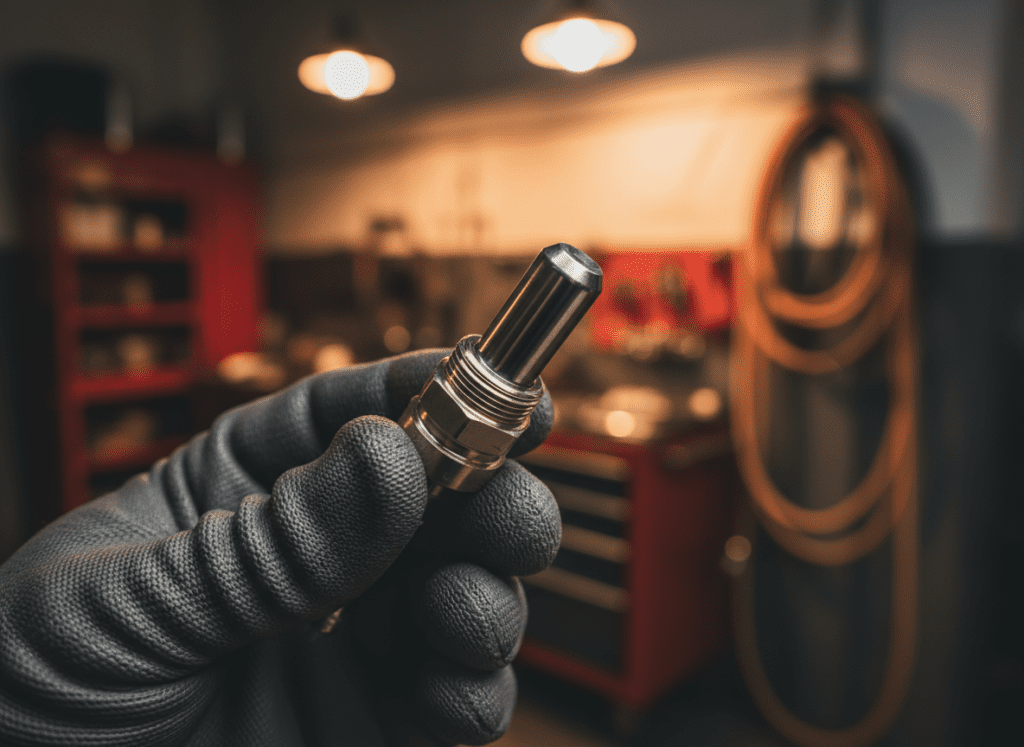
Glow plugs solve this. They are electrically heated rods installed in each cylinder (one per cylinder) that pre-heat the air inside the combustion chamber before the engine starts. When you turn the ignition on and wait a moment before cranking (the brief glow plug warm-up period), glow plugs are doing their job.
On modern common rail diesel engines, glow plugs also assist combustion during the first few minutes of a cold drive, reducing white smoke and improving fuel burn until the engine reaches operating temperature.
Symptoms of Glow Plug Failure
1. Difficult Cold Starts
This is the most recognisable symptom. On cold mornings — particularly when temperatures are below 5°C — the engine cranks for longer than usual before firing. It may take two or three attempts to start.
One failed glow plug often produces only marginal cold start difficulty. Two or more failed plugs will make cold starting noticeably harder. In very cold conditions, the engine may not start at all if several glow plugs have failed.
2. White Smoke on Cold Start
A small amount of white smoke from a diesel exhaust on a cold morning is normal — it is mostly water vapour and condensation burning off. But sustained white smoke for several minutes after startup, or white smoke that has a slightly acrid or fuel-like smell, often indicates incomplete combustion from a cold engine — which can be caused by failing glow plugs not heating the cylinders adequately.
White smoke that clears completely once the engine is warm typically points to glow plugs or a cold-start injector issue rather than something more serious like a head gasket.
3. Rough Running When Cold
If one or more cylinders are not pre-heating properly, combustion in those cylinders is less efficient when the engine is cold. This can cause a rough idle, occasional misfires, or a noticeable shudder when the engine first starts. The roughness typically clears within a few minutes as the engine warms up.
This pattern — rough when cold, smooth when warm — is a classic glow plug symptom pattern.
4. Engine Management Light (Glow Plug Warning Light)
Most diesel cars have a dedicated glow plug warning light — usually a coil or spiral symbol, sometimes amber. This illuminates during the pre-heat cycle (normal) and should go out once the plugs are ready for starting.
If this light stays on after starting, flashes during the drive, or comes on alongside the general engine management light, a glow plug circuit fault has been detected. This could mean a failed plug, a failed glow plug relay, or a wiring fault.
The only way to confirm which plug has failed and why is a proper diagnostic scan with live data.
5. Increased Fuel Consumption
Glow plugs support efficient combustion during cold operation. When they fail, fuel is not burned as completely during the warm-up period. Over time, particularly in stop-start city driving with lots of cold starts, this contributes to slightly higher fuel consumption.
This symptom is subtle on its own. But combined with other signs, it adds to the picture.
6. Misfires or Fault Codes
Modern diesel engines monitor combustion quality in each cylinder. A failing glow plug can trigger misfire codes or cylinder contribution faults — not because the plug itself causes a misfire directly, but because incomplete cold combustion registers as a cylinder not firing properly.
If you have a scan showing codes P0670–P0679 (or manufacturer equivalents), these point directly to the glow plug circuit.
What Causes Glow Plugs to Fail?
Age and Mileage
Glow plugs are a wear item. They are subject to extreme heating and cooling cycles every time the engine starts from cold. Most manufacturers recommend replacement every 60,000–100,000 miles or every four to five years, whichever comes first. Many drivers do not change them until they cause a problem.
Carbon Build-Up
Carbon deposits from combustion can accumulate around the glow plug tip over time, reducing its ability to heat efficiently. This is more common on engines that do mostly short journeys, where combustion temperatures never fully burn off deposits.
Seized Glow Plugs
This is one of the more problematic failure modes. If glow plugs are left in an engine for a very long time without servicing, corrosion between the plug and the cylinder head can cause them to seize. A seized glow plug that is forced will snap — leaving the tip inside the cylinder head, which requires specialist extraction.
This is why replacing glow plugs preventatively on a mileage schedule is preferable to leaving them until they fail and seize.
Electrical Faults
The glow plug relay controls power supply to all plugs simultaneously. A failed relay can cause all glow plugs to stop working, even if the plugs themselves are fine. Wiring faults — corroded connectors, damaged insulation — can also cause intermittent glow plug circuit problems.
Glow Plug Replacement: What It Costs
| Vehicle Type | Typical Total |
|---|---|
| Standard 4-cylinder diesel (e.g. Ford, Vauxhall, VW) | Priced per vehicle |
| Premium 4-cylinder diesel (e.g. BMW, Mercedes) | Priced per vehicle |
| 6-cylinder diesel (e.g. BMW 3.0d, Range Rover) | Priced per vehicle |
| Seized glow plug extraction (per plug) | Varies significantly |
All four (or six) plugs should always be replaced at the same time. Replacing a single failed plug leaves the others — which are equally aged — on borrowed time. Replacing the set once gives you a known baseline and avoids returning for the same job a few months later.
Can You Drive with Failed Glow Plugs?
In warm weather, yes — with reduced efficiency and some rough running on cold starts. A diesel engine can still start and run without glow plugs once ambient temperatures are above around 10–15°C, because the compression ratio alone generates enough heat to ignite the fuel.
In cold weather (below 5°C), failed glow plugs can make the car genuinely difficult or impossible to start from cold. Driving with known failed plugs in winter is not advisable.
More importantly, ignoring the glow plug warning light does not just mean tolerating a difficult start. The engine management system may restrict power or fuel economy, and unresolved fault codes can mask other developing problems. It is always better to get confirmed faults addressed rather than tolerate them.
Diesel Vehicles Particularly Prone to Glow Plug Issues
While glow plug failure can affect any diesel, some vehicles see it more commonly than others:
- BMW N47 and N57 diesel engines: Glow plug accessibility can be challenging and seized plugs are a known issue on high-mileage examples
- Ford 1.5 and 2.0 TDCi engines: Generally straightforward, but plugs left for too long can corrode in
- Vauxhall 1.6 CDTi and 2.0 CDTi: Glow plug replacement is routine on these and usually straightforward if done at recommended intervals
- Volkswagen Group TDI engines (2.0 TDI): Glow plugs are accessible and replacement is standard, but the relay (N108) is a known failure point
- Land Rover 2.2 SD4 and 3.0 TDV6: More complex to access, particularly on the V6 — labour time is higher
How We Diagnose and Replace Glow Plugs at Star Garage Mansfield
When a diesel comes in with cold start problems or a glow plug warning light, our first step is a full diagnostic scan to confirm which cylinder’s glow plug circuit has flagged a fault and whether the relay is also involved.
We then test the plugs individually for correct resistance and current draw, which tells us whether the plug itself has failed or whether the fault is in the wiring or relay.
Before removing glow plugs, particularly on higher-mileage vehicles, we apply penetrating treatment and allow adequate soak time to reduce the risk of seizure. If a plug does seize and break on removal, we have the tooling to extract the remaining piece without damaging the cylinder head.
We use quality replacement plugs — NGK and Bosch for most applications — and always replace the full set alongside the relay where appropriate. After fitting, we clear the fault codes and run a check to confirm the system is reading correctly before returning the car.
For diesel vehicles with multiple issues — cold start problems alongside EGR faults, DPF warnings, or fuel system faults — we diagnose the full picture before recommending repairs, so you understand what is causing what before any money is spent.
Frequently Asked Questions
How do I know if it’s glow plugs or something more serious?
Glow plug failure typically produces cold-start difficulty and white smoke that clears once the engine is warm, with a glow plug warning light. Symptoms that persist once the engine is fully warm — sustained smoke, power loss, rough running — usually point to other issues. A diagnostic scan will confirm the fault codes and narrow it down quickly.
Can I replace just one glow plug?
Technically yes, but it is not recommended. The remaining plugs are the same age and will fail soon. Replacing the full set at the same time costs only marginally more and avoids a repeat job in a few months.
My diesel starts fine in summer but struggles in winter — is it glow plugs?
Almost certainly, yes. Warm weather masks glow plug failure because the engine does not need as much pre-heating to start. As temperatures drop in autumn and winter, the failing plugs can no longer compensate. Get the car checked before winter if you notice any summer symptoms.
How long does glow plug replacement take?
Usually 1–2 hours for a standard four-cylinder engine, assuming the plugs come out cleanly. Allow more time if the vehicle is high-mileage and there is a risk of seizure — we prefer to take a cautious approach rather than rush and snap a plug.
Does replacing glow plugs clear the warning light?
The warning light will not clear by itself — fault codes must be reset using diagnostics after the repair is complete. We clear codes and confirm the system is reading correctly as part of the job.
Are glow plugs covered by my service schedule?
They should be. Most manufacturer service schedules include glow plug inspection or replacement, but not all garages actually perform this check during routine services. Ask specifically whether glow plugs have been tested if your diesel is at 60,000 miles or more.
Diesel Hard to Start? Book a Glow Plug Diagnosis
We will confirm which plugs have failed, test the relay, and replace the full set with quality parts. No guessing — just accurate diagnosis and a clear quote before any work starts.
Located in Mansfield Woodhouse, Mansfield. Serving drivers across Mansfield, Worksop, Chesterfield, and Nottingham. Open Monday–Friday, 8:30 AM to 6:00 PM. Phone: 01623 904724
Need this looked at?
Describe the symptom and we’ll tell you whether it needs a diagnostic slot or a straight booking.
- 5.0 from 235 Google reviews
- Mon–Fri 08:30–18:00
- 2 Warsop Road, Mansfield Woodhouse