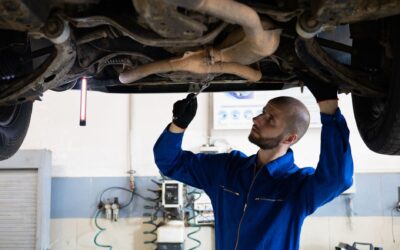
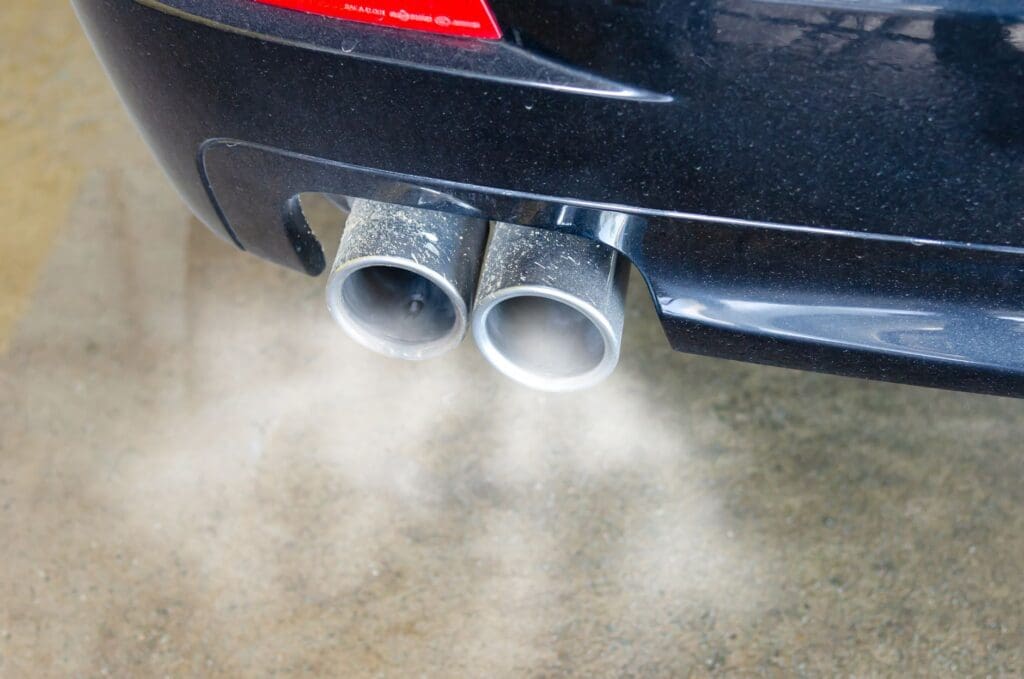
Your diesel car generates soot as a by-product of combustion. The diesel particulate filter traps that soot before it exits the exhaust. But a filter that keeps filling with soot eventually blocks. DPF regeneration is the process your car uses to burn off that soot — and when it stops working correctly, the filter blocks and the problems begin.
Contents
What DPF Regeneration Actually Is
The diesel particulate filter is a ceramic or metal honeycomb structure in the exhaust system designed to trap soot particles before they enter the atmosphere. It is highly effective — capturing over 85% of particulate emissions — but it has a finite capacity. If the soot it collects is not periodically burned off, the filter clogs and exhaust gases cannot flow freely.
Regeneration is the controlled combustion of that trapped soot. By raising exhaust temperatures high enough — typically above 500°C — the soot oxidises into carbon dioxide and water vapour, which pass harmlessly through the exhaust. The result is a clean filter ready to collect soot again.
There are three types of regeneration: passive, active, and forced. Most diesel drivers are unaware that regeneration is happening at all, because in normal circumstances it occurs without any driver input or warning light. Problems only become visible when regeneration cannot complete.
Passive Regeneration: The Ideal Scenario
Passive regeneration happens automatically during extended motorway or dual-carriageway driving, without any intervention from the engine management system. When exhaust gas temperatures are high enough — sustained engine load at higher revs over a period of 20 to 30 minutes — the soot in the DPF burns off naturally.
This is the cleanest and most efficient form of regeneration. It requires no additional fuel injection, does not place extra stress on engine oil, and completes without any driver awareness. Vehicles that regularly cover motorway miles will often maintain a healthy DPF indefinitely through passive regeneration alone.
The problem is that many diesel vehicles in the UK are used predominantly for short urban journeys, school runs, or commutes that never generate sustained exhaust temperatures. These vehicles never achieve conditions for passive regeneration, so the filter gradually accumulates soot until the engine management system steps in.
Active Regeneration: When the Engine Management System Intervenes
When soot load builds to a threshold — typically around 45% of filter capacity — the ECU triggers active regeneration. This involves injecting additional fuel into the exhaust stroke, or using a post-injection strategy, to increase exhaust temperatures artificially until the soot burns off.
Active regeneration typically takes 10 to 15 minutes to complete. During this time, you may notice slightly increased fuel consumption and, on some vehicles, a faint smell from the exhaust as soot burns. The engine fan may also run harder than normal as the system manages heat.
Why active regeneration fails to complete
Active regeneration requires sustained driving at moderate to high engine load. If you stop the engine mid-cycle — arriving home, stopping for fuel, or being caught in traffic — the regeneration cycle cancels. The ECU stores the incomplete regeneration and will attempt it again when conditions are met.
If multiple active regeneration attempts fail to complete, the ECU recognises that normal driving conditions are not meeting the requirement and the DPF warning light activates. At this stage, a forced regeneration may be required.
How Often Does a DPF Regenerate, and How Can You Tell?
Most diesel cars run an active regeneration roughly every 300 miles, and anywhere from about 200 to 400 miles is normal depending on how the car is driven. You can usually tell one is under way because the idle speed is higher than normal, the cooling fans run, and stop/start stops working until it finishes.
The interval is not fixed. The engine management works from the soot load it calculates, so a car doing mostly short town trips fills the filter faster and needs to regenerate more often than one that spends its week on the motorway, where more of the soot burns off passively.
Signs a regeneration is happening while you drive:
- Faster idle speed – the engine sits at higher revs than usual when you stop.
- Cooling fans running – sometimes carrying on after you switch off, which can mean the cycle was cut short.
- Stop/start not working – the engine stays running at junctions.
- Higher fuel consumption – extra fuel is being used to raise the exhaust temperature.
- A hot, acrid smell from the exhaust, and the engine may sound slightly different.
If you notice these, keep driving at a steady speed rather than switching off, so the cycle can finish. If they show up on almost every journey, the car may be regenerating far more often than it should, which is worth a diagnostic check.

Forced Regeneration: The Workshop Option
A forced regeneration is a process carried out using diagnostic equipment to command the engine management system to complete a full regeneration cycle under workshop conditions. The vehicle is typically run at elevated idle, with the ECU managing fuel injection and exhaust temperatures until the DPF soot load drops to a safe level.
Forced regeneration is appropriate when:
- The DPF warning light is on and normal driving has not cleared it
- Soot load is high but has not yet reached the point where the filter is fully blocked
- The driver cannot complete long motorway runs that would allow active regeneration to finish naturally
It is important to understand that forced regeneration is not a repair — it is a service procedure to clear an elevated soot load. If the underlying driving pattern continues, the filter will accumulate soot again and the warning light will return.
Why DPF Regeneration Fails
Understanding why regeneration fails helps drivers take practical steps to reduce the risk. The most common causes are:
Short journey driving patterns
This is the primary cause of DPF problems on modern diesels. A diesel engine on a two-mile school run never warms to operating temperature. Exhaust gases remain cool. Passive regeneration cannot occur. Active regeneration, if triggered, cannot complete before the engine is switched off. Over weeks and months, the soot load climbs steadily.
Faulty EGR valve
The exhaust gas recirculation valve recirculates a portion of exhaust gas back into the intake to reduce combustion temperatures and NOx emissions. A sticking or failed EGR valve can increase soot production beyond the rate the DPF can manage, accelerating filter loading even on vehicles with reasonable driving patterns.
Boost leak or turbocharger fault
A boost leak or underperforming turbocharger means the engine is running with insufficient air, which leads to incomplete combustion and excessive soot production. The DPF fills faster than regeneration can clear it. A diagnostic check will identify any boost-related fault codes that may be contributing to DPF loading.
Injector fault
A misfiring or over-fuelling injector delivers excess fuel that does not fully combust. The unburned fuel contaminates the DPF and can wash down into the engine oil, diluting it. Oil dilution from DPF regeneration fuel injection is a known issue on some engines, and badly affected oil will need changing.
Low-quality or incorrect engine oil
DPF-equipped diesel engines require low-ash engine oil (typically labelled C1, C2, or C3 specification). Standard engine oil contains higher levels of metallic additives that leave an ash residue in the DPF after regeneration. Unlike soot, this ash cannot be burned off and permanently reduces filter capacity.
Warning Signs Your DPF Is Not Regenerating
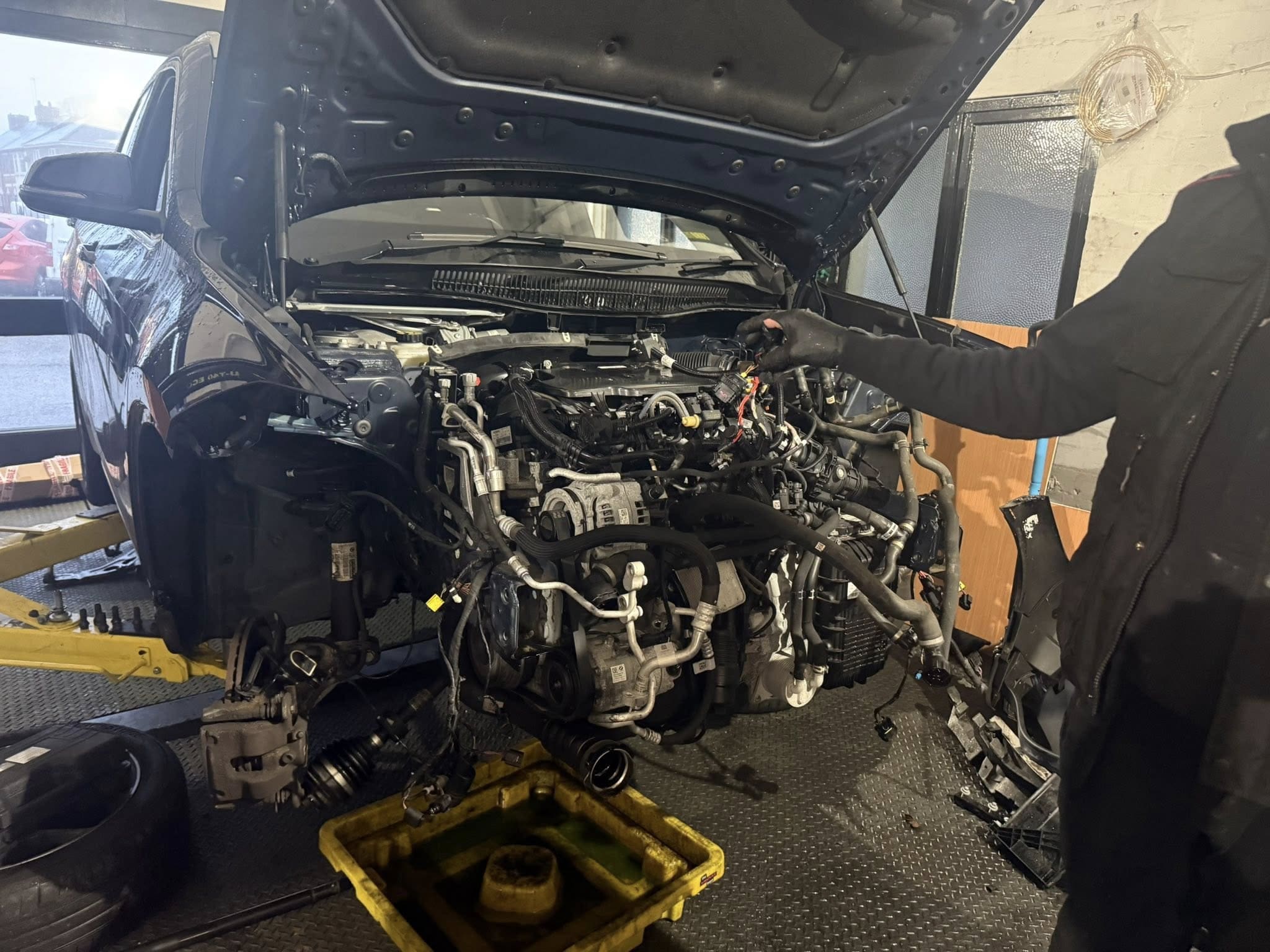
Most DPF issues give warning before the filter blocks completely. Recognising these signs early makes the difference between a relatively straightforward service and a costly filter replacement.
| Warning Sign | What It Indicates | Urgency |
|---|---|---|
| DPF warning light on (amber) | Elevated soot load — regeneration incomplete | Drive at sustained speed for 30+ minutes or book diagnostics |
| DPF + engine light together | ECU has logged a related fault | Book diagnostic soon — do not ignore |
| Reduced power / limp mode | DPF soot load critical — ECU protecting engine | Do not drive far — book inspection urgently |
| Increased fuel consumption | Active regeneration running frequently or injector issue | Investigate if persistent |
| Rough idle after short trips | Incomplete combustion, possible injector or EGR fault | Investigate — do not ignore |
What to Do When Regeneration Fails
If the DPF warning light comes on, the appropriate first step depends on soot load and how many warning lights are active.
If only the DPF light is on
Try an extended motorway or dual-carriageway drive at moderate to high revs — typically 30 to 40 minutes at 50 to 70 mph. Keep the engine running and avoid stopping. If the light clears, the regeneration completed successfully. If it does not clear after the drive, book a diagnostic — a forced regeneration may be needed.
If the DPF and engine management lights are both on
An associated fault code has been logged. A diagnostic check is needed to identify the cause. Do not attempt a motorway drive to force regeneration without understanding whether an underlying fault is contributing to the high soot load — clearing the filter without fixing the cause will reproduce the problem quickly.
If limp mode has activated
The soot load is at a critical level. Do not attempt to drive long distances. Have the vehicle recovered or driven carefully to a garage for inspection. At this stage, off-vehicle cleaning is likely required.
When Off-Vehicle DPF Cleaning Is Needed
When a DPF is blocked beyond the level where forced regeneration is safe or effective, off-vehicle cleaning is the appropriate solution. The filter is removed from the vehicle, cleaned using specialist equipment that flushes both soot and ash from the internal channels, and tested before refitting.
Off-vehicle cleaning is significantly cheaper than replacing a DPF and, when carried out correctly, restores the filter to a condition that allows normal regeneration to resume. It is also the only effective way to remove the ash residue that accumulates over the filter’s life and cannot be removed through any regeneration process.
At Star Garage Mansfield, we carry out off-vehicle DPF cleaning and always diagnose the reason for failure before returning the vehicle. Refitting a cleaned filter without identifying and resolving the underlying cause — whether a faulty EGR valve, boost leak, injector fault, or incorrect oil — will result in the filter blocking again prematurely.
DPF Warning Light On? Get It Checked Properly
We diagnose first and clean second — making sure the filter problem does not return after cleaning.
Call 01623 904724 | Star Garage Mansfield, NG19 9LF | Mon–Fri 8:30am–6:00pm
Frequently Asked Questions
How long does a DPF forced regeneration take?
A workshop forced regeneration typically takes between 20 and 45 minutes depending on the vehicle and the soot load level. The engine is run at controlled speed while the ECU manages exhaust temperatures through the regeneration cycle.
Will the DPF warning light clear itself?
Sometimes — if you complete a long motorway drive that allows active regeneration to finish, the light will clear. If it does not clear after an extended drive, the underlying cause needs investigation. The light will not clear on its own in town driving.
Can I remove the DPF to solve the problem?
DPF removal is illegal on any vehicle used on UK public roads. It is a criminal offence under Road Vehicles (Construction and Use) Regulations and will result in an MOT failure. It also increases particulate emissions significantly.
Why does my diesel smell of burning after a long drive?
A temporary burning smell during or after a motorway drive is often a sign that an active regeneration cycle has completed. It is usually nothing to worry about. A persistent smell, or one accompanied by increased smoke, should be investigated.
How much does DPF cleaning cost compared to replacement?
Off-vehicle DPF cleaning typically costs a fraction of replacement. Replacement DPFs for common diesel vehicles can cost priced on inspection. Cleaning is usually far more economical when the filter structure is intact and only blocked with soot and ash.
Need this looked at?
Describe the symptom and we’ll tell you whether it needs a diagnostic slot or a straight booking.
- 5.0 from 235 Google reviews
- Mon–Fri 08:30–18:00
- 2 Warsop Road, Mansfield Woodhouse