If you own a Mazda CX-5 or Mazda6 with the 2.2 Skyactiv-D engine and the car feels flat, smokes, hesitates, regens too often, or just does not feel right, carbon build-up needs to be high on the list.
This is not one of those faults where a quick spray, an additive, or a code clear sorts it. On badly affected engines, the intake side can be packed with hard carbon that physically restricts airflow and upsets how the engine breathes.
At Star Garage Mansfield, we strip them properly, walnut blast the build-up, replace the gaskets, inspect related parts, and put the engine back together the right way. That matters because this job only pays off when it is done thoroughly.
- What Mazda 2.2 Skyactiv carbon build-up actually is
- Why these engines suffer with it
- The symptoms drivers notice first
- Which cars are usually affected
- Why chemical cleans are usually not enough
- How a proper walnut blast carbon clean is done
- What else should be checked while the engine is apart
- When to book diagnostics
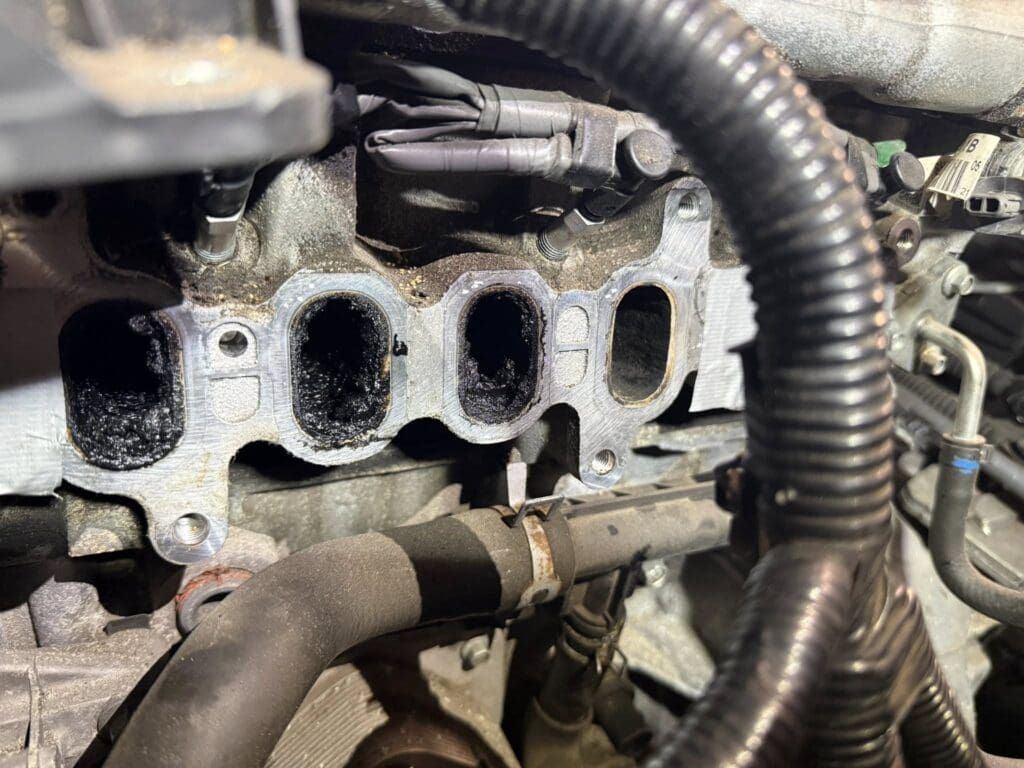
Mazda 2.2 Skyactiv carbon build-up usually forms through the EGR and intake system, then hardens inside the manifold, runners, and intake ports. When it gets bad enough, the engine can lose airflow, run poorly, smoke, feel sluggish, and trigger repeat faults. A proper repair usually means stripping the intake system and cleaning it physically, not relying on an aerosol or a “machine clean”.
Why this engine gets talked about so much
The 2.2 Skyactiv-D has built a big owner following, and with that comes a lot of research before anyone books a repair. Many owners watch workshop videos and forum content first, then ring around asking very specific questions.
That is why the process matters. If a garage can explain exactly how the clean is done, why the valves must be shut, why the other ports are sealed, and why a full strip-down matters, that builds trust straight away.
That is the difference between guessing and knowing.
What is Mazda 2.2 Skyactiv carbon build-up?
Put simply, it is a heavy build-up of soot and oily residue inside the intake side of the engine. Over time, that contamination sticks, bakes on, and hardens.
On a badly affected engine, the inside of the intake tract can become heavily restricted. Instead of clean, smooth airflow into the engine, the ports narrow down and the air path becomes rough and uneven. That changes how the engine fills each cylinder, which can affect performance, economy, emissions behaviour, and general drivability.
This is why owners often describe the same vague set of complaints:
- It feels flat
- It is not as responsive as it used to be
- It smokes more than it should
- It seems to regenerate too often
- It has had sensors or valves replaced but still is not right
Those symptoms can overlap with other faults, which is why proper testing still comes first. But when the engine is known for intake contamination and the symptoms fit, carbon build-up becomes a serious suspect.
Why do these engines suffer with carbon build-up?
The short version is that the intake side gets contaminated by the emissions system. Exhaust gases and oily vapour pass back through the system, and over time they leave deposits through the EGR path, manifold, runners, and intake areas. On the Mazda 2.2 Skyactiv-D, this build-up can become severe enough that a proper strip and manual clean is the only worthwhile answer.
That is why these jobs should not be treated like a basic service add-on. The issue is not a light film. It can be years of hard, baked-on carbon.
Common factors that make it worse
- Short runs and stop-start driving
- Repeated low-temperature operation
- Existing EGR contamination
- Delayed diagnosis when early symptoms start
- Trying cheaper quick-fix cleans first, then leaving the real restriction in place
Which Mazda models are usually linked with the 2.2 Skyactiv-D?
In the UK, most drivers recognise this engine from Mazda CX-5 and Mazda6 diesel models. That is why these two keep appearing in owner groups, YouTube videos, and workshop discussions around carbon cleaning, oil strainers, airflow issues, and drivability complaints.
If you drive one of these cars and the symptoms below sound familiar, it is worth getting the car checked before the problem grows into a much bigger repair bill.
Symptoms of Mazda 2.2 Skyactiv carbon build-up
Not every car will show every symptom. Some start with one annoying issue. Others slowly get worse over months.
1. Lack of power or lazy response
If airflow is being restricted, the engine cannot breathe as it should. Drivers often say the car feels strangled, flat, or slow to pick up.
2. Hesitation or uneven running
A restricted intake path can lead to poor running, inconsistent response, and a car that simply does not feel clean under load.
3. More smoke than usual
When airflow and combustion are not where they should be, smoke complaints often follow. Owners may notice it more on cold starts or harder acceleration.
4. Frequent DPF regeneration behaviour
On some vehicles, poor combustion and intake contamination can sit alongside repeat regeneration complaints. Drivers may notice more fan running, more fuel use, or a car that just seems to be in regeneration too often.
5. Fault codes that keep returning
Sometimes the car has already had components changed. A sensor gets replaced. The EGR gets cleaned. A code is cleared. Yet the car still does not feel right because the real restriction deeper in the intake tract is still there.
6. Poor fuel economy
When the engine is working harder to achieve the same result, fuel use can creep up. Owners often notice the car is more sluggish and more expensive to run at the same time.
Typical complaint versus what it can point to
| Driver complaint | What it may indicate | Why testing matters |
|---|---|---|
| Loss of power | Restricted intake, airflow issue, sensor problem, boost issue | The symptom overlaps with several faults |
| Repeat warning lights | Contamination, EGR flow issue, sensor drift, deeper mechanical restriction | Replacing the wrong part is easy without diagnosis |
| Smoky running | Poor combustion, restricted air path, emissions-related faults | Smoke alone does not confirm the cause |
| Poor MPG | Inefficient running, repeated regens, contamination | Fuel use is a clue, not a final diagnosis |
Why the quick fixes usually disappoint
This is the part a lot of owners need to hear clearly.
If the engine has years of hard carbon packed into the intake side, a can of cleaner is not going to remove it. Neither is a generic machine treatment that never physically reaches and removes the heavy deposits. At best, those options may freshen up a lightly contaminated system. At worst, they delay the repair the engine actually needs.
That is why so many owners end up frustrated. They spend money trying “carbon cleans” that sound easy, but the real obstruction remains in place.
How a proper walnut blast carbon clean is done
This is where the job separates proper repair work from cosmetic cleaning.
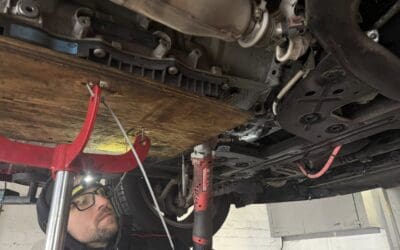
On the Mazda CX-5 job described by the owner, the process involved stripping the system down so the built-up deposits could be removed properly. The walnut blaster fires crushed walnut shell media at the carbon. It is aggressive enough to break down the deposits, but soft enough not to damage the metal housings when used correctly.
That does not mean you can simply blast away and hope for the best. The process has to be controlled.
The ports must be handled one at a time
The crank has to be rotated by hand so the valve on the port being cleaned is fully shut. The other ports are taped up. That way, the media stays where it should and does not find its way into the engine.
That is the kind of detail owners look for when they are deciding who to trust. It shows the job is being done by someone who understands the engine, not someone trying to rush through a generic clean.
The manifold and related parts matter too
Cleaning only one section and leaving the rest contaminated is poor practice. If the build-up is bad, the surrounding components need attention as well. Otherwise, you end up with an incomplete fix and a result that never feels as good as it should.
What else should be checked while the engine is apart?
A good repair on these engines is not just about making the intake look clean for photos.
On the Mazda CX-5 job described by the owner, the sump was dropped, the strainer was replaced, the oil pump was refurbished, a new uprated air flow sensor was installed, and the engine was reassembled with new gaskets before a stage one remap was carried out.
That matters because a lot of these engines do not arrive with one neat, isolated issue. They arrive with a chain of related concerns. Once the vehicle is in pieces, it makes sense to check the parts and systems that can contribute to repeat issues, poor running, or lubrication risk.
Items commonly worth inspecting
- Oil pick-up strainer condition
- Oil pump condition where relevant
- Airflow and sensor readings
- Condition of removed gaskets and seals
- Signs of wider contamination across the intake path
This is one reason these jobs build trust when explained well on the phone. The owner is not just hearing “yes, we do carbon cleaning”. They are hearing the exact process and the wider checks that make the work worthwhile.
Why genuine parts and proper reassembly matter
Once an engine has been stripped to this level, poor parts choice is a false economy. Fresh gaskets, correct sealing, careful reassembly, and the right parts help protect all the work that has just been carried out.
If the goal is to get the car back to its best, the finish matters just as much as the clean itself.
When should you book diagnostics for a Mazda 2.2 Skyactiv?
Book it in if the car is showing any of the following:
- Noticeable loss of power
- Hesitation under load
- Heavy smoke
- Frequent regeneration behaviour
- Persistent warning lights
- Poor fuel economy with no obvious reason
- A history of parts being changed without a proper fix
The key is not to self-diagnose too confidently from one video or one forum post. Owner research is useful. It helps you ask better questions. But the right next step is still proper testing, because these symptoms can overlap with EGR, airflow, boost, DPF, sensor, and general running faults.
Why this matters for drivers in Mansfield
If you are local and your Mazda diesel is showing the classic signs, you want a garage that can explain the process in plain English and then back that up in the workshop. That is where Star Garage Mansfield fits well.
The garage already positions itself around accurate testing, not guesswork, and that is exactly the mindset this engine needs. The fix is not throwing random parts at it. The fix is confirming the issue, stripping it properly, cleaning it properly, and dealing with the related faults that come with it.
Need a proper Mazda 2.2 Skyactiv carbon clean?
If your Mazda CX-5 or Mazda6 feels flat, smokes, regens too often, or just is not running as it should, book it in for proper inspection first.
At Star Garage Mansfield, we focus on diagnosis before repair. If carbon build-up is the problem, we can explain the job clearly and carry it out the right way.
Star Garage Mansfield, 2 Warsop Road, Mansfield Woodhouse, NG19 9LF
01623 904724
Frequently asked questions
What causes carbon build-up on the Mazda 2.2 Skyactiv-D?
It usually builds through the intake and EGR side of the engine over time, where soot and oily residue stick and harden into heavy deposits.
Can a fuel additive or spray fix heavy carbon build-up?
Not usually. If the deposits are thick and hardened, the engine normally needs physical cleaning after strip-down.
What are the signs that my Mazda diesel may need this job?
Common signs include loss of power, hesitation, smoke, repeat warning lights, poor fuel economy, and frequent regeneration behaviour.
Is walnut blasting safe on these engines?
Yes, when the job is done correctly. The ports are cleaned carefully with the valves shut on the port being worked on, and the remaining ports are sealed off to control stray media.
Should I still get diagnostics before booking a carbon clean?
Yes. Carbon build-up is common on these engines, but the symptoms can overlap with other faults. Proper diagnostics confirm what the car actually needs.
Need this looked at?
Describe the symptom and we’ll tell you whether it needs a diagnostic slot or a straight booking.
- 5.0 from 235 Google reviews
- Mon–Fri 08:30–18:00
- 2 Warsop Road, Mansfield Woodhouse