
What Do We Mean by an Engine-Out Job?
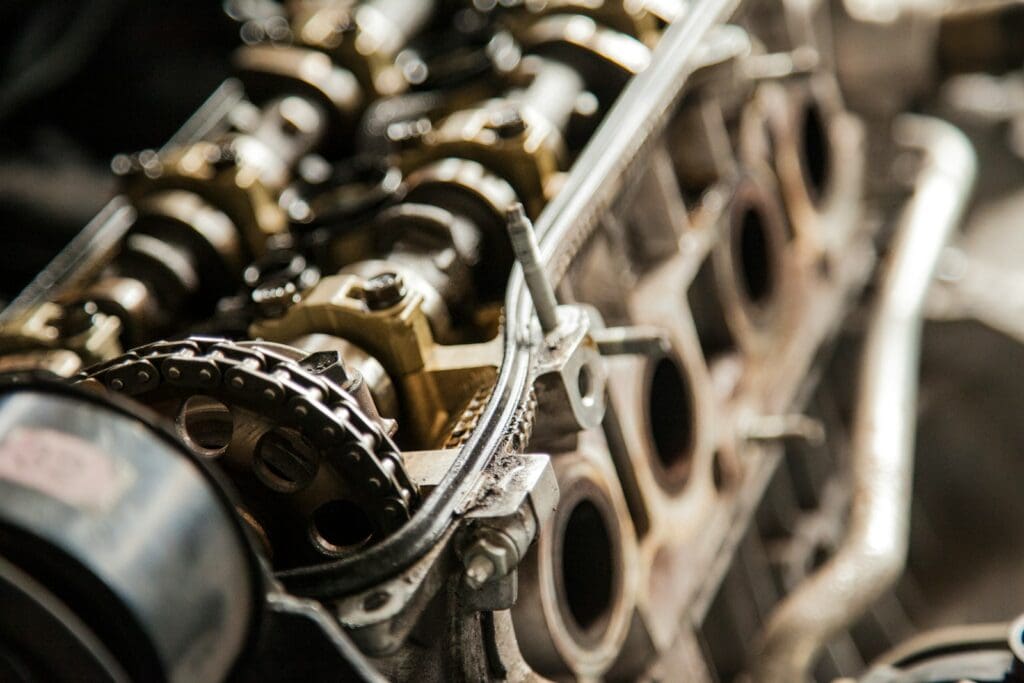
When a garage says an “engine-out” job is needed, it simply means the engine has to be lifted out of the car to reach the parts that need work. The engine, gearbox and subframe are packed very tightly on modern cars. Some faults sit in places that are almost impossible to reach with the engine still in the bay.
That does not always mean your engine is ruined, or that the car is not worth repairing. In many cases, the engine itself is fine. The problem is access, not the core engine condition.
Typical reasons include:
- Major oil leaks from parts buried in the “V” of a V6 or V8.
- Rear-mounted timing chains with no access from the front.
- Turbochargers hidden behind the engine and subframe.
- Badly cracked or leaking oil coolers and hard-to-reach gaskets.
Our role at Star Garage Mansfield is to explain clearly why removal is needed, what the process involves, and what your options are. You can always talk to us before you commit to any major job by using our engine diagnostics and major repairs route.
Common Reasons We Have to Remove an Engine
On some cars you can reach nearly everything from above or below. On others, even a simple part is buried behind layers of brackets, pipes, heat shields and subframe sections.
Common faults that may require engine removal include:
- Severe oil leaks from rear main seals or oil cooler housings deep in the V.
- Timing chain replacement on engines with chains at the gearbox end.
- Cracked or leaking turbochargers with no access from the top.
- Major coolant leaks from rear core plugs or metal coolant pipes.
- Internal engine work such as head gaskets where access is blocked by the bulkhead.
- Bad subframe design that leaves no space for tools with the engine in place.
With some designs, you will spend more labour trying to work around the engine than you would by removing it carefully and doing the repair on a stand. In those cases, engine-out is actually the more sensible choice.
Examples from Our Workshop
We see a lot of cars where access has dictated the repair method. Two recent examples help show why engine-out and near engine-out jobs are sometimes the right call.
Mercedes E350 Engine-Out Oil Leak and Timing Chain Job
A 2011 Mercedes E350 Convertible came in with heavy oil leaks and early timing chain wear. The oil cooler sat deep in the V of the V6, buried under pipes and other components. From above or below, we simply could not reach it safely or see the full leak pattern.
We removed the engine, diagnosed a cracked oil cooler housing, a turbo oil feed leak and a vacuum pump leak, and replaced the full timing chain kit while it was on the stand. This gave the car a fresh, dry engine and a new chain, all in one hit. You can read that full story in our Mercedes E350 engine-out case study.
Volvo S60 Heavy Clutch and DMF Job – Almost Engine-Out
A Volvo S60 with a slipping clutch and worn dual mass flywheel needed major work. Technically it was a gearbox-out job, not engine-out, but the amount of strip-down was similar. The subframe had to be lowered, the engine and gearbox supported carefully, and a lot of surrounding parts removed to create space.
This job shows that some repairs are “near engine-out” in terms of labour, even if the block stays in the bay. That case is covered in our Volvo S60 clutch and DMF case study.
Why Access Matters More Than Anything
The key question in any major job is not “How big is the part?” but “Can you physically reach it?” Modern cars are built from the factory with the engine and subframe going in as a unit. Many parts are then added around that, leaving barely any space for tools later in the car’s life.
In plain terms:
- If we cannot see the part, we cannot test it properly.
- If we cannot get tools on bolts squarely, there is a risk of rounding them.
- If we have to bend or force things, other parts can be damaged.
On some designs, engine-out gives clean, open access. That means a better-quality repair, less risk of broken bolts, and far less chance of missing a second leak or fault hidden behind the first one.
That was the situation on the Mercedes E350. Working around the engine would have meant guesswork and repeat strip-downs. Taking the engine out once, doing everything properly and refitting it was the safer choice.
How Engine-Out Labour Time Is Calculated
Labour for engine-out jobs is not guessed. We work from a mix of:
- Manufacturer labour time guides.
- Independent labour data for each model.
- Our own experience from previous jobs on the same platform.
We break the estimate into stages such as:
- Preparation: strip ancillaries, fluids, exhaust sections, driveshafts and wiring.
- Removal: support subframe, lower engine and gearbox as a unit, move to stand.
- Repair: carry out the actual job (for example timing chain, oil cooler, clutch).
- Refit: reinstall engine, reconnect wiring, refill fluids and bleed systems.
- Testing: first start, leak checks and road tests.
Each stage has its own time. We add them up, then discuss the total with you before work starts. If extra parts are likely, we explain where the “grey areas” are so you know what could change.
Typical Costs and Timescales
Costs vary by make and model, but engine-out jobs nearly always involve a full day or more. Some can stretch to several days, especially when machining, extra diagnostics or specialist parts are needed.
Factors that affect the price include:
- How tightly packed the engine bay and subframe are.
- Whether the gearbox comes out with the engine or stays in the car.
- Rust, seized bolts or previous poor repairs.
- Extra parts found worn once the engine is on the stand.
We will never promise exact figures here because every car is different. What we will always do is:
- Give a clear written estimate before work starts.
- Call you if we find anything extra that changes the price.
- Explain the parts list so you know exactly what you are paying for.
How We Protect Your Car During a Major Job
Taking an engine out is a big operation, and it needs a methodical approach. At Star Garage Mansfield we:
- Use proper lifting beams, engine cranes and stands rated for the job.
- Protect paintwork, wings and bumpers with covers and guards.
- Label and photograph wiring looms, hoses and brackets to ensure correct refit.
- Store bolts and small parts in organised trays, marked by location.
- Replace seals, gaskets and stretch bolts as needed rather than reusing tired parts.
Once the engine is refitted, we run a full set of checks:
- Fluid levels and leaks.
- Cooling system bleed and fan operation.
- Oil pressure and warning lights.
- Live data checks where needed.
- Road test under different speeds and loads.
The goal is for the car to leave cleaner, quieter and more reliable than when it arrived, even after a large strip-down.
Questions to Ask Any Garage Suggesting Engine Removal
If another garage has suggested an engine-out job and you are unsure, you are not being awkward by asking questions. Any good workshop should be happy to talk you through it.
Good questions to ask include:
- What exactly needs the extra access?
- What parts are you trying to reach that you cannot with the engine in place?
- Are there any alternative repair methods, and what are the downsides?
- What happens if we do not remove the engine – do we risk damage or missed faults?
- How many hours of labour are you quoting, and what does that cover?
- What warranty do I get on the parts and labour?
- Have you done this job on this model before?
If you do not feel you are getting straight answers, that is a sign to pause and seek a second opinion. You are welcome to contact us with a quote you have already received so we can advise whether it sounds fair for the car and fault in question.
Why Star Garage Mansfield Is Trusted for Engine-Out Repairs
At Star Garage Mansfield we focus on clear diagnostics and honest conversation, especially on big jobs. We regularly deal with:
- Engine-out oil leak and timing chain work on Mercedes and BMW models.
- Heavy clutch and dual mass flywheel jobs on Volvos and other large cars.
- Timing chain and oil pump chain cases where early shutdown has saved the engine.
- Major repairs that other garages have turned away due to access issues.
We also have strong experience in finding the root cause of problems before stripping anything, through proper engine diagnostics and major repairs. That means you are not paying for an engine-out job based on guesswork.
If you want to see real-world examples, you can read our Mercedes E350 engine-out case study and our Volvo S60 clutch and DMF case study to see how we approach this type of work.
Book a Second Opinion or Engine-Out Repair
If you have been told your car needs an engine-out job and you feel unsure, or you already know a major repair is needed and want it done properly, we are here to help. Call 01623 904724 to talk through your situation, get a clear explanation of your options, or book your car in for a full assessment at Star Garage Mansfield.
FAQ
Does an engine-out job mean my engine is finished?
No. In many cases the engine itself is healthy. We remove it to reach leaking oil coolers, worn timing chains, rear seals or other parts that are buried out of reach.
Why is engine removal so expensive?
It takes time to strip, support, lower and refit an engine safely. There are many parts to disconnect and later reconnect. The parts bill might be modest, but the labour time is high.
Can I keep driving if a job really needs engine-out?
That depends on the fault. Some leaks or noises can quickly lead to bigger damage. If in doubt, ask for honest guidance and do not ignore warning lights or severe rattles.
Are there cheaper shortcuts instead of engine removal?
Sometimes you can reach a part with partial removal or by working around components, but it can increase the risk of damage, missed leaks or poor workmanship. Where we suggest engine-out, it is usually because shortcuts would give a worse result.
Do you give a warranty on engine-out work?
Yes. Parts and labour are covered by our normal warranty terms, which we explain before you agree to any work. We also keep clear records of the job for future reference.
Can I bring you a quote from another garage to compare?
Yes. You can share the details and we will explain what is involved, whether the labour time sounds realistic, and what we would recommend based on our own experience with that model.
Need this looked at?
Describe the symptom and we’ll tell you whether it needs a diagnostic slot or a straight booking.
- 5.0 from 235 Google reviews
- Mon–Fri 08:30–18:00
- 2 Warsop Road, Mansfield Woodhouse