Peugeot 1.5 BlueHDi timing chain problems can go from a worrying noise to a major repair far quicker than many drivers expect. In some cases, the first clue is a brief rattle. In others, the engine still seems to drive well while wear is building in the background. That is what makes this issue so frustrating. You can be close to failure before the problem feels serious enough to stop the car.
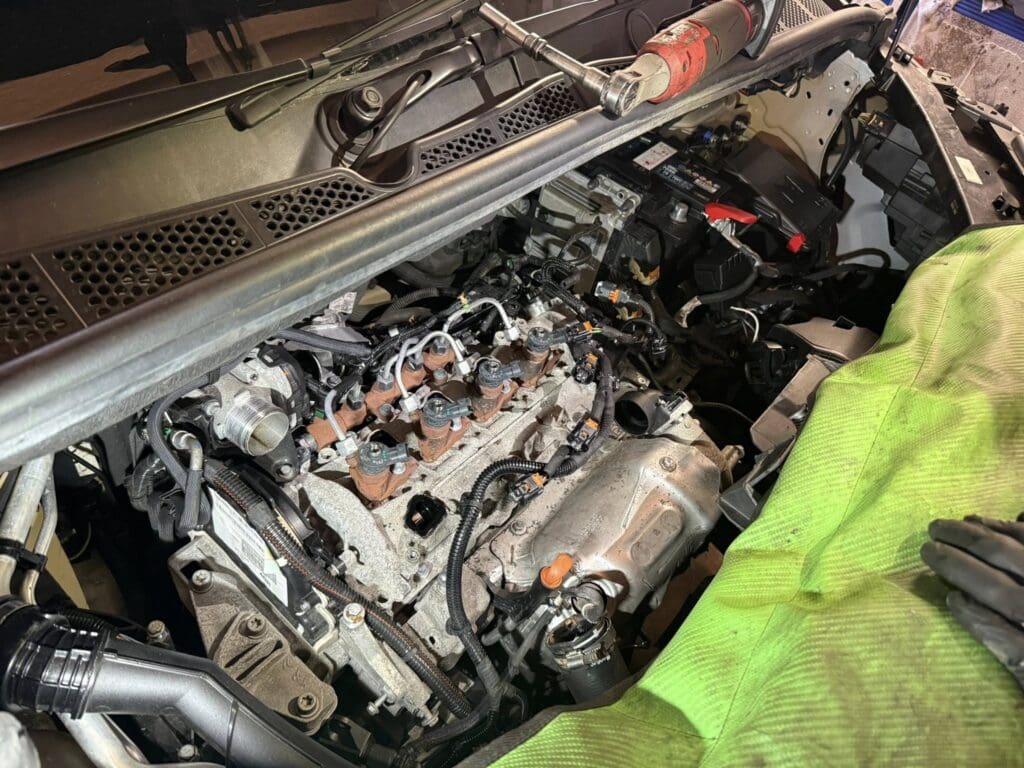
At Star Garage Mansfield, we see this engine family often enough to know one thing clearly. Waiting and hoping rarely pays off. Only recently, we had another Peugeot and Citroen 1.5 BlueHDi-based job in where the chain guide was badly damaged and very close to letting go. That vehicle had been checked elsewhere, yet the real condition told a different story once the engine was investigated properly.
Contents
- Why this engine is a concern
- Which vehicles have the 1.5 BlueHDi engine?
- Common signs of Peugeot 1.5 BlueHDi timing chain problems
- What actually fails in the timing setup
- Why drivers often miss the early warning signs
- Can it happen without a major noise?
- How the fault should be diagnosed properly
- What the repair route may involve
- Why acting early matters so much
- What to do next if you own one
Why this engine is a concern
The Peugeot 1.5 BlueHDi engine is used across a range of cars and vans, which means the same underlying timing concern can affect very different owners. Some use the vehicle for commuting. Some use it for family driving. Some rely on it for daily work. That matters because many people do not spot the issue until the vehicle is already showing more serious symptoms.
The main reason this engine gets so much attention is the timing setup. When wear builds in the chain system, the result is not just an irritating noise. It can mean slack in the chain, guide damage, loss of proper timing control, and the risk of much wider engine damage if the problem is left too long.
This is also why broad, vague advice can do more harm than good. Owners read one forum thread, watch one short video, and assume all they need is an oil change or a code reset. The reality is usually more mechanical than that. If the chain system is worn, no dashboard reset or additive is going to fix it.
Why people act early
- They know the engine has a reputation for chain trouble
- They have heard a new rattle or clatter on start-up
- They want to avoid an engine-outcome repair bill
- The vehicle is too important to risk downtime
Why people leave it too long
- The noise can be brief or inconsistent at first
- The car may still drive normally early on
- Warning lights are not always immediate
- Quick scans do not confirm the true condition of the chain
Which vehicles have the 1.5 BlueHDi engine?
The engine everyone calls the “1.5 BlueHDi” is the PSA/Stellantis DV5, introduced in 2017 and fitted right across the group. The same timing chain concern therefore turns up on badges that look nothing like each other — and it is not always called BlueHDi. On Vauxhall it is sold as 1.5 Turbo D or 1.5D, and on Toyota it is the 1.5 D-4D. It is the same engine family underneath.
Common engine codes are DV5RC, DV5RD, DV5RE, DV5RCE, DV5RCF, DV5RUC and DV5RUCD. On a PSA V5 registration document or parts invoice these usually appear as a three-letter code such as YHZ, YHY, YHT, YHW, YHX, YHS, YHR or YHV. On Vauxhall the same engines are listed as D 15 DT, D 15 DTH, D 15 DTL or F 15 DT.
Cars
- Peugeot — 208, 2008, 301, 308 and 308 SW, 3008, 508 and 508 SW, 5008
- Citroën — C3, C3 Aircross, C4, C4 Cactus, C4 Spacetourer and Grand C4 Spacetourer, C5 Aircross, C-Elysée
- DS — DS 3, DS 3 Crossback, DS 4, DS 7 and DS 7 Crossback
- Vauxhall (badged 1.5 Turbo D / 1.5D) — Astra, Corsa, Crossland and Crossland X, Grandland and Grandland X, Mokka
Vans and people carriers
- Peugeot — Partner, Rifter, Expert, Traveller
- Citroën — Berlingo, Dispatch, Jumpy, SpaceTourer
- Vauxhall — Combo, Vivaro, Vivaro Life
- Toyota (badged 1.5 D-4D) — Proace City, Proace City Verso, Proace
Why the van list matters. Vans on this engine tend to cover far more miles, do more cold starts and spend longer idling than the cars do, so a chain that is beginning to wear usually shows itself on a Berlingo, Partner, Combo or Proace City before it shows on the same engine in a 208 or a C3. If you run one of these for work, treat a cold-start rattle as urgent rather than annoying.
Not every one of these vehicles will develop a timing chain problem, and not every engine in the list is built to the same specification — PSA revised the timing components during production. What the list tells you is whether your vehicle is in the affected family at all, which is the question most owners are actually trying to answer. If yours is on this list and it rattles on a cold start, cranks for longer than it used to, or has thrown a timing or camshaft correlation code, it is worth having checked properly rather than guessed at. See our full 1.5 HDi Berlingo timing chain repair for what the job actually involves on a van.
Common signs of Peugeot 1.5 BlueHDi timing chain problems
The most common sign people notice is a rattle on start-up. Some describe it as a metallic clatter. Some say it sounds like a loose mechanical chatter for a second or two when the engine first fires. Others only notice that the engine sounds rougher than it used to when cold.
That said, the chain issue is not always announced with one dramatic noise. Plenty of owners first become suspicious because the engine just does not feel quite right any more.
Typical warning signs to watch for
- Metallic rattle or clatter on start-up
- Longer cranking before the engine fires
- Rough idle or uneven first few seconds from cold
- Engine management light
- Timing-related fault codes
- A change in the way the engine sounds without another clear cause
- Loss of confidence in the vehicle, even if it still drives
The reason these signs matter is simple. They can point to the chain no longer being controlled properly. If that turns into bigger slack or guide failure, the job can move from a repair you caught in time to something much worse.
| Symptom | What it can suggest | Why it should not be ignored |
|---|---|---|
| Cold start rattle | Early chain slack or tension issues | Often the first sign that wear is building |
| Longer cranking | Timing drift or poor chain control | Can mean the fault is already affecting running |
| Warning light | Timing or performance-related fault detection | Usually means the issue has moved beyond “just a noise” |
| Rougher cold running | Engine timing no longer behaving as it should | Worth checking before the chain system worsens |
What actually fails in the timing setup
Owners often ask the same question. Is it just the chain? The short answer is no. The issue is usually about the wider timing setup, not only one single part.
Depending on the condition of the engine, the chain can develop excess play, the guides can wear or break up, and related components can show signs of damage too. Once that starts, the system is no longer keeping stable control in the way it should.
That is why workshop inspections matter so much. On real jobs, the story is often bigger than the part name used in the conversation. Someone calls it a “timing chain issue”, but the inspection reveals worn guides, related top-end wear, and other parts that need dealing with to repair the engine properly.
Areas that may be affected
- The chain itself
- Chain guides
- Tension control parts
- Related timing components
- Top-end parts affected by wider wear
That is one of the big differences between internet advice and workshop reality. Online, the topic sounds simple. In the garage, it often is not.
Why drivers often miss the early warning signs
Many Peugeot 1.5 BlueHDi owners are not ignoring the fault on purpose. They just do not realise what the signs can mean. A one-second rattle on a cold morning can sound small. A slightly longer crank can feel easy to explain away. A dash light that comes and goes does not always create urgency. That is how these cars keep being driven while the chain setup gets worse.
There is also another problem. Drivers often assume the main dealer or a quick code read would have flagged anything serious. That is not always how this issue works. The true condition of the chain system is a mechanical question. It is not always something a fast scan or basic check will answer fully.
Can it happen without a major noise?
Yes, and that is one of the reasons Peugeot 1.5 BlueHDi timing chain problems catch people out. Not every engine gives a dramatic warning for weeks on end. Some cars only make a brief noise. Some barely make one at all. Some first show themselves through running quality, fault behaviour, or inspection findings rather than a loud rattle.
This is why owners who know the reputation of the engine often book a check before the fault becomes obvious. It is also why workshop experience matters. A garage that sees these engines regularly knows when a customer’s description sounds like something worth taking seriously even if the noise is not yet dramatic.
In simple terms, do not use volume as your only measure of risk. A quiet fault is still a fault.
How the fault should be diagnosed properly
The right process starts with what the car is doing, then moves into testing and inspection. At Star Garage Mansfield, that means listening carefully to the owner’s description, checking fault behaviour, and using diagnostics to build a proper picture before mechanical recommendations are made.
A sensible diagnostic approach includes
- Reviewing the exact symptoms and when they happen
- Checking for stored and current fault codes
- Listening to the engine from cold where possible
- Assessing whether the symptoms fit known chain failure patterns
- Moving into mechanical inspection when the evidence points that way
- Checking for related issues uncovered during investigation
This is the difference between guessing and proving. Too many owners lose time and money when a fault is treated as a generic warning light problem rather than a known timing risk. Once the mechanical side is confirmed, the repair plan becomes much clearer.
What the repair route may involve
The repair route depends on how early the issue is caught and what the engine condition shows once it is stripped and inspected. In early cases, the aim is to catch the problem before wider damage develops. In more advanced cases, the parts list can grow because the wear has spread beyond the most obvious component.
That is why some jobs involve much more than a single chain part. Depending on the engine, related items may also need attention so the repair solves the real problem and not just the headline symptom.
A proper repair may involve
- Timing chain upgrade or replacement work
- Guide and related timing component replacement
- Inspection of other affected top-end parts
- Supporting work where inspection shows it is sensible
- Post-repair checks to confirm the engine is running correctly
The goal is not to do the biggest job possible. The goal is to do the right job for the engine in front of you. That is why our timing chains and belts service sits at the centre of this kind of repair work. The work should be led by condition, not assumptions.
Why acting early matters so much
When owners leave Peugeot 1.5 BlueHDi timing chain problems too long, the biggest cost is often not the initial repair. It is what comes after the fault has had time to spread. A worn guide caught early is one thing. A chain system that has deteriorated badly enough to affect timing, damage related parts, or tip the engine into a far bigger failure is something else.
That is the point where the conversation changes from “What repair do I need?” to “How bad has this become?” No driver wants to arrive at that stage if it could have been avoided.
| Stage | Typical situation | Why early action helps |
|---|---|---|
| Early concern | Short rattle or mild symptom only | Best chance of catching the issue before major damage |
| Developing fault | Symptoms becoming more regular or obvious | Still worth addressing before wider wear builds |
| Advanced problem | Serious noise, running issues, or major damage risk | This is the stage most owners wish they had avoided |
For many owners, the smartest decision is not waiting for certainty from a breakdown. It is acting when the first signs and the known engine history start to line up.
What to do next if you own one
If you have a Peugeot 1.5 BlueHDi and you have heard a new noise, seen a fault light, or simply want the timing setup checked because you know the risk, the best next step is inspection rather than delay. Start with the symptoms. Get the car assessed properly. Then make a repair decision based on facts.
At Star Garage Mansfield, we focus on proper testing, not guesswork. That means we look at what the engine is doing, use diagnostics where needed, and inspect properly before advising on the right repair path. If timing trouble is confirmed, we can then point you towards the most sensible next step through our repair services.
Drivers in Mansfield, Mansfield Woodhouse, and surrounding areas can see our Mansfield Woodhouse location page for local support, or go straight to our contact page to get booked in.
Need Peugeot 1.5 BlueHDi timing chain checks?
If your Peugeot has started rattling, cranking longer, or showing signs of timing trouble, book diagnostics and inspection before the fault becomes a much bigger engine repair.
Star Garage Mansfield, 2 Warsop Road, Mansfield Woodhouse, Mansfield, NG19 9LF · 01623 904724
Frequently asked questions
What are the early signs of Peugeot 1.5 BlueHDi timing chain problems?
Common early signs include a cold start rattle, longer cranking, rough start-up, or a warning light. Some cars show only mild symptoms at first.
Can the timing chain issue be serious even if the car still drives?
Yes. The engine may still drive while wear is building in the timing setup. That is why early checks matter.
Will a diagnostic scan alone confirm a worn timing chain?
Not always. A scan helps build the picture, but the real condition of the chain system is a mechanical question that may need proper inspection.
Does every Peugeot 1.5 BlueHDi need the same repair work?
No. The right repair depends on how early the issue is caught and what condition the timing setup is in when checked.
What is the safest next step if I suspect this problem?
Book diagnostics and inspection as soon as possible. The earlier the issue is confirmed, the better the chance of avoiding a much bigger repair.
Need this looked at?
Describe the symptom and we’ll tell you whether it needs a diagnostic slot or a straight booking.
- 5.0 from 235 Google reviews
- Mon–Fri 08:30–18:00
- 2 Warsop Road, Mansfield Woodhouse