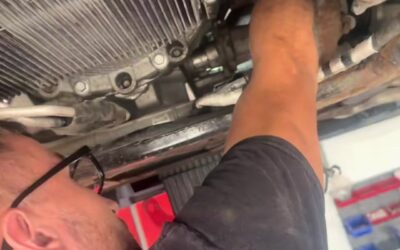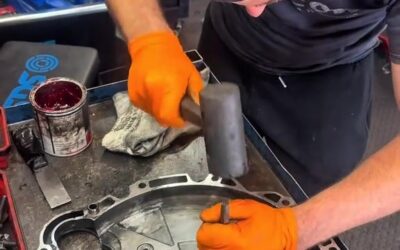
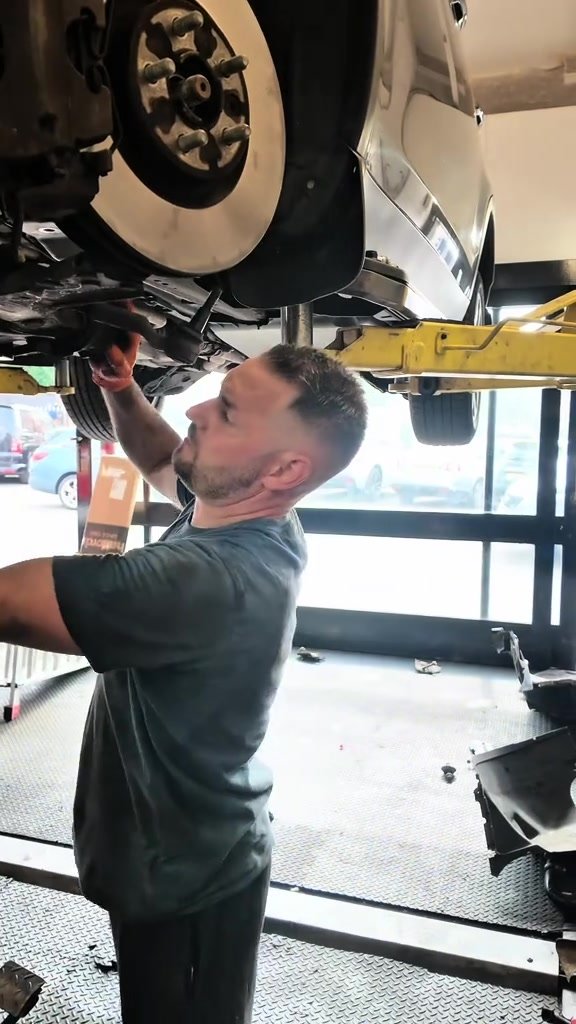
This 2017 Land Rover Discovery Sport came in for one thing: a timing chain rattle. It left with a new set of chains, a new turbo, a new thermostat housing and a new piston cooling jet solenoid. None of that was upselling. Each fault was found, checked and explained to the owner while the car was apart. This is the whole job, in the order it happened, with Dan talking you through it in three short videos.
Quick Answer
Part 1 — the timing chain:
What the Owner Told Us
The complaint was simple. The car rattled on start-up, and it still rattled once it was warm. That second detail matters. A brief rattle on a cold start can sometimes be a tensioner taking a moment to pump up with oil. A rattle that carries on when the engine is up to temperature points much more strongly at a chain that has stretched beyond what the tensioner can take up.
We confirmed the rattle, and when Dan got to the chains the slack was obvious. In his words it was possibly the worst chain slack he had seen, well beyond the manufacturer’s tolerances. The owner had done the right thing by bringing it in when the noise started rather than waiting to see if it went away.
Discovery Sport models have been offered with JLR’s own Ingenium engine family since 2015. If you want the background on why chains on these engines stretch, our guide to Ingenium 2.0 timing chain problems covers the causes in detail. This post is about what one car actually needed.
Stage 1: The Timing Chain Job
A worn chain is never just the chain. The guides, tensioners and gears wear alongside it, and putting a new chain on old guides is asking for the same noise to come back. On this car we replaced all of the chains and the idler gears as a set.
The process Dan follows in the first video is the same one we use on every job like this:
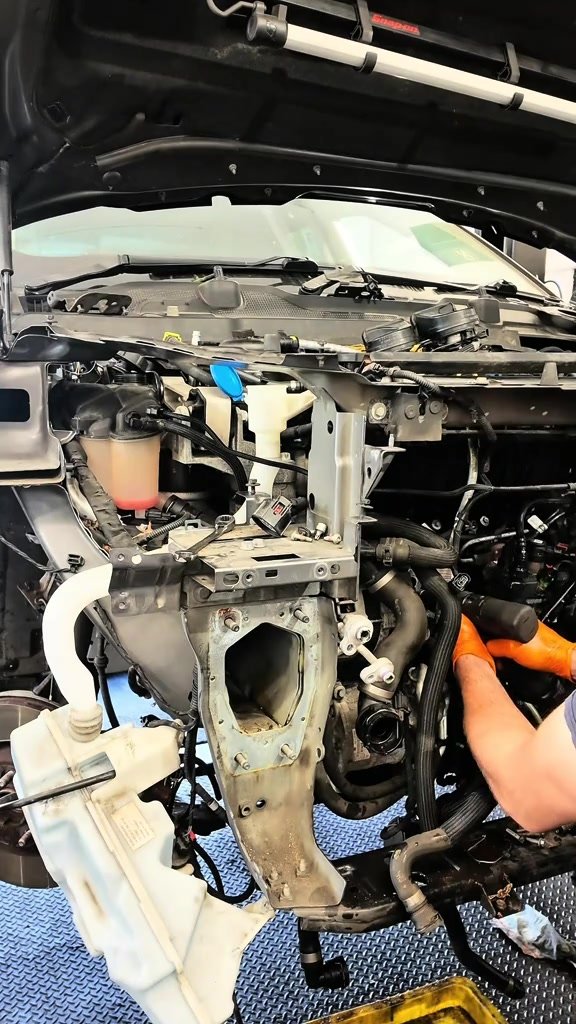
- Strip for access. With the subframe off, the front end comes apart far enough to reach the timing drive properly rather than working blind.
- Fit the new chains, guides and gears. Everything is torqued to the manufacturer’s specification.
- Time it up. The tensioner pins are removed in order — the bottom one first. For the top one, you pull down on the guide until it clicks, then release it.
- Final torque on the camshaft gear. The last stage is torquing the camshaft and variable valve timing gear to the specified angle.
Getting the timing right is the whole job. A chain that is one tooth out can run, but it will not run well, and on an interference engine a bigger error can let valves and pistons meet.

Stage 2: What We Found While It Was Apart
This is the part most owners never hear about, because a lot of garages fit the part they were asked to fit and put the car back together. With this much of the front end already stripped, we inspected everything we could now see. Two more faults turned up.
Part 2 — the thermostat housing and solenoid:
A leaking thermostat housing
The thermostat housing was leaking coolant. On its own, that is a common and fairly ordinary fault. What makes it important on this car is where the coolant was going.
A shorted piston cooling jet solenoid
Dan’s explanation in the video is straightforward. The thermostat housing sits above the piston cooling jet solenoid. When the housing leaks, coolant drips onto the solenoid below and short-circuits it. That is exactly what had happened on this car, so we replaced both the thermostat housing and the solenoid.
The solenoid matters more than its size suggests. Ingenium engines use electronically controlled piston cooling jets, which spray oil at the underside of the pistons to keep them cool. If the solenoid that controls those jets fails, the pistons can run hotter than they should. Replacing only the solenoid would have been pointless — the leak above it would have killed the new one. Fix the cause, then the casualty.
We have a separate explainer on how a thermostat housing leak takes out the piston cooling solenoid, including why it can happen without much warning.
Stage 3: The Discovery Sport Turbo Replacement
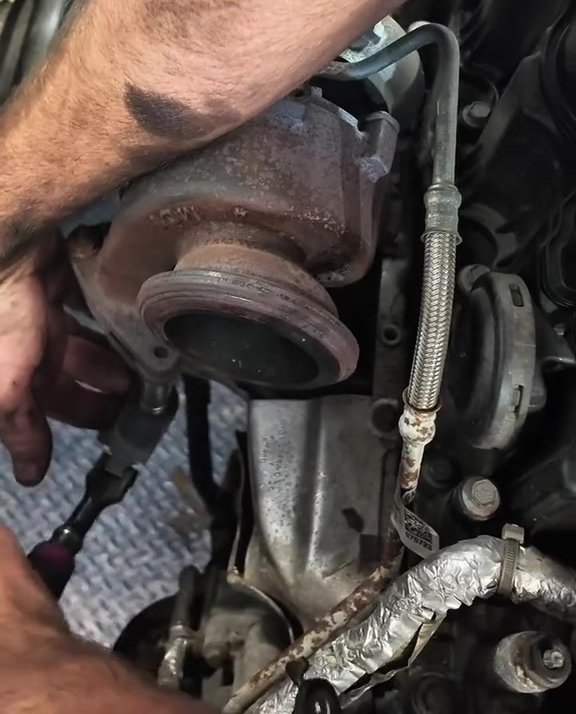
The second discovery was the turbo. When Dan checked it, the shaft had excessive end float (in-and-out movement) and up-and-down play, and there was oil on the intake side. A healthy turbo shaft spins on a very thin film of oil with almost no free movement. Once you can feel play in it by hand, the bearings are worn and the turbo is on borrowed time.
Oil on the intake side is part of the same story. As the bearings and seals wear, oil can find its way past them into the intake tract. Left alone, a turbo in that state usually gets louder, loses boost and can eventually fail outright.
Part 3 — the turbo and the finished car:
Getting the turbo out
Because the subframe was already off for the chain work, Dan dropped the exhaust completely out of the way to reach the turbo. As he points out, on a turbo-only job you don’t necessarily need to drop the exhaust from the subframe — it just makes life easier when you are already that far in. That is one of the practical gains of doing everything in one visit: the access work is paid for once.
A replaced turbo also needs the reason for the wear understood, otherwise the new one goes the same way. Our guide to Ingenium 2.0 turbo failure explains the usual root causes we look for.
Why We Did It All in One Visit
Here is the view we hold, and the reason we film jobs like this: the cheapest time to fix a fault is when the car is already apart for something else. Most guides treat timing chains, turbos and thermostat housings as separate repairs with separate symptoms. On a real car they overlap, and the labour to reach them overlaps too.
One strip-down, not three
The subframe, front end and exhaust came off once. Doing the chain now and the turbo in six months would mean paying for most of that access twice.
Faults that feed each other
A coolant leak was killing an electrical part. A worn turbo can push oil where it should not be. Leaving either would have put the new chain work at risk.
The owner decides
Nothing extra gets fitted without a conversation. We show what we found, explain why it matters, and the owner chooses.
One road test, one handover
The car went back to the customer finished, with every fault found during the job dealt with.
We have seen the same pattern before on a Jaguar E-Pace, which we wrote up in when a timing chain fault also means turbo trouble. The Discovery Sport went a step further, with the thermostat housing and solenoid on top.
Signs Your Discovery Sport Needs Looking At
Every car is different, and none of these on its own proves a particular fault. But if you own a Discovery Sport, these are the things worth booking in for rather than living with:
- A rattle on start-up that does not clear when warm. That is what brought this car in.
- Coolant going down with no obvious puddle. A slow leak onto a hot engine can evaporate before it reaches the floor.
- A whistle, whine or loss of pull under acceleration. Classic turbo warning signs.
- Oil in the intake pipework or around the turbo. Worth checking at any service.
- Any oil or engine warning messages, even ones that come and go.
It is also worth running your registration through the free GOV.UK vehicle recall checker before any big repair, so you know whether any outstanding recall work applies to your car.
How the Car Went Back
With the new chains timed up, the thermostat housing and piston cooling jet solenoid replaced and the new turbo fitted, everything went back together and the car was returned to the customer. The rattle the owner came in with was gone, and so were the two faults they did not know they had.
Frequently Asked Questions
What are the signs of a failing turbo on a Discovery Sport?
The common signs are a whistle or whine under acceleration, a loss of power, smoke, oil around the turbo or intake pipes, and warning lights. On this car the giveaway was physical: excessive end float and shaft play, with oil on the intake side.
Should the turbo be replaced at the same time as the timing chain?
Only if the turbo is actually worn. We check it while the car is apart, and if it has play or oil leaks it makes sense to replace it then, because the access work is already done. A healthy turbo stays.
What does a piston cooling jet solenoid do?
It controls oil jets that spray the underside of the pistons to keep them cool. If it fails, the pistons can run hotter than designed. On this Discovery Sport, coolant from a leaking thermostat housing above it had short-circuited it.
Is a timing chain rattle on a Discovery Sport serious?
Yes. A rattle that persists once the engine is warm usually means the chain has stretched. If it keeps going it can jump timing or break, and that causes internal engine damage. Get it checked as soon as you hear it.
Hearing a Rattle From Your Land Rover?
Whether it is a chain noise, a turbo whistle or coolant you cannot account for, the first step is a proper look. We will tell you what we find and what it means before any work goes ahead.
Book Your Discovery Sport In With Star Garage Mansfield
From diagnosis to full timing chain replacement and related engine work, we handle the whole job in-house. Message us with your registration for a quote.
Call 01623 904724 — Star Garage Mansfield
Need this looked at?
Describe the symptom and we’ll tell you whether it needs a diagnostic slot or a straight booking.
- 5.0 from 235 Google reviews
- Mon–Fri 08:30–18:00
- 2 Warsop Road, Mansfield Woodhouse