
Many drivers go into a garage visit expecting one fault and leave with a bigger picture. That is especially common on diesel engines. A vehicle may come in because of a timing chain rattle, a rough start, or a warning light, only for inspection to reveal that turbo wear is part of the story too.
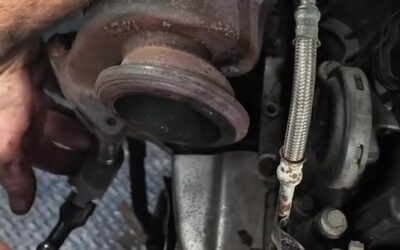
That does not mean every timing chain fault damages the turbo, or that every turbo problem means the chain is failing. They are different faults. But in real workshop conditions, they can appear on the same engine at the same time. We recently saw that again on a Jaguar E-Pace Ingenium in for an uprated timing chain kit. During the job, further inspection showed turbo wear as well. The customer had caught it just in time.
Contents
- Why two faults can show up together
- Timing chain signs to watch for
- Turbo trouble signs to watch for
- When both problems come from the same underlying issue
- Why this combination gets missed
- How both faults should be diagnosed properly
- Why repair planning matters
- The cost of fixing only half the problem
- What to do next if your diesel shows both sets of symptoms
Why two faults can show up together
On paper, timing chains and turbos do different jobs. One keeps the engine timing in step. The other helps the engine make efficient power. But engines do not live on paper. They live with heat, oil, mileage, missed service intervals, short trips, hard use, cold starts, and sometimes a long period of symptoms that have been ignored.
That is why two faults can appear together. The same engine that has been running with poor oil condition, high wear, or delayed maintenance can start showing trouble in more than one place. A timing chain system may develop slack and guide wear. A turbo may show play, oil-related wear, or performance problems. They are separate parts, but the bigger story around engine condition may connect them.
Why timing chain faults develop
- Chain stretch or excess play
- Guide wear or break-up
- Poor tension control
- Oil quality or maintenance issues
Why turbo faults develop
- Bearing or shaft wear
- Oil supply or contamination issues
- Heat and mileage
- Long-term running with underlying engine faults
In short, one fault does not automatically cause the other. But the same worn or stressed engine can create the right conditions for both to appear together.
Timing chain signs to watch for
Timing chain problems often announce themselves with sound first. Owners talk about a metallic rattle, a dry clatter, or a noise on cold start that lasts for a few seconds before settling down. That early stage is where the best decisions usually get made. Catch it then and you may avoid wider engine trouble.
Common timing chain symptoms
- Metallic rattle on start-up
- Longer cranking before the engine fires
- Rough idle or uneven running from cold
- Engine management light
- Camshaft or crankshaft correlation faults
- A change in engine sound that keeps returning
These signs matter because they can point to slack in the timing system, worn guides, or timing drift. If those problems are ignored, the repair can quickly stop being a planned chain job and become something much more serious.
Turbo trouble signs to watch for
Turbo issues often sound and feel different. Some drivers notice a whistle that was not there before. Some report a loss of power. Others see smoke, sluggish acceleration, or a car that no longer pulls properly under load. In some cases, the symptoms are subtle enough that the driver puts them down to “just a diesel feeling a bit tired”.
Common turbo fault symptoms
- Loss of power or poor boost response
- Whistling or unusual turbo noise
- Smoke under load
- Oil-related signs or consumption concerns
- Performance faults linked to boost or air flow
- Mechanical play found during inspection
Again, the point is not that every one of these means the turbo is definitely failing. The point is that these are not symptoms to ignore when they appear alongside timing chain signs. That combination needs proper attention.
| Symptom | More likely timing chain side | More likely turbo side |
|---|---|---|
| Cold start metallic rattle | Yes | No |
| Loss of boost or poor pull | Not usually the main clue | Yes |
| Whistle under load | No | Yes |
| Long crank and timing faults | Yes | Not usually |
| Smoke with performance drop | Can be part of the wider picture | Often worth checking |
When both problems come from the same underlying issue
This is where the real workshop view matters. Two faults on one vehicle do not always mean bad luck. Sometimes they reflect the same underlying pattern.
Oil condition is a good example. Timing chain systems and turbos both rely on healthy lubrication. If the oil has been neglected, contaminated, or unable to do its job properly, wear can build across more than one component. That does not prove that one failed because of the other, but it often explains why both are unhappy at the same time.
High mileage, stop-start work, repeated cold running, and heavy load use can also build the kind of wear that shows up in several areas. That is why diesel vans and hardworking family diesels sometimes arrive with more than one major concern in play.
Why this combination gets missed
Drivers often search one symptom at a time. They look up “timing chain rattle” or “turbo whistle” and then expect one neat answer. Real vehicles do not always behave that way. The chain noise gets attention because it sounds serious. The turbo symptom gets dismissed because the vehicle still drives. Or the opposite happens. The driver focuses on the power loss while the cold start rattle is brushed aside.
It also gets missed because a basic code scan can encourage false confidence. Fault codes help. They do not tell the whole story. A turbo with wear may not be fully explained by the first stored code. A timing chain with slack may not look dramatic on a cheap scan. The only safe route is to investigate the vehicle properly when the symptoms do not fit a simple one-part answer.
How both faults should be diagnosed properly
The right process starts with the symptom pattern. What noise is present? Is it cold only or all the time? Is there a power complaint? Smoke? Warning lights? Longer cranking? Then the vehicle needs proper testing and inspection.
At Star Garage Mansfield, that means using diagnostics to build the fault picture, then checking the mechanical side where the evidence points that way. On a job like this, guessing is expensive. If you change one part and ignore the second problem, you are only buying time until the vehicle comes back with another major issue.
A sensible diagnostic process can include
- Reviewing the exact noise and performance symptoms
- Checking engine fault codes and live data
- Listening to the engine from cold where possible
- Assessing timing-related behaviour
- Checking boost, air flow, and turbo-related clues
- Mechanical inspection where symptoms justify it
- Looking for oil-related or wider engine condition issues
This is how you move from “it sounds like two problems” to “this is the condition of the vehicle and this is the right repair path”.
Why repair planning matters
When both timing chain and turbo trouble are present, the repair should be planned around the full condition of the vehicle. That does not mean both faults always need dealing with at once in exactly the same way. It does mean the owner needs a clear picture before choosing the route forward.
On the Jaguar E-Pace example, the chain issue brought the vehicle into the workshop. The turbo problem was uncovered during the wider investigation. That sort of finding matters because it gives the owner the chance to deal with both issues before they become two separate major jobs months apart.
Good repair planning should answer a few simple questions:
- What fault is confirmed?
- Which problem is urgent?
- What wider wear has been found?
- What work is sensible now rather than later?
- How do we avoid repeat labour or repeat breakdown risk?
That is one reason our timing chains and belts service and diagnostics work sit so closely together. The right answer starts with proving the cause, then planning the repair properly.
The cost of fixing only half the problem
If a driver comes in focused on the chain noise and the turbo issue is missed, the repair can still leave them with a second major problem waiting in the background. If they come in focused on power loss and the chain issue is ignored, the outcome can be even worse.
That is the real cost of half-fixing a vehicle. The first bill does not solve the actual condition of the engine. The car goes out. The second fault develops. Then the owner is back facing more downtime, more labour, and a completely avoidable amount of frustration.
| Approach | What happens | Likely outcome |
|---|---|---|
| Treat one symptom only | The second fault stays hidden or ignored | Higher chance of repeat breakdown or repeat repair bill |
| Run proper diagnostics and inspection | The full condition is understood before work starts | Better repair planning and fewer surprises |
| Delay because the car still drives | Wear continues in the background | Bigger repair risk later on |
What to do next if your diesel shows both sets of symptoms
If your diesel has a start-up rattle and a power complaint, or a timing fault and a turbo whistle, do not split the problem into two separate guesses. Book proper assessment and let the workshop build the full picture. The earlier you know what is going on, the more control you keep over the repair decision.
At Star Garage Mansfield, we work from evidence. We use diagnostics, listen to what the engine is telling us, and inspect properly before recommending the next step. That is the safest route for faults like these because it stops you paying for assumptions.
If you are in Mansfield, Mansfield Woodhouse, or nearby, you can see our Mansfield Woodhouse location page for local support or go straight to our contact page to get booked in.
Need diesel engine fault checks in Mansfield?
If your vehicle is showing timing chain signs, turbo symptoms, or both, book diagnostics and inspection before the damage grows and the repair gets harder to manage.
Star Garage Mansfield, 2 Warsop Road, Mansfield Woodhouse, Mansfield, NG19 9LF · 01623 904724
Frequently asked questions
Can a timing chain fault and turbo problem happen at the same time?
Yes. They are separate faults, but on some diesel engines they can show up together, especially where wider wear or oil-related issues are present.
Does a timing chain fault cause turbo failure?
Not directly in every case. They are different systems. But the same poor engine condition or maintenance history can contribute to both problems appearing together.
What symptoms suggest both faults may be present?
A cold start rattle together with loss of power, turbo whistle, smoke, or boost-related symptoms is a strong reason to get the vehicle checked properly.
Will a basic code scan find both issues?
Not always. A scan helps, but it does not replace proper diagnosis and mechanical inspection where needed.
What is the safest next step if I suspect both problems?
Book diagnostics and inspection early. That gives you a full picture before parts are changed and helps avoid paying to fix only half the problem.
Need this looked at?
Describe the symptom and we’ll tell you whether it needs a diagnostic slot or a straight booking.
- 5.0 from 235 Google reviews
- Mon–Fri 08:30–18:00
- 2 Warsop Road, Mansfield Woodhouse