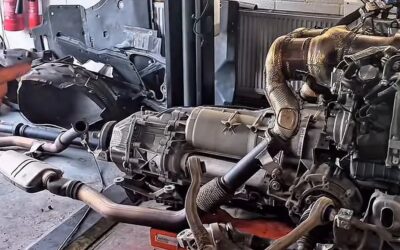
A turbo failure is one of the more expensive faults a diesel vehicle can develop — but it rarely happens without warning. In most cases, the signs of a failing turbocharger appear weeks or months before the unit stops working altogether. Catching those signs early, getting a proper diagnosis, and addressing the root cause is nearly always less costly than waiting for a full failure and dealing with the collateral engine damage that can follow.
At Star Garage Mansfield, turbocharger diagnosis and replacement is a regular part of the work we carry out on diesel vehicles. This guide covers the main symptoms of turbo failure, what causes turbos to fail, and what to expect from the diagnostic and repair process.
- What a turbocharger does
- Symptoms of turbocharger failure
- What causes turbos to fail?
- How we diagnose turbo faults
- Turbo replacement cost UK
- Repair, reconditioned, or new?
- Can a failing turbo damage the engine?
- FAQs
A turbocharger uses exhaust gas energy to spin a turbine. That turbine drives a compressor on the same shaft, which forces more air into the engine than it could draw in naturally. More air means more oxygen for combustion, which allows more fuel to be burned and more power to be produced from the same engine displacement.
Modern diesel engines rely heavily on the turbo. Without it, the power output and fuel efficiency of a turbocharged diesel would drop dramatically. The turbocharger operates in an extremely harsh environment — exhaust gas temperatures can exceed 900°C, and the turbine shaft spins at between 100,000 and 300,000 rpm. The only thing separating the spinning shaft from the bearing housing is a film of engine oil.
This is why oil supply — quality, quantity, and timing — is so critical to turbocharger longevity.
Symptoms of Turbocharger Failure
Turbo faults rarely appear all at once. They tend to develop progressively, and the symptoms often correspond to the stage of failure the turbo has reached.
Loss of power or sluggish acceleration
This is the most commonly reported turbo symptom and one of the earliest to appear. If the turbo is not generating its full boost pressure — due to a worn compressor wheel, a sticking variable geometry mechanism, or a boost leak — the engine will feel noticeably flat. The power loss is often most apparent under load, on hills, when overtaking, or when pulling away fully loaded.
Excessive smoke from the exhaust
Blue or grey smoke from the exhaust, particularly at startup or under acceleration, typically indicates that oil is getting into the turbo’s airflow path and burning in the combustion chamber. This happens when the turbo’s oil seals fail and oil from the bearing housing migrates into the compressor or turbine housing. Black smoke under boost can indicate a boost pressure problem — more fuel going in than the engine can efficiently burn.
Whining, whistling, or grinding noise
A high-pitched whine that increases with engine speed and is particularly noticeable under acceleration often points to bearing wear within the turbo. A whistling sound can indicate a boost leak — air escaping from a cracked intercooler hose, a loose clamp, or a split hose between the turbo and the intake. A grinding or rattling noise from the turbo area is a more serious sign — it can indicate that the compressor or turbine wheel is contacting the housing, which means the shaft has moved from its correct position due to bearing failure.
Engine warning light
Modern diesel engines monitor boost pressure via a map sensor. If the boost level is outside the expected range, a fault code is stored and the engine warning light comes on. Limp mode — where the engine management system restricts power to protect the engine — is also common when a significant boost fault is detected. P0299 (turbocharger underboost) and related codes are frequent findings when we scan vehicles with power loss complaints.
Increased oil consumption
If you are topping up engine oil more frequently than usual without a visible external leak, oil may be burning inside the turbo. This is a classic sign of seal failure within the turbocharger and tends to worsen progressively. Left unchecked, significant oil consumption can lead to a blocked DPF and carbon build-up in the intake system.
Oil in the intercooler or intake pipes
A small amount of oil misting through the crankcase ventilation system is normal. A significant quantity of oil pooling in the intercooler, intercooler pipes, or intake manifold is not — it indicates the turbo’s oil seal has failed and needs addressing.
What Causes Turbos to Fail?
Understanding why a turbo has failed is just as important as fitting a replacement. If the root cause is not identified and corrected, a new turbocharger will fail in the same way. The main causes of turbo failure are:
Oil starvation
If oil does not reach the turbo bearing quickly enough — or at sufficient pressure — the shaft runs dry and the bearing wears rapidly. This most commonly happens at startup after a cold soak, particularly if the oil has become thin or contaminated, or if the oil feed pipe to the turbo is partially blocked. It can also occur if the engine is switched off immediately after a hard run, while the turbo is still spinning hot, before the bearing has had time to cool properly.
Oil contamination
Oil that has degraded, become contaminated with coolant, fuel, or metallic particles, or has been left significantly past its service interval is a common cause of turbo bearing wear. Contaminated oil loses its lubricating properties and can also block the fine oil passages within the turbo bearing housing. Regular oil and filter changes at the correct interval are the single most effective way to extend turbocharger life.
Foreign object damage (FOD)
Any debris that enters the turbo — a piece of broken air filter element, a loose bolt from the intake, grit or stones drawn in through a damaged air filter — will strike and damage the compressor wheel blades at extremely high speed. The damage is usually immediate and severe. A damaged compressor or turbine wheel causes the turbo to vibrate, accelerating bearing wear and often causing the wheel to contact the housing.
Carbon build-up on the VGT mechanism
Variable geometry turbos (VGT) use adjustable vanes to vary the flow of exhaust gas across the turbine, improving response across a range of engine speeds. These vanes are operated by an actuator and are vulnerable to carbon build-up, particularly on engines with a poorly functioning EGR system or a blocked DPF. Sticking VGT vanes are a common cause of low boost, overboost, and turbo-related limp mode on modern diesel engines.
Excessive heat
Turbos exposed to sustained high exhaust gas temperatures — through prolonged heavy towing, sustained high-speed driving, or a running fault like a lean mixture or EGR system problem — can suffer heat-related damage to the seals, housings, and bearing journal.

How We Diagnose Turbo Faults
Effective turbo diagnosis starts with a thorough description of the symptoms — when the power loss occurs, what smoke colour is present, whether there are unusual noises, and what the vehicle’s service history looks like. This gives us a working hypothesis before any testing begins.
We then carry out a full diagnostic scan to check for boost-related fault codes, followed by a visual inspection of the intercooler pipes and hoses for oil contamination and boost leaks. We check the turbo for shaft play (radial and axial movement), which is a reliable indicator of bearing condition. On VGT turbos, we check actuator operation and vane movement.
Where boost pressure data is available via live diagnostics, we compare measured boost against target boost under load. A significant shortfall with no boost leak present points directly to the turbo. We also review oil condition and change interval — because a turbo that has failed due to oil-related causes needs to have that underlying issue addressed before a replacement is fitted.
Book a diagnostic inspection at our Mansfield Woodhouse garage if your vehicle is showing any of the symptoms above.
Turbo Replacement Cost UK
Turbo replacement costs depend on the vehicle, the turbo type, and whether a reconditioned or new unit is used.
| Repair Type | Typical UK Cost |
|---|---|
| Variable geometry turbo actuator replacement | Priced per vehicle |
| Reconditioned turbo supply and fit | Priced per vehicle |
| New OEM turbo supply and fit | Priced per vehicle |
| VGT carbon clean (vane decoke) | Priced per vehicle |
| Oil feed pipe replacement (as part of turbo job) | Priced per vehicle |
These figures are indicative. High-performance diesel vehicles, twin-turbo applications, or vehicles where the turbo is particularly difficult to access will sit at the top of or above these ranges. We provide a fixed quote before work starts, and we always include an oil and filter change when fitting a replacement turbo — this is essential to protect the new unit from day one.
Repair, Reconditioned, or New?
When a turbo needs replacing, there are three main options.
Reconditioned turbo
A reconditioned turbo is a unit that has been returned to a specialist, stripped, inspected, and rebuilt with new bearings, seals, and worn components. The housing and shaft are reused where they are still within specification. Reconditioned turbos are generally less expensive than new units and are a sound choice for most vehicles. Reputable suppliers offer a warranty on reconditioned units.
New OEM or equivalent
A new turbo is the appropriate choice for newer vehicles, vehicles where the failure mode means the entire unit is compromised, or where the vehicle’s value justifies the additional cost. Some turbo configurations are not available on a reconditioned basis, making new the only option.
VGT actuator or carbon clean
Where the turbo itself is mechanically sound but the VGT mechanism is sticking due to carbon build-up, a professional decoke of the vane assembly — carried out on the car using specialist equipment — can restore full variable geometry function at significantly less cost than a replacement turbo. This is worth exploring before committing to a full replacement on affected applications.
Can a Failing Turbo Damage the Engine?
Yes — in several ways. A turbo that has suffered bearing failure and allowed the shaft to move can result in the compressor or turbine wheel contacting the housing. Fragments of the damaged wheel can then be ingested into the engine or pass into the exhaust and damage the DPF or catalytic converter.
Oil consumption from a failed turbo seal creates soot and carbon deposits in the intake, intercooler, and combustion chamber. Over time this contributes to blocked EGR valves, a fouled throttle body, and DPF blockage. In severe cases, oil that has entered the combustion chamber can cause a phenomenon called hydraulic lock or runaway — particularly in older vehicles without a modern engine management system — where the engine runs uncontrolled on the oil vapour rather than metered fuel.
The message is straightforward: early diagnosis and repair is always less costly than waiting. If your diesel is running flat, smoking, or making unusual noises from the turbo area, get it checked. We are at Mansfield Woodhouse and can usually arrange a diagnostic appointment within a few days.
Diesel Turbo Problems in Mansfield?
We diagnose and repair turbocharger faults across a wide range of diesel vehicles. Proper diagnosis first — replacement only when it’s the right call.
Book a turbo check | View repair services | Speak to our team
Call 01623 904724
Star Garage Mansfield, 2 Warsop Road, Mansfield Woodhouse, NG19 9LF
Frequently Asked Questions
How do I know if my turbo is failing?
Common signs include a noticeable loss of power or flat acceleration, blue or black smoke from the exhaust (particularly at startup or under hard acceleration), an unusual whining or whistling noise from the engine bay, an engine warning light, and increased engine oil consumption. Any combination of these symptoms warrants a proper turbo check.
Can I drive with a failing turbo?
Short distances may be possible, but continued driving is not advisable. A failing turbo can cause progressive engine damage — oil consumption, DPF blockage, and in the worst case, component ingestion into the engine. The sooner it is diagnosed, the more limited the likely repair scope.
What is the most common cause of turbo failure?
Oil-related causes are the most common — either oil starvation (delayed oil supply at startup or a blocked feed pipe) or contaminated oil that has lost its lubricating properties. Regular oil and filter changes at the correct interval are the most effective way to prevent premature turbo failure.
How long does turbo replacement take?
Most turbo replacements on standard diesel vehicles are completed within a day. More complex applications — twin turbos, hard-to-access locations, or vehicles requiring significant stripping — may take longer. We will confirm the expected timeframe when we provide your quote.
Does Star Garage Mansfield fit reconditioned turbos?
Yes. For most applications we offer reconditioned turbos from reputable suppliers alongside new OEM options. We will advise which is most appropriate for your vehicle based on the failure mode, the vehicle’s age and value, and parts availability. All turbo replacements include an oil and filter change as standard.
Need this looked at?
Describe the symptom and we’ll tell you whether it needs a diagnostic slot or a straight booking.
- 5.0 from 235 Google reviews
- Mon–Fri 08:30–18:00
- 2 Warsop Road, Mansfield Woodhouse