
A failing head gasket rarely gives no warning. The problem is that the early signs are easy to miss or misread. This guide explains what to look for, why early diagnosis saves thousands of pounds, and what a confirmed head gasket failure actually means for your car.
What Does a Head Gasket Actually Do?
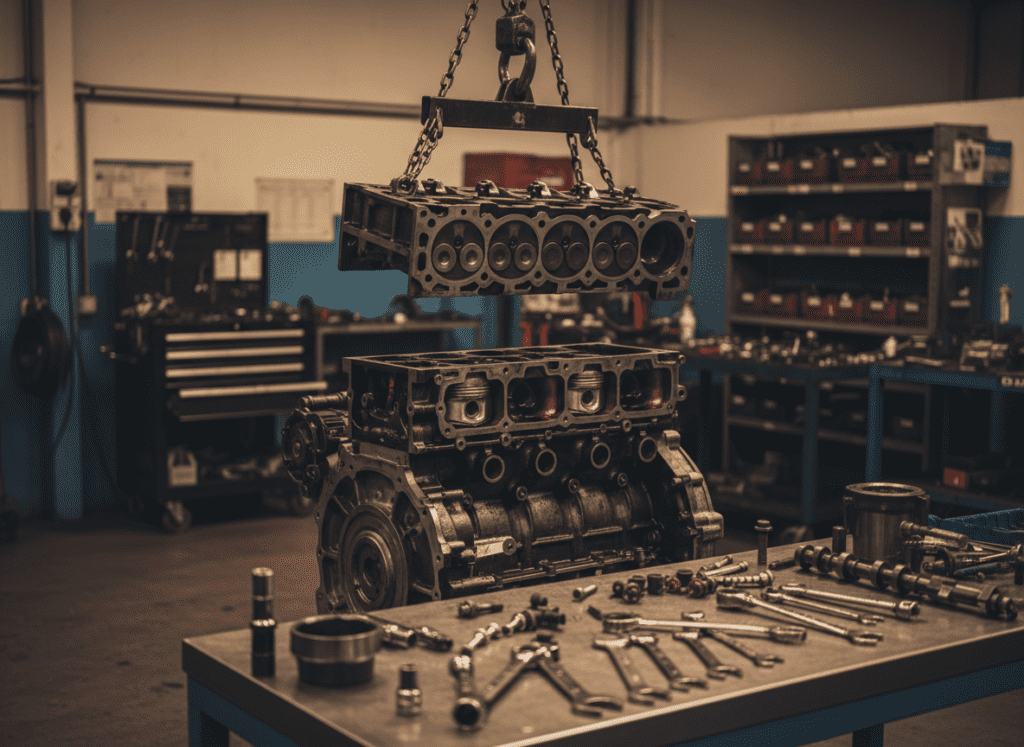
The head gasket sits between the engine block and the cylinder head. It has one job: sealing the combustion chambers from the coolant passages and oil galleries that run alongside them.
Inside the engine, combustion pressures reach thousands of PSI. The head gasket must contain that pressure while simultaneously allowing coolant and oil to flow through their respective channels — without the three systems ever mixing.
When the gasket fails, that separation breaks down. Combustion gases can escape into the coolant. Coolant can enter the cylinders. Oil and coolant can mix. Each of these produces different symptoms, which is why head gasket failure presents in several different ways.
The Warning Signs of Head Gasket Failure
1. White Smoke from the Exhaust
This is one of the most recognisable signs. When coolant enters the combustion chamber, it vaporises during combustion and exits as white or blue-white smoke from the exhaust.
The key difference: a small puff of white smoke on a cold morning is normal condensation burning off. Sustained white smoke once the engine is fully warm — particularly if it has a sweet smell — is a red flag.
The smell matters. Burning coolant has a distinct sweet, slightly chemical odour. Burning oil is acrid and harsher. If the smoke smells sweet, get the car checked quickly.
2. Coolant Loss Without Visible Leaks
If you are regularly topping up the coolant reservoir but cannot find any drips, stains, or wet spots under the car, the coolant may be going internally — into the combustion chambers or the oil system.
This is one of the more subtle early signs. The level drops. You top it up. It drops again. There is no obvious external leak. The natural assumption is a minor evaporation issue. But unexplained coolant loss always needs investigation.
3. Milky or Creamy Residue on the Oil Cap
Remove the oil filler cap and look at the underside. In a healthy engine you will see clean or slightly discoloured oil residue. If you see a creamy, mayonnaise-like substance, coolant and oil have mixed.
This is a serious finding. Oil contaminated with coolant loses its lubricating properties. Continued running can damage bearings, camshafts, and other critical engine components quickly.
Note: A tiny amount of condensation-related milkiness in very cold weather can occur in petrol engines on short journeys. But thick, consistent mayo-coloured residue is not normal and needs diagnosis.
4. Overheating — Especially Intermittent Overheating
Head gasket failure is both a cause and a consequence of overheating. In some cases, overheating (from another cause such as a thermostat or water pump failure) blows the head gasket. In others, a failing gasket allows combustion gases to enter the coolant system, creating air pockets that prevent the cooling system from working properly.
Intermittent overheating — where the temperature gauge spikes then returns to normal — is a classic sign of a compromised head gasket causing air locks in the cooling system.
5. Bubbling in the Coolant Reservoir
With the engine running (cold start is best for this test), look at the coolant reservoir cap. If you see bubbles or gurgling in the coolant, combustion gases are entering the cooling system through a failing gasket.
This is a reliable diagnostic indicator. Healthy cooling systems do not bubble. Bubbling coolant means pressurised gas is finding a way in — which means the gasket seal is compromised.
6. Loss of Power or Rough Running
If coolant enters the combustion chamber, it disrupts the air-fuel mixture and combustion process. The result can be misfires, rough idle, hesitation, or noticeable power loss — particularly on acceleration.
This symptom on its own has many potential causes. But combined with any of the above signs, it points strongly toward a head gasket issue.
7. Coolant in the Oil (Dipstick Check)
Pull the dipstick and look at the oil on it. Healthy oil is dark but fluid. Oil contaminated with coolant looks lighter, foamy, or has a frothy consistency. In severe cases it may look distinctly milky or pale brown.
If you see this, stop driving immediately and do not restart the engine until the car has been diagnosed.
What Causes Head Gaskets to Fail?
Overheating
The most common cause. When an engine overheats — from a failed thermostat, water pump, or coolant leak — the aluminium cylinder head expands at a different rate to the cast iron or aluminium block. This movement stresses the head gasket beyond its design limits. A single serious overheating event can blow the gasket.
High Mileage and Age
Head gaskets are engineered to last the life of the engine, but material fatigue does occur on very high-mileage vehicles. This is more common on older engines with original head gaskets at 150,000 miles or more.
Poor Coolant Maintenance
Old, depleted coolant becomes acidic. Acidic coolant corrodes the sealing surfaces and can attack the gasket material itself. Changing coolant on the manufacturer’s recommended schedule protects against this.
Engine Design Weaknesses
Some engines are known to have head gasket weaknesses. The Vauxhall 1.4 and 1.6 naturally aspirated petrol engines, certain Land Rover diesel units, and the original Toyota MR2 are among examples with known histories. Being aware of your vehicle’s reputation helps set expectations.
Can You Drive with a Blown Head Gasket?
In the very short term, some head gasket failures are mild enough that the car still moves. But driving on a confirmed or suspected blown head gasket accelerates damage significantly.
- Coolant entering the cylinders can cause hydrolock — where liquid in the cylinder cannot compress, bending or snapping a connecting rod
- Contaminated oil loses its lubrication properties, causing accelerated bearing wear
- Continued overheating warps the cylinder head, turning a gasket job into a much bigger repair including a head skim or head replacement
The honest advice: if you suspect a head gasket failure, stop driving. Get the car transported to a garage rather than driving it there.
Head Gasket Repair: What to Expect
| Repair Type | Notes |
|---|---|
| Head gasket replacement (cylinder head intact) | Best case — head not warped |
| Head gasket + cylinder head skim | Common when overheating has occurred |
| Head gasket + new cylinder head | Worst case — head cracked or beyond skimming |
| Diagnostic inspection | Essential first step before any repair decision |
Costs vary significantly by vehicle. Labour time for head gasket replacement ranges from 6 to 16+ hours depending on engine configuration. Some engines are straightforward; others require removing much of the top of the engine to access the head.
Is It Worth Repairing?
This is a question we get asked regularly at Star Garage Mansfield, and the honest answer depends on several factors: the age and value of the vehicle, the condition of the rest of the engine, and what the diagnostic reveals about the extent of the damage.
A car with plenty of life left in it and a straightforward head gasket repair (no head damage) is generally worth fixing. The same car with a cracked head requiring priced on inspection of work becomes a harder decision. We will always give you an honest assessment and let you make the call.
If the engine itself is otherwise sound and the repair cost is proportionate to the vehicle’s value, head gasket work is a sensible repair. If the engine has other underlying issues or the damage is severe, we will tell you that too.
How We Diagnose Head Gasket Failure
At Star Garage Mansfield, we do not guess. Head gasket diagnosis involves:
- Combustion gas test: A chemical block test that detects combustion gases in the coolant — the most reliable indicator of head gasket failure
- Cooling system pressure test: We pressurise the system and monitor for pressure drop, which reveals external leaks and internal failures
- Oil analysis: Checking for coolant contamination in the oil
- Live data monitoring: Coolant temperature sensor data and any stored fault codes via our diagnostics equipment
- Cylinder compression test: Checking for compression loss across cylinders, which can indicate a gasket breach between combustion chambers
Once we have a clear picture of the damage, we give you a detailed quote for the repair — including whether the cylinder head needs skimming, whether new head bolts are required, and what associated parts should be replaced at the same time.
For engines where the head gasket job is close to the timing belt or timing chain, we will also flag whether combining the work makes sense.
Frequently Asked Questions
How do I know if it’s the head gasket or just a thermostat?
Thermostat failure typically causes the engine to overheat without any of the other signs — no white smoke, no milky oil, no coolant loss without visible leak. Head gasket failure usually presents with multiple symptoms. A proper diagnostic test will confirm which it is before any parts are ordered.
Can a head gasket fail gradually?
Yes. A small breach can develop slowly, initially showing only as unexplained coolant loss or occasional rough running. Over time it worsens. Catching it at the early stage is the key to a less expensive repair.
Does a blown head gasket always cause white smoke?
Not always. Some failures primarily mix oil and coolant without significant combustion gas escape, so white smoke may be minimal. All the symptoms should be considered together, not any single one in isolation.
How long does a head gasket repair take?
Typically 1–3 days. The engine head must be removed, any machining work (skimming) must be done, and the engine must be reassembled carefully. We allow adequate time for the job to be done properly.
What if I’ve been driving on a blown head gasket for a while?
We will assess the full extent of the damage when we open the engine. If the oil is contaminated, we will flush and replace it alongside the gasket repair. If the cylinder head is warped or cracked, we will advise you of the additional work and cost before proceeding.
Suspect a Head Gasket Problem? Get Diagnosed First
Do not guess and do not keep driving. We will run a full combustion gas test, pressure test, and coolant analysis to confirm what’s happening — and give you an honest repair quote before any work starts.
Located in Mansfield Woodhouse, Mansfield. Serving drivers across Mansfield, Worksop, Chesterfield, and Nottingham. Open Monday–Friday, 8:30 AM to 6:00 PM. Phone: 01623 904724
Need this looked at?
Describe the symptom and we’ll tell you whether it needs a diagnostic slot or a straight booking.
- 5.0 from 235 Google reviews
- Mon–Fri 08:30–18:00
- 2 Warsop Road, Mansfield Woodhouse