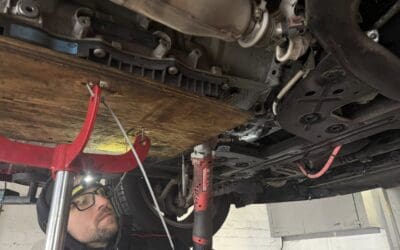
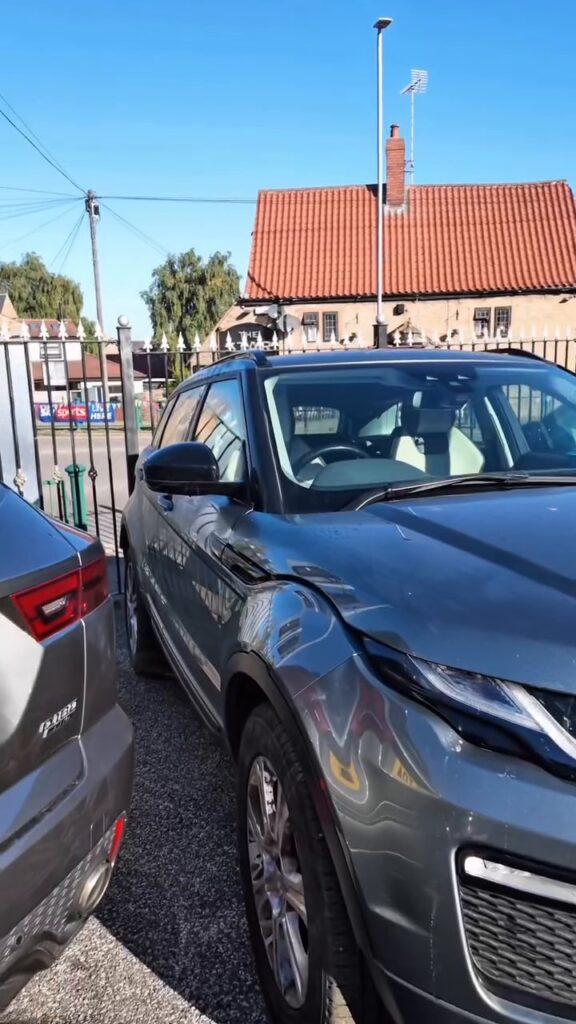
This Range Rover Evoque did not limp in with a warning light. Its engine had seized, and the car had come to a complete stop. The owner asked us to supply and fit a replacement, so we sourced a second-hand engine, swapped it in and had the Evoque back outside and running. Here is how that job went, and why a used engine was the sensible route.
Quick Answer
Watch the job:
What Came Into the Workshop
The facts of this job are simple, and we will not dress them up. The car is a Range Rover Evoque. The engine had seized and the car had stopped completely. It could not be driven in, and there was no question of a quick fix on the drive.
The customer’s request was clear: supply a replacement engine and fit it. Dan, one of our technicians, talks through the job in the video above. We sourced a second-hand engine for the car rather than a new or remanufactured unit.
When the video went up on our Facebook page, the most common question underneath it was whether the engine was new or used. The answer is used — a second-hand engine — and the rest of this post explains why that made sense and what has to happen to make it a good decision rather than a gamble.
What a Seized Engine Actually Means
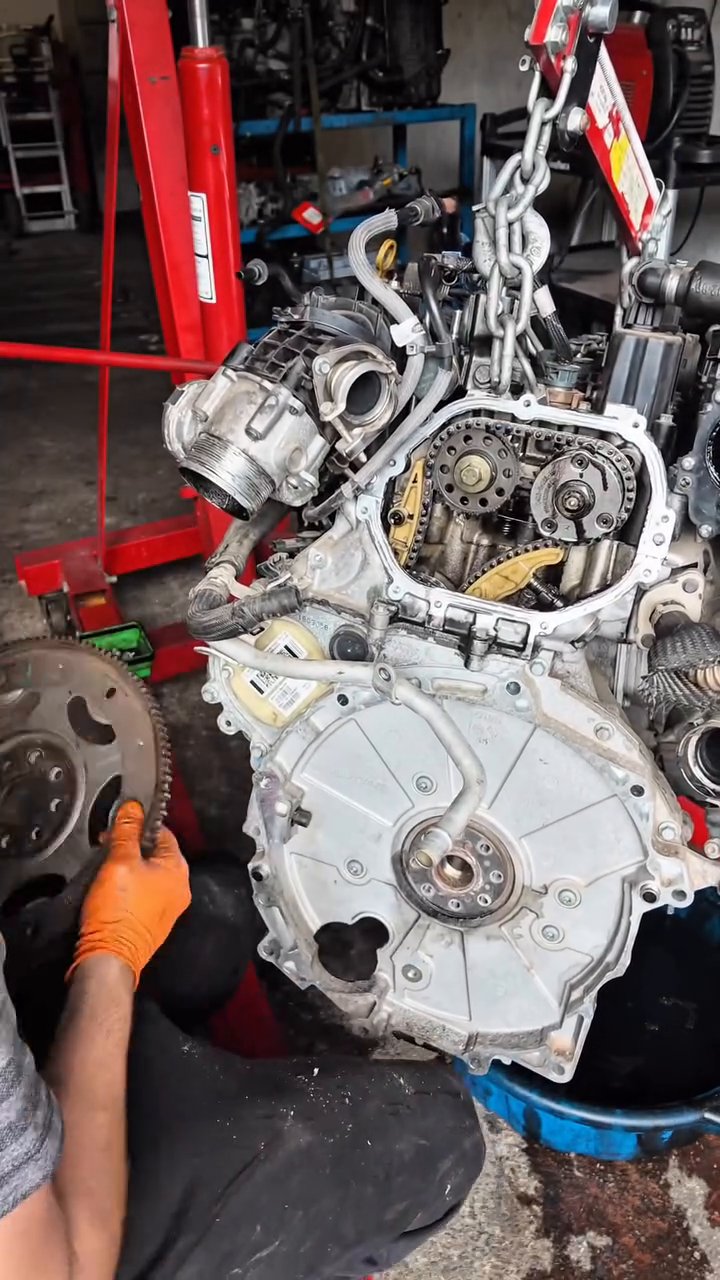
“Seized” gets used loosely, so it is worth being precise. A seized engine is one that will not turn over at all. The internal rotating parts — crankshaft, connecting rods, pistons — have locked against each other and the engine is physically stuck.
By far the most common route to that point is a lubrication failure. Oil keeps a thin film between every moving metal surface in the engine. Take that film away, through a low oil level, a leak, a blocked pick-up or a failed pump, and metal runs on metal. Friction and heat climb very quickly, bearings pick up, and eventually the parts lock.
Other routes exist. A timing failure can drive valves into pistons. Water drawn into a cylinder can lock an engine on its compression stroke. Whatever the cause, the practical outcome is the same: the engine cannot be brought back with a part or two bolted on the outside.
Why a Second-Hand Engine Was the Right Call Here
When an engine has seized there are broadly three ways forward, and each suits a different car and owner.
Rebuild the original
Strip the seized engine, assess the damage and machine or replace what is needed. Worth it when the damage is contained and the owner wants that exact engine kept. The final bill only firms up once the engine is apart.
Remanufactured unit
An engine that has been fully stripped and rebuilt to a set standard before sale. Usually the most thorough option, and usually the one with the longest wait and the biggest outlay.
Second-hand engine
A running engine removed from another vehicle. Quicker to source and simpler to plan around, but only as good as the unit you start with and the checks done before it goes in.
We cover the wider repair-or-replace decision in our guide to choosing between engine replacement and engine repair. On this Evoque, the customer had already decided what they wanted: a replacement engine, supplied and fitted. A second-hand unit delivered that without the uncertainty of rebuilding a seized engine whose internal damage was unknown.
That is the honest case for a used engine. It is not “cheap and cheerful”. It is a known, running unit swapped for a failed one, done in a single visit.
How We Replaced the Seized Engine, Step by Step
This is the sequence Dan walks through in the video. Nothing about it is exotic, but every step has to be done properly for the replacement to last.
- Remove the seized engine. The failed unit comes out of the car completely. On a transverse-engined SUV like the Evoque that means disconnecting everything that ties the engine to the car before lifting it clear.
- Inspect the replacement unit. Before anything is fitted, the second-hand engine is checked over. A used engine that goes in without inspection is a guess.
- Swap over the ancillaries. Components needed from the old engine are transferred to the replacement so the unit matches what the car expects.
- Line up and bolt it into the chassis. The replacement is lowered in, aligned and secured to its mounts.
- Reconnect pipes and electrics. Every coolant hose, fuel line, vacuum pipe, sensor and connector goes back where it belongs.
- Get it running. Our aim on this job was to have the car running for the customer by the end of the day, and the finished Evoque is shown back outside and running at the end of the video.
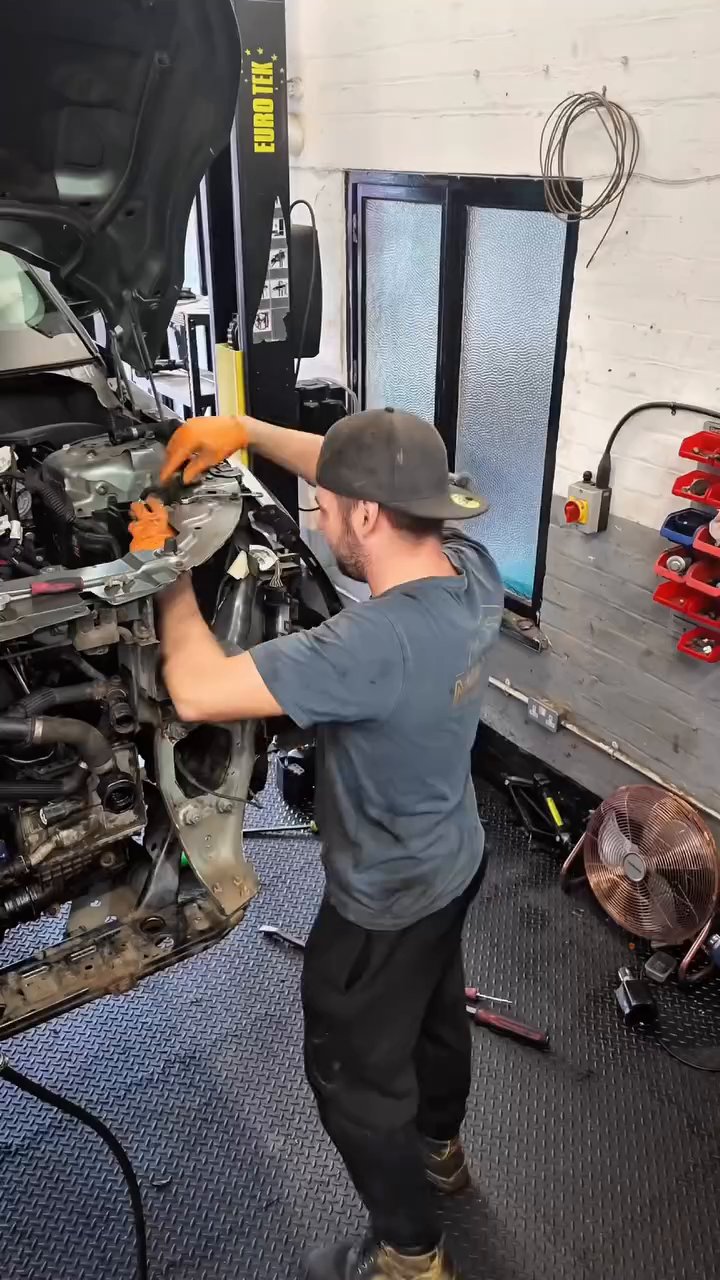
If you want to see what an engine-out job involves more generally, including why some repairs simply cannot be done with the engine in the car, our explainer on when a garage has to remove the engine goes into more detail.
What We Check on Any Second-Hand Engine Before It Goes In
This is where used-engine jobs are won or lost. The engine itself is only half the story; the checks around it decide whether the car comes back in three months.
- It is the right engine. The Evoque has been built over many years with more than one engine family. The replacement has to match the original by engine code, not just by badge or size, or sensors, mounts and software will not line up.
- Its physical condition. Obvious damage, signs of overheating, oil or coolant leaks, and the state of what can be seen from outside.
- What transfers across. Deciding which ancillaries stay with the replacement and which move over from the old engine, and making sure nothing worn is carried across without being checked.
- Fresh fluids and filters. A replacement engine should start life in the car with fresh oil, a new filter and clean coolant, not whatever it arrived with.
- Why the first engine failed. If a cooling or lubrication problem killed the original, fitting a second engine without finding it simply repeats the failure.
Range Rover Evoque Seized Engine: Paperwork After the Swap
An engine change is not only a workshop job. The replacement unit will carry a different engine number from the one on your log book, and GOV.UK lists a change of engine among the changes you must update on your V5C. It takes a few minutes and keeps the vehicle record accurate.
It is also sensible to let your insurer know the engine has been replaced. Keep the paperwork from the job with the car’s service history; it answers the obvious question from any future buyer.
Warning Signs That Come Before a Seizure
Engines rarely seize without some warning first. We cannot say what this particular Evoque showed before it stopped, but across every make these are the signs that should get a car off the road and into a workshop:
- An oil pressure warning light, even briefly — see our guide to oil pressure warning light causes.
- Knocking or rattling that gets louder with engine speed.
- An oil level that keeps dropping between checks.
- Overheating, or a temperature gauge that climbs higher than normal.
- Any new warning light accompanied by a strange noise.
Stopping early is the difference between repairing a fault and replacing an engine. If a car is making a noise it did not make last week, switching it off and having it looked at is always cheaper than driving until it stops on its own.

Frequently Asked Questions
Can a seized engine be fixed?
Sometimes, but rarely cheaply or quickly. Freeing a seized engine does not undo the damage that caused it; the bearings, crank or bores are usually affected. The realistic choices are a full strip and rebuild, or replacing the engine with a remanufactured or second-hand unit.
Is a second-hand engine a good idea?
It can be, when the engine is correctly matched to the car, inspected before fitting, started on fresh oil and filters, and the cause of the original failure is dealt with. Those checks matter more than whether the unit is new or used.
Is it worth replacing the engine in a Range Rover Evoque?
That depends on the rest of the car. If the body, gearbox, suspension and electrics are sound, replacing a failed engine keeps a good vehicle on the road. We look at the whole car before recommending it, so you are not putting a new heart into something that is failing elsewhere.
Do I need to tell the DVLA if I change my engine?
Yes. A change of engine is one of the changes you must update on your V5C log book, according to GOV.UK. Tell your insurer as well.
Engine Seized or Making Worrying Noises?
Whether your Range Rover has already stopped or is only just starting to make a noise you do not like, the first step is a proper diagnosis. We will tell you honestly whether it is a repair or a replacement.
Engine Trouble? Talk to Star Garage Mansfield
From diagnosis to engine replacement and engine swaps, we handle the whole job in-house. Message us with your registration for a quote.
Call 01623 904724 — Star Garage Mansfield
Need this looked at?
Describe the symptom and we’ll tell you whether it needs a diagnostic slot or a straight booking.
- 5.0 from 235 Google reviews
- Mon–Fri 08:30–18:00
- 2 Warsop Road, Mansfield Woodhouse