
When an engine fault turns serious, most drivers ask the same question. Is this worth repairing, or is it time to replace the engine instead? It is not a small decision. The wrong call can cost you a lot of money, a lot of time, and a lot of frustration.
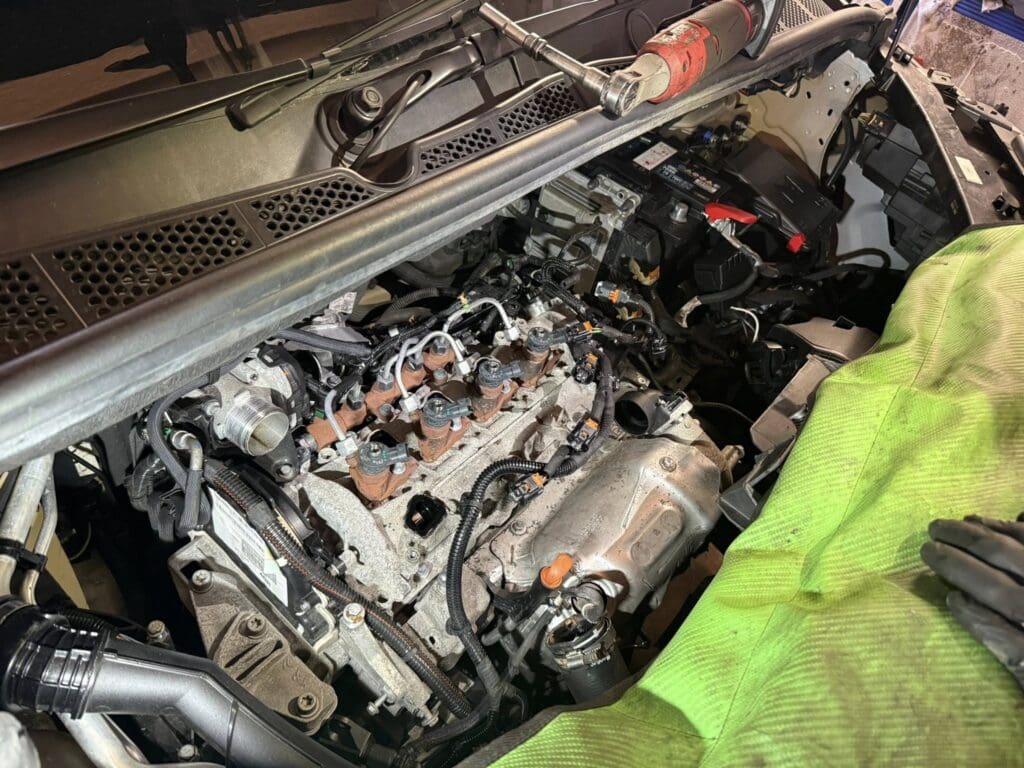
At Star Garage Mansfield, we see this decision from the workshop side. Sometimes a repair is clearly the better route. Sometimes an engine replacement makes far more sense. We recently had a day in the garage with a 2016 Ford Focus C-Max and a 2014 VW Polo both in for engine swaps. In both cases, low-mileage replacement engines were supplied, inspected, fitted with a new timing belt and full service, then put back into use. That kind of job only makes sense when the wider decision has been made properly first.
Contents
- When this question usually comes up
- What engine repair can actually mean
- What engine replacement really means
- When repair is usually the better option
- When replacement often makes more sense
- Why cost is not the only factor
- What should be checked before the decision is made
- What to ask about a replacement engine
- How to avoid the wrong decision
- What to do next if your engine is in trouble
When this question usually comes up
Drivers do not usually arrive at this point because of one small fault. The repair versus replacement question tends to appear when the engine problem is already serious enough to affect confidence in the whole vehicle.
That might be because the car has lost compression, suffered internal damage, overheated badly, snapped a belt or chain, developed severe oil pressure problems, or reached the point where the likely repair list keeps growing. Sometimes the car still runs, but the amount of work needed no longer looks sensible. In other cases, the engine has failed so badly that the focus shifts straight to whether the vehicle is worth saving at all.
This is also the point where emotions can get in the way. Many people want a simple answer immediately. Repair it. Replace it. Scrap it. The safer approach is to slow down and work from evidence. A rushed decision is often the expensive one.
Typical situations that trigger the question
- Major timing failure
- Serious overheating damage
- Low oil pressure and internal engine wear
- Repeated faults after earlier repairs
- Severe knocking, smoke, or loss of compression
- An engine that no longer justifies piecemeal repairs
Why the decision feels difficult
- The current fault may be only part of the story
- The car may still have value outside the engine issue
- Repair costs can rise once the engine is stripped
- A replacement engine sounds simple but still needs checks
- Online advice rarely matches the exact condition of your car
What engine repair can actually mean
One mistake people make is treating “engine repair” like one neat option. In reality, engine repair can mean anything from targeted work on a known failure point to extensive internal work that starts to look like a rebuild in all but name.
For one vehicle, repair may mean replacing timing components, sorting cylinder head damage, or addressing a single confirmed internal issue. For another, it may involve removing the engine, stripping major sections down, finding extra wear, and replacing a long list of parts just to return the engine to a state you can trust.
That difference matters because the decision is not really “repair or replace” in a simple abstract sense. The real question is: what specific repair is being proposed, how predictable is it, and what will the engine be like afterwards?
Engine repair can range from
- Targeted repair of one failed component
- Top-end work after timing or valve-related issues
- Oil system and internal wear investigation
- Partial engine rebuild work
- Multiple repairs where the final bill may keep rising
That is why a workshop should never frame this as a generic choice. A contained repair to solve one confirmed issue is a very different decision from an open-ended repair path with several unknowns still hanging over it.
What engine replacement really means
Engine replacement sounds more straightforward than it sometimes is. Many drivers hear “engine swap” and assume the solution is simply taking one out and dropping another in. A proper engine replacement is much more controlled than that.
The replacement engine itself needs checking. The history matters. The mileage matters. The condition matters. The sensible supporting work matters too. If a used engine is being fitted, you want to know what has been inspected and what is being renewed while access is available.
That is exactly how we approach these jobs. On the recent Ford Focus C-Max and VW Polo engine swaps we mentioned, the supplied engines were low mileage, fully inspected, and both fitted with a new timing belt and full service as part of the job. That sort of thinking helps protect the investment and reduces the chance of fitting an engine only to face obvious preventable work later.
When repair is usually the better option
Repair is often the better route when the fault is serious enough to matter but still contained enough to make the outcome predictable. In those cases, keeping the original engine can make more sense than sourcing and fitting another one.
This is especially true where the engine history is known, the rest of the vehicle is in good order, and the workshop can confirm that the problem has a clear repair path without opening the door to endless extra costs.
Repair often makes more sense when
- The fault is clearly identified and limited in scope
- The engine bottom end is healthy
- The repair cost stays sensible compared with the vehicle value
- The original engine is otherwise worth keeping
- The likely outcome after repair is reliable and predictable
A good example would be a car with a known top-end issue that can be repaired properly without the rest of the engine becoming a question mark. In that situation, replacing the whole engine may add unnecessary cost and complexity.
Repair can also make sense where the owner wants to preserve the original unit, especially if the car has been maintained well and the fault has been caught before it spread through the engine.
When replacement often makes more sense
Replacement starts to look more sensible when the original engine has reached the point where repair is no longer clean, contained, or cost-effective. That may be because the internal damage is too severe, the likely bill is too high for the uncertainty involved, or the list of affected parts keeps expanding every time the engine is assessed further.
In simple terms, the replacement option becomes stronger when repairing the original engine looks like paying a lot of money to still be left with too many risks.
Engine replacement often makes more sense when
- The engine has suffered major internal damage
- The repair estimate is high and still uncertain
- The engine would need extensive rebuild-level work
- A good low-mileage replacement engine is available
- The swap offers a better long-term outcome than rebuilding the damaged unit
This is why engine swaps can be the practical answer on some vehicles. They are not always the cheap answer, but they can be the cleaner answer. If the replacement engine is strong, inspected, and supported by sensible preparation work, it may put the car back on the road with more confidence than a repair plan full of unknowns.
Why cost is not the only factor
Most drivers start here, which is understandable. What is cheaper? The problem is that the cheapest number on day one is not always the cheapest outcome over the next year.
A lower initial repair bill can still be the wrong answer if it leaves the vehicle with major risk. Equally, a replacement engine can look expensive on paper but make much better sense if it avoids repeat downtime, repeat labour, or the possibility of the original engine needing even more work soon after.
| Factor | Repair route | Replacement route |
|---|---|---|
| Initial cost | May be lower if the fault is limited | May be higher upfront |
| Risk of hidden extra work | Can rise once the engine is opened further | Depends on donor engine quality and prep work |
| Downtime | Can be short or can extend if more damage is found | Depends on engine supply and installation plan |
| Long-term confidence | Strong if the fault is isolated and repaired properly | Strong if the replacement engine is a good unit and prepared well |
| Best fit | Contained faults with a predictable outcome | Severe damage or repair routes full of uncertainty |
So yes, cost matters. It just should not be treated as the only question. Outcome matters more.
What should be checked before the decision is made
The right starting point is evidence. Before anyone says repair or replacement with confidence, the actual condition of the vehicle needs to be understood.
At Star Garage Mansfield, that means starting with diagnostics and a proper assessment of what has failed, what the likely knock-on damage is, and whether the engine still offers a sensible repair path. This step matters because it prevents guesswork. It also stops owners from paying for major work based on assumptions that turn out to be wrong.
Key checks before choosing a route
- What fault is actually confirmed?
- How much internal damage is likely?
- Is the repair path straightforward or uncertain?
- What is the value and condition of the rest of the vehicle?
- Is a suitable replacement engine available?
- Which route gives the better long-term outcome?
Without those answers, the decision is just guesswork dressed up as confidence.
What to ask about a replacement engine
If replacement is being considered, the next step is not simply saying yes to the first engine available. The donor engine matters. The preparation matters. The supporting work matters.
A proper engine swap should answer some practical questions clearly.
Useful questions to ask
- What is the mileage on the replacement engine?
- What inspection has been carried out before fitting?
- What obvious service items should be renewed while access is good?
- What comes with the supplied engine and what does not?
- What confidence is there in the source and condition of the unit?
These questions are not about making the process awkward. They are about protecting yourself from a bad engine becoming the next problem. An engine swap should reduce uncertainty, not create a new version of it.
That is why, on recent swap jobs, we made sure the replacement units were inspected and supported with a new timing belt and full service. If those items are clearly sensible while the engine is already out or accessible, it makes little sense to skip them.
How to avoid the wrong decision
The safest way to avoid the wrong call is to stop looking for a universal rule. There is no rule that says repair is always better because it keeps the original engine. There is no rule that says replacement is always better because it sounds cleaner. The right answer comes from the condition of your vehicle.
Drivers usually make the wrong decision in one of three ways. They choose the cheapest quote without understanding the risk. They rush into a replacement without checking the engine properly. Or they delay the decision for too long and let the car lose value while the problem grows.
Common bad decisions
- Approving a major repair without knowing the likely final bill
- Buying a replacement engine on price alone
- Assuming the first diagnosis is the full picture
- Ignoring the condition of the rest of the vehicle
What a better decision looks like
- Start with proper fault finding
- Compare likely outcomes, not just first prices
- Choose the route with the clearest long-term value
- Use a workshop that is honest about both options
This is where an independent garage perspective helps. The aim should not be to steer every customer towards the biggest invoice. The aim should be to work out what genuinely makes sense for the car and the owner.
What to do next if your engine is in trouble
If you suspect your vehicle is at the point where repair versus replacement is becoming the real question, do not jump straight into parts decisions. Start with assessment. Confirm the fault. Understand the likely engine condition. Then compare the repair route against the replacement route properly.
At Star Garage Mansfield, we help drivers work through major engine decisions with proper testing and practical advice. Where an engine swap is the better route, our engine swaps service supports that. Where a repair makes more sense, we can point you towards the right next step without forcing the issue.
If you are based in Mansfield, Mansfield Woodhouse, or nearby, you can also visit our Mansfield Woodhouse location page for local support or go straight to our contact page to arrange a booking.
Need help deciding between repair and replacement?
If your engine problem has moved beyond a simple fix, book diagnostics and assessment first. We will help you understand whether repairing the original engine or fitting a replacement makes better sense for your vehicle.
Star Garage Mansfield, 2 Warsop Road, Mansfield Woodhouse, Mansfield, NG19 9LF · 01623 904724
Frequently asked questions
Is engine replacement always better than engine repair?
No. It depends on the fault, the condition of the original engine, the likely repair cost, and the quality of any replacement engine being considered.
When does an engine swap usually make more sense?
Usually when the original engine has severe internal damage, the repair route is too uncertain, or a strong replacement engine offers better long-term value.
Can repairing the original engine be the better choice?
Yes. If the fault is clearly identified, limited in scope, and likely to give a reliable outcome, repairing the original engine can be the smarter route.
What should be checked before choosing repair or replacement?
The fault itself, the amount of likely internal damage, the condition of the rest of the vehicle, and the availability and quality of any replacement engine should all be assessed first.
What is the safest first step if I am not sure?
Book diagnostics and a proper assessment. That gives you the information needed to compare both options properly rather than guessing.
Need this looked at?
Describe the symptom and we’ll tell you whether it needs a diagnostic slot or a straight booking.
- 5.0 from 235 Google reviews
- Mon–Fri 08:30–18:00
- 2 Warsop Road, Mansfield Woodhouse