
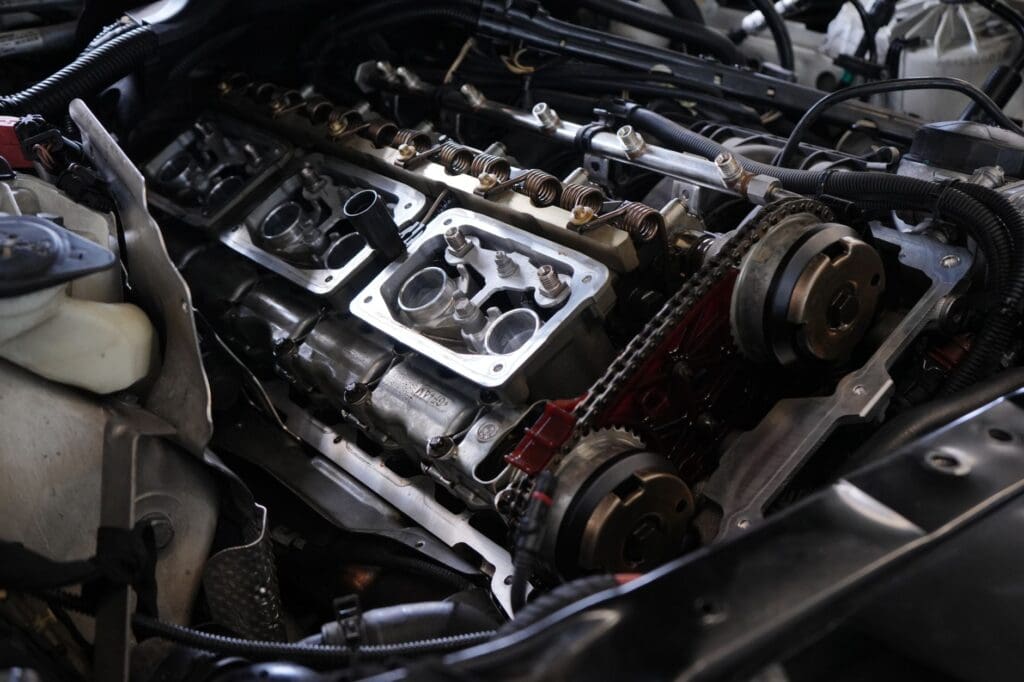
Ford Transit timing chain problems are one of the more common and costly engine issues we see at Star Garage Mansfield. The Transit uses a chain rather than a belt — it was designed to be maintenance-free. But that does not make it immune to wear. This guide explains the symptoms, the causes, and what the repair involves.
Quick Answer
Ford Transit timing chain problems typically present as a rattling noise on startup, rough running, reduced power, or engine management warning lights. The most common cause is chain stretch from oil sludge or inadequate servicing. If left, a stretched chain can slip on the sprocket or snap — causing serious engine damage. Book a diagnostic check as soon as symptoms appear.
In This Guide
What the Timing Chain Does
The timing chain synchronises the rotation of the crankshaft and camshaft so that the engine’s valves open and close at precisely the right moment relative to the pistons. Get the timing wrong by even a few degrees and the engine runs roughly. Get it significantly wrong and the valves can contact the pistons, causing catastrophic engine damage.
A chain system is driven directly by the engine and — unlike a rubber belt — does not have a fixed replacement interval. Ford designed the Transit’s chain to last the engine’s lifetime. In practice, chains do wear, and the vehicle’s service history and oil quality play a large role in how long they last.
Symptoms of a Failing Ford Transit Timing Chain
Rattling Noise on Cold Start
This is the most reported early symptom. A worn or stretched timing chain produces a distinctive rattle from the front of the engine — particularly in the first few seconds after a cold start, before oil pressure builds and lubricates the chain. The noise often fades once the engine warms, which causes some drivers to dismiss it. It should not be dismissed.
Engine Management Warning Light
A stretched chain allows the camshaft timing to drift from specification. The engine management system monitors camshaft position via sensors and will log a fault code — and in many cases illuminate the engine management light — when timing is outside the expected range.
Rough Running and Reduced Power
If timing has drifted, the engine will not run cleanly. Common symptoms include rough idle, hesitation under load, reduced acceleration, and noticeably worse fuel economy. These symptoms often develop gradually and can easily be attributed to other causes — which is why a diagnostic check is the correct first step.
Engine Cuts Out or Fails to Start
A chain that has jumped a tooth on the sprocket or snapped completely will cause an immediate breakdown. If the chain snaps at speed, there is a significant risk of piston-to-valve contact. On interference engines — which includes some Transit variants — this means bent valves and, in the worst cases, a written-off engine.
Why Ford Transit Timing Chains Fail
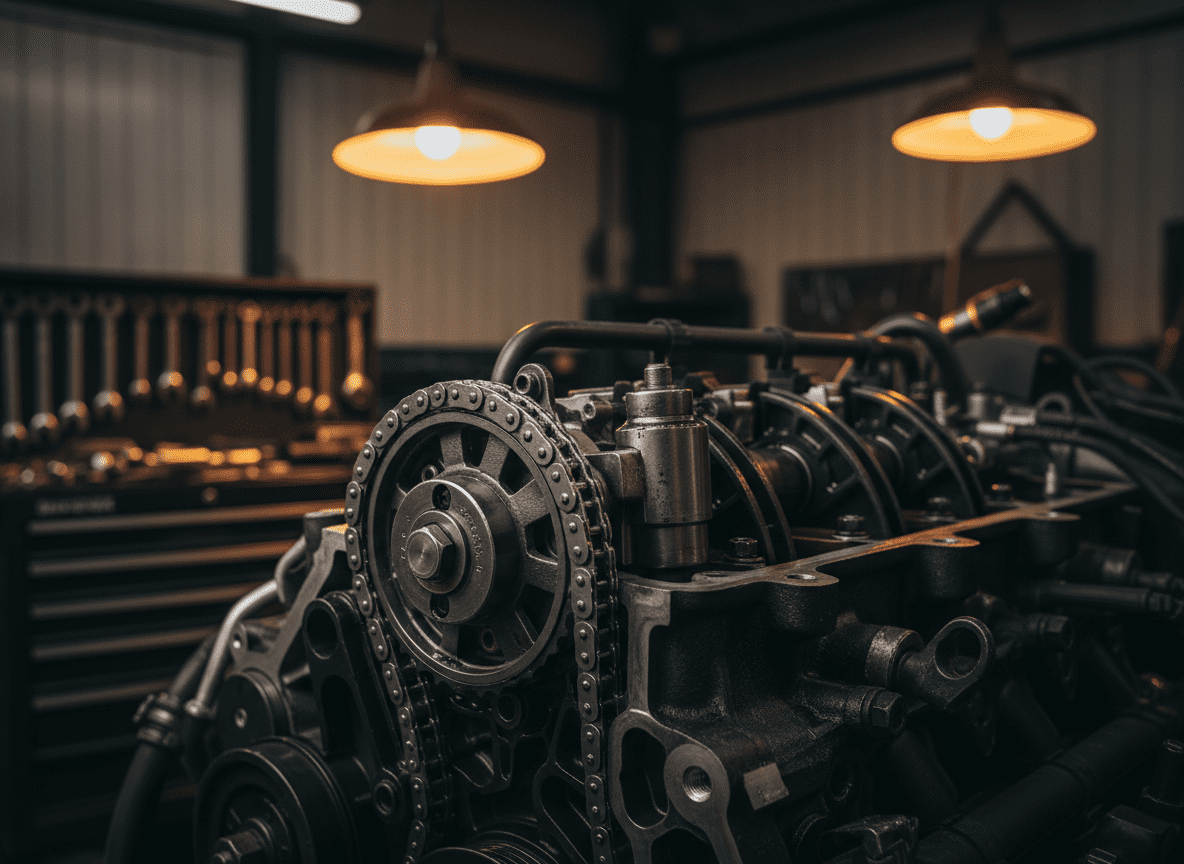
Oil Sludge and Contamination
The timing chain operates inside the engine and relies on clean oil for lubrication. When oil degrades or is left too long between changes, it begins to form sludge. Sludge clogs the chain tensioner and the oil passages that keep the chain lubricated, accelerating wear. This is the most common root cause of premature chain failure on the Transit.
Extended Service Intervals
Transits used in hard commercial service — high mileage, heavy loads, lots of short journeys — generate more combustion byproducts in the oil than the service interval assumes. Stretching the oil change interval beyond what the vehicle’s use justifies accelerates chain wear significantly.
Chain Tensioner Failure
The hydraulic chain tensioner maintains correct tension on the chain as it wears slightly over time. If the tensioner fails — due to oil pressure issues or mechanical wear — the chain goes slack, which causes the rattle and allows timing to drift. Tensioner failure is often a consequence of oil quality issues rather than a standalone failure.
Chain Stretch
All timing chains stretch slightly with age and mileage. The tensioner compensates for this up to a point. When stretch exceeds what the tensioner can correct for, timing begins to drift. Some Transit owners with well-maintained vehicles develop this issue around 150,000 to 200,000 miles. In poorly-serviced vehicles it can occur much earlier.
Fault Codes Associated With Timing Chain Faults
| Code | Description | Likely Cause |
|---|---|---|
| P0016 | Crankshaft/Camshaft Position Correlation Bank 1 Sensor A | Timing chain stretched or jumped — cam and crank out of sync |
| P0017 | Crankshaft/Camshaft Position Correlation Bank 1 Sensor B | Exhaust camshaft timing drift — often chain or tensioner related |
| P0340 | Camshaft Position Sensor A Circuit Malfunction | Sensor fault or timing drift causing signal issues |
| P0341 | Camshaft Position Sensor A Range/Performance | Timing chain skip — camshaft position outside expected range |
| P0345 | Camshaft Position Sensor A Circuit Bank 2 | Sensor or wiring fault, but can indicate timing issue |
Which Ford Transit Engines Are Most Affected
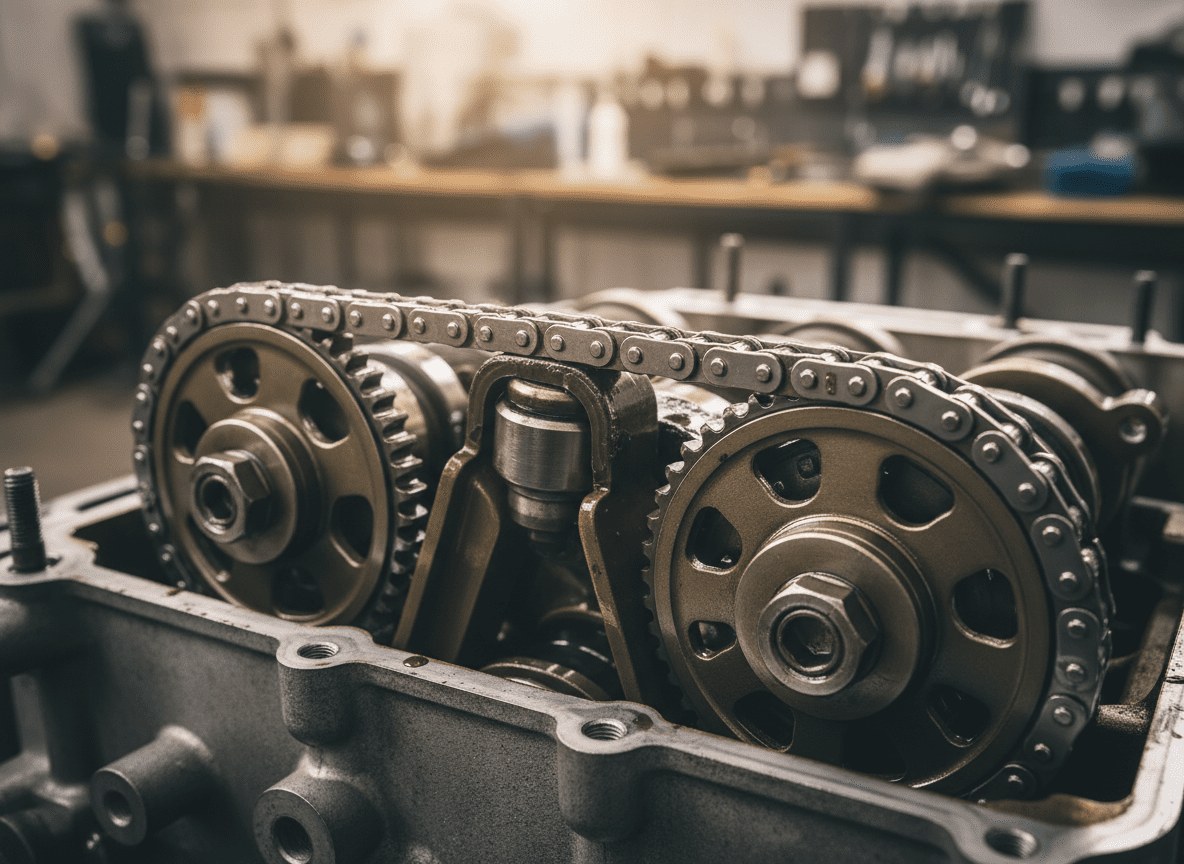
The 2.2 TDCi and 2.0 EcoBlue diesel engines fitted to Transit models from 2006 onwards are the most commonly affected by timing chain issues. The 2.2 TDCi in particular has a well-documented history of chain and tensioner wear when service intervals are not maintained correctly.
The 2.0 EcoBlue (fitted to Mk8 Transits from 2019) uses a different chain design and has been less problematic, but is not immune — particularly in high-mileage commercial use with extended oil changes.
Repair Cost and What the Job Involves
A Ford Transit timing chain replacement is a significant labour job. Accessing the chain requires removal of ancillary components at the front of the engine — the timing cover, coolant pump in some cases, and in some configurations the sump. The job typically takes 6 to 10 hours of labour time depending on the engine variant.
Parts typically replaced as part of the repair include the timing chain, chain tensioner, chain guides, and any stretch-worn sprockets. It is generally not cost-effective to replace only the chain while leaving worn guides and a marginal tensioner in place.
Ford Transit Timing Chain Problem in Mansfield?
We diagnose and repair Ford Transit timing chain faults at our Mansfield Woodhouse garage. We work on all Transit variants including 2.2 TDCi and 2.0 EcoBlue engines.
How to Prevent Timing Chain Problems
The single most effective prevention is maintaining correct engine oil quality and change intervals. Use the oil specification Ford recommend for your engine variant — using an incorrect viscosity accelerates chain wear. Change oil on time or early if the vehicle does high mileage or lots of short journeys. Avoid letting the oil level drop significantly between changes.
At Star Garage Mansfield we carry out a health check as part of every service, which includes checking for early signs of timing chain noise and assessing tensioner condition where accessible. Catching chain wear before failure is dramatically cheaper than post-failure repair.
Frequently Asked Questions
Can I drive my Ford Transit with a timing chain rattle?
We would not recommend it, especially for long journeys. A rattling chain has already begun to wear beyond normal limits. Continued use risks the chain jumping a tooth or snapping — which on interference engines can destroy the cylinder head. Book a diagnostic first.
How long does a Ford Transit timing chain last?
In a well-maintained vehicle with regular oil changes and correct specification oil, the chain should last the engine’s useful life — often 200,000 miles or more. In vehicles with extended service intervals or oil quality problems, chain issues can appear from 80,000 to 120,000 miles.
Is the Ford Transit timing chain covered under warranty?
For vehicles within Ford’s standard manufacturer warranty, timing chain faults are typically covered. Outside warranty, it is a standard repair cost. Some extended warranty policies include timing chain failure — check your policy wording.
Will a Ford Transit timing chain fault cause the engine management light to come on?
Yes, in most cases. A stretched chain causes the camshaft position to drift from specification, which is detected by the crankshaft and camshaft position sensors. This triggers fault codes — typically P0016 or P0017 — and illuminates the engine management light.
Need this looked at?
Describe the symptom and we’ll tell you whether it needs a diagnostic slot or a straight booking.
- 5.0 from 235 Google reviews
- Mon–Fri 08:30–18:00
- 2 Warsop Road, Mansfield Woodhouse