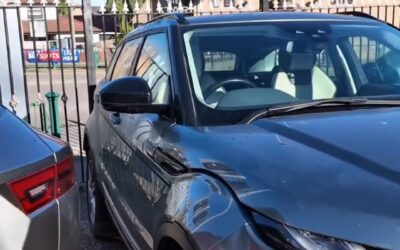
A customer brought their 2015 Skoda Fabia to us with a serious problem: the car wouldn’t start. When we scanned the diagnostic port, we discovered the camshaft positioning sensor was out of correlation—a classic sign of timing belt failure.
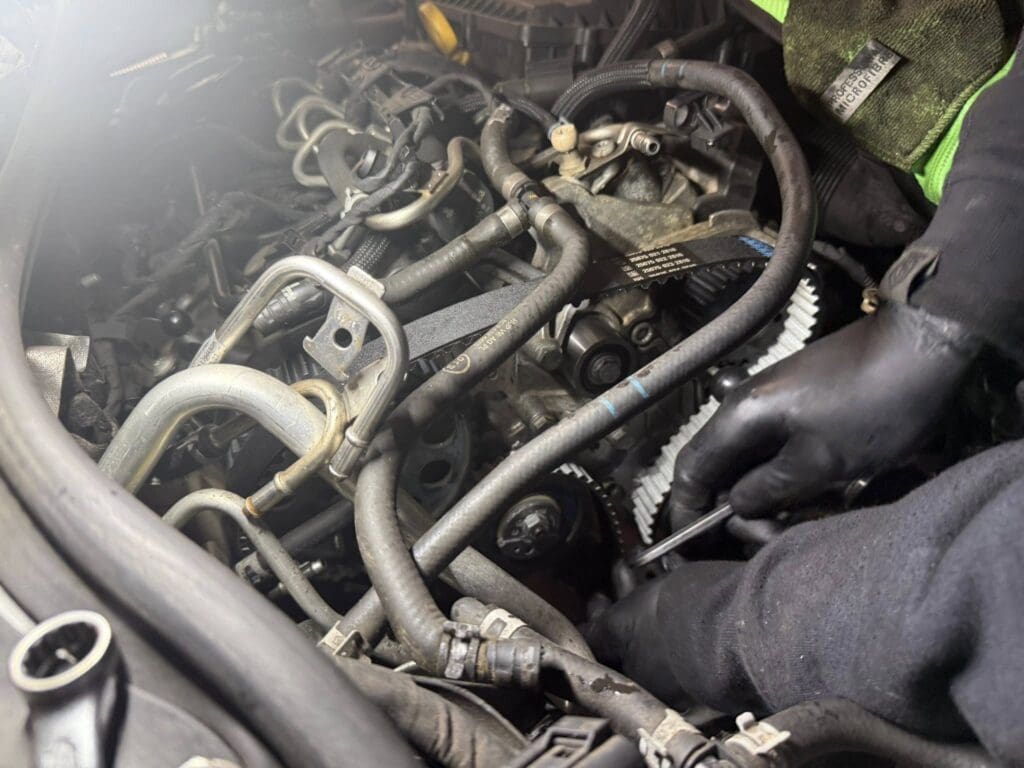
After stripping off the timing cover, we found the real culprit: the timing belt had jumped 3 teeth and was completely out of time. The belt was in terrible condition—cracked, frayed, and showing signs of severe wear.
This is a critical situation. When a timing belt jumps teeth, it throws the engine’s valve timing out of sync with the crankshaft. If left unchecked, this can cause bent valves, piston damage, and catastrophic engine failure costing priced on inspection to repair.
Fortunately, we caught it in time. We replaced the timing belt, water pump, pulley, and tensioner. The engine fired up first time, and—luckily—there was no valve damage.
Below is the complete story of what happened, why it happened, how we fixed it, and how you can prevent this from happening to your Skoda Fabia.

The Problem: Timing Belt Jumped 3 Teeth
The customer first noticed the problem when they tried to start the car and it wouldn’t turn over. The engine cranked but wouldn’t fire. This is a classic sign of timing belt failure.
Diagnostic scan revealed:
- Fault code: P0011 (Camshaft Position Timing Over-Advanced)
- Fault code: P0014 (Camshaft Position Timing Over-Retarded)
- Camshaft positioning sensor error (out of correlation)
- Engine won’t start
These fault codes are textbook timing belt problems. The camshaft timing is out of sync with the crankshaft, which prevents the engine from starting.
Customer’s symptoms:
- Car won’t start (cranks but won’t fire)
- Check engine light (P0011, P0014 codes)
- Camshaft positioning sensor error
- No obvious external damage
When we opened up the timing cover, we found the problem: the timing belt had jumped 3 teeth and was in terrible condition. The belt was cracked, frayed, and showing signs of extreme wear. It was only a matter of time before it snapped completely.
Why Skoda Fabia Timing Belts Fail
The Skoda Fabia (especially models from 2000–2015) is prone to timing belt problems. Here’s why:
1. Weak Tensioner Design
The original tensioner on many Fabia models doesn’t maintain consistent belt tension over time. As the tensioner weakens, the belt becomes slack, which can cause it to jump teeth.
2. Worn Pulleys
Over time, the crankshaft and camshaft pulleys wear out. Worn pulleys have uneven surfaces that can cause the belt to slip or jump.
3. Missed Maintenance
If the timing belt isn’t replaced at the manufacturer’s recommended interval (usually 60,000–80,000 miles), it becomes brittle and weak. This Fabia had likely exceeded its service interval.
4. Poor Quality Replacement Belts
If a timing belt was previously replaced with a cheap, low-quality belt, it won’t last as long as an OEM-spec belt. It can fail prematurely and jump teeth.
5. Age & Mileage
Rubber degrades over time. A timing belt that’s 10+ years old or has 100,000+ miles will eventually fail, regardless of maintenance.
6. Driving Conditions
Extreme heat, cold, or humidity can accelerate belt wear. Short journeys (where the engine doesn’t warm up fully) can also contribute to premature failure.
In this case, the Fabia’s timing belt had likely reached the end of its service life and wasn’t replaced on schedule. The combination of age, mileage, and weak tensioner caused it to jump teeth.

Symptoms of Skoda Fabia Timing Belt Problems
If your Skoda Fabia is showing any of these symptoms, your timing belt may be failing:
- Won’t start or difficult to start: Engine cranks but won’t fire (timing is out of sync)
- Camshaft positioning sensor error: Fault codes P0011, P0014, or P0016
- Check engine light: Related to timing or valve position
- Rough running: Engine misfires or runs poorly
- Loss of power: Reduced acceleration or sluggish performance
- Engine knock: Metallic knocking or pinging noise
- Ticking noise from engine: Belt slipping or teeth jumping
- Visible belt damage: Cracks, fraying, or missing chunks (if you can see it)
Important: If your Fabia won’t start and you see timing-related fault codes, do not attempt to start the engine repeatedly. Each attempt can cause more damage. Have it towed to a mechanic for diagnosis.
Real Case Study: 2015 Skoda Fabia Timing Belt Repair
Here’s the complete story of how we diagnosed and fixed this Skoda Fabia:
Customer’s Situation
- 2015 Skoda Fabia (approximately 95,000 miles)
- Car won’t start (cranks but won’t fire)
- No obvious external damage
- Customer unsure of last timing belt service
- Concerned about cost and whether engine is damaged
Diagnostic Process
- Initial inspection: Visual check for obvious problems (none found)
- Diagnostic scan: Revealed P0011 and P0014 fault codes (camshaft timing errors)
- Timing belt inspection: Removed timing cover to inspect belt
- Finding: Belt had jumped 3 teeth and was in terrible condition (cracked, frayed, worn)
- Customer consultation: Explained problem, repair options, and costs
What We Found
- Timing belt: Cracked, frayed, and showing severe wear. Had jumped 3 teeth out of time.
- Tensioner: Weak and not maintaining proper belt tension
- Pulleys: Crankshaft and camshaft pulleys showed minor wear but were serviceable
- Water pump: Showing signs of wear, so we replaced it as preventative measure
- Valve damage: Fortunately, NO bent valves or piston damage (lucky!)
Repair Process
- Remove timing cover and inspect all components
- Remove old timing belt (cracked and jumped teeth)
- Remove old tensioner and pulleys
- Inspect crankshaft and camshaft gears for damage (none found)
- Install new timing belt kit (OEM-spec Skoda components)
- Install new tensioner (stronger design to prevent future slipping)
- Install new pulleys (crankshaft and camshaft)
- Replace water pump (preventative maintenance)
- Verify timing using locking tools (critical step)
- Replace timing cover with new gasket
- Engine start-up (fired up first time!)
- Diagnostic scan to clear fault codes
- Road test for performance and drivability
What the Job Included
| Item | Details |
|---|---|
| Timing Belt Kit | OEM-spec Skoda belt, tensioner, pulleys |
| Water Pump | Replacement water pump (preventative) |
| Gaskets & Seals | Timing cover gasket, seals |
| Coolant | Fresh coolant for refill |
| Labour | 6–8 hours skilled labour |
| TOTAL | Complete timing belt replacement |
Timeline: 1 day (6–8 hours labour)
Outcome: Engine running smoothly, all fault codes cleared, full power restored. Customer saved thousands by catching the problem before valve damage occurred.

What Happens When Timing Belt Jumps Teeth?
When a timing belt jumps teeth, it throws the engine’s valve timing out of sync. Here’s what happens:
Stage 1: Belt Slips (Immediate)
- Camshaft timing shifts relative to crankshaft
- Valves open/close at wrong times
- Engine won’t start or runs very rough
- Fault codes appear (P0011, P0014, P0016)
Stage 2: Valve & Piston Collision Risk (Hours to Days)
If the belt has jumped significantly, the valves and pistons may collide:
- Bent valves: Valves bend when pistons hit them
- Cracked pistons: Pistons can crack or break from impact
- Cylinder head damage: Valve seats can be damaged
- Catastrophic failure: Engine may need complete rebuild
Stage 3: Complete Belt Failure (If Not Fixed)
- Belt snaps completely
- Engine stops immediately
- Severe internal damage (bent valves, damaged pistons)
- Engine rebuild or replacement required (priced on inspection)
This customer was extremely lucky. The belt had jumped 3 teeth, but the engine hadn’t been started repeatedly (which would have caused valve damage). We caught it in time, replaced the belt, and the engine fired up perfectly with no internal damage.
Skoda Fabia Timing Belt Replacement Cost
The cost of Skoda Fabia timing belt replacement depends on the model, engine size, and extent of damage:
| Repair Type | Labour Time | What’s Included |
|---|---|---|
| Timing Belt Only | 4–5 hours | Belt replacement (not recommended alone) |
| Timing Belt + Tensioner | 5–6 hours | Belt, tensioner (minimum recommended) |
| Full Timing Belt Kit | 6–7 hours | Belt, tensioner, pulleys (recommended) |
| Timing Belt Kit + Water Pump | 6–8 hours | Belt, tensioner, pulleys, water pump (best value) |
| Engine Rebuild (if valve damage) | 20+ hours | Cylinder head removal, valve replacement, rebuild |
Why replace water pump at the same time?
- Water pump is behind the timing belt
- Labour is already done (no extra time to replace it)
- Water pumps typically fail around the same mileage as timing belts
- Prevents future breakdown and additional labour costs
- Only adds priced on inspection to total cost
Our recommendation: Always replace the full timing belt kit (belt, tensioner, pulleys) + water pump. It’s the best value and prevents future problems.
How Often Should Skoda Fabia Timing Belt Be Replaced?
Skoda recommends timing belt replacement at specific intervals depending on the model and engine:
| Model & Engine | Replacement Interval | Years |
|---|---|---|
| Fabia 1.2 Petrol (2000-2007) | 60,000 miles | 2000-2007 |
| Fabia 1.4 Petrol (2000-2014) | 60,000 miles | 2000-2014 |
| Fabia 1.2 TSI (2010-2014) | 120,000 miles | 2010-2014 |
| Fabia 1.4 TDI Diesel (2000-2010) | 60,000 miles | 2000-2010 |
| Fabia 1.6 TDI Diesel (2010-2014) | 120,000 miles | 2010-2014 |
| Fabia 1.9 TDI Diesel (2000-2007) | 60,000 miles | 2000-2007 |
Important: Even if your Fabia hasn’t reached the mileage interval, replace the timing belt every 5–7 years regardless of mileage. Rubber degrades over time, even if the car isn’t driven much.
Check your service history: If you don’t know when the timing belt was last replaced, assume it’s overdue and get it inspected immediately.
Prevention: How to Avoid Timing Belt Failure
Timing belt failure is preventable with proper maintenance. Here’s how:
1. Replace on Schedule (Most Important)
Follow the manufacturer’s replacement interval (usually 60,000–120,000 miles depending on engine).
- Don’t wait until the belt fails
- Preventative replacement is priced on inspection
- Emergency repair (with valve damage) is priced on inspection
2. Replace Full Kit (Not Just Belt)
Always replace the full timing belt kit (belt, tensioner, pulleys) + water pump.
- Tensioner and pulleys wear out at the same rate as the belt
- Replacing only the belt leaves weak components in place
- Full kit prevents future failures
3. Use Quality Parts
Always use OEM-spec or high-quality aftermarket parts (Gates, Dayco, INA).
- Cheap belts fail prematurely
- Quality parts last longer and perform better
- Only is priced on inspection more
4. Check Service History
If you buy a used Skoda Fabia, check the service history to see when the timing belt was last replaced.
- If no record exists, assume it’s overdue
- Factor timing belt replacement into purchase price
- Get it replaced immediately after purchase
5. Listen for Warning Signs
Pay attention to unusual noises or symptoms:
- Ticking or squealing from engine
- Check engine light (timing-related codes)
- Rough running or loss of power
- Difficulty starting
6. Regular Servicing
Follow the manufacturer’s service schedule (usually every 12 months or 10,000 miles).
- Technicians can inspect the belt during servicing
- Catches problems early
- Prevents expensive repairs
Frequently Asked Questions About Skoda Fabia Timing Belts
How often should Skoda Fabia timing belt be replaced?
Skoda Fabia timing belt replacement intervals vary by engine:
- 1.2 & 1.4 petrol (2000-2010): 60,000 miles or 5 years
- 1.2 TSI (2010-2014): 120,000 miles or 7 years
- 1.4 TDI diesel (2000-2010): 60,000 miles or 5 years
- 1.6 TDI diesel (2010-2014): 120,000 miles or 7 years
Always check your owner’s manual for your specific model. Even if you haven’t reached the mileage, replace the belt every 5–7 years as rubber degrades over time.
What happens if Skoda Fabia timing belt breaks?
If the timing belt breaks on a Skoda Fabia:
- Engine stops immediately
- Valves and pistons collide (interference engine)
- Bent valves, cracked pistons, damaged cylinder head
- Engine rebuild required (priced on inspection)
- Car may not be worth repairing
This is why preventative replacement is so important—a service today beats a rebuild tomorrow.
How much does Skoda Fabia timing belt replacement cost?
Skoda Fabia timing belt replacement typically costs priced on inspection depending on what’s included:
- Belt + tensioner: priced on inspection
- Full kit (belt, tensioner, pulleys): priced on inspection
- Full kit + water pump: priced on inspection (recommended)
Always replace the full kit + water pump for best value and reliability.
Can I drive with timing belt warning?
No. Do not drive if you suspect timing belt problems. If your Fabia won’t start or shows timing-related fault codes (P0011, P0014, P0016), have it towed to a mechanic. Attempting to start the engine repeatedly can cause valve damage costing thousands to repair.
What’s the difference between timing belt and timing chain?
Timing belts and timing chains both synchronize the crankshaft and camshaft, but:
- Timing belt: Rubber belt that requires replacement every 60,000–120,000 miles
- Timing chain: Metal chain that typically lasts the life of the engine (but can still fail)
Most Skoda Fabia models (2000-2014) use timing belts, which require regular replacement. Some newer models use timing chains.
Why did my Skoda Fabia timing belt jump?
Timing belts jump teeth due to:
- Weak tensioner: Doesn’t maintain proper belt tension
- Worn pulleys: Uneven surfaces cause belt to slip
- Old belt: Rubber becomes brittle and loses grip
- Missed maintenance: Belt exceeded service interval
- Poor quality parts: Cheap belts fail prematurely
In this case, the belt was overdue for replacement and the tensioner had weakened, allowing it to jump 3 teeth.
Is valve damage covered by warranty?
No. Timing belt replacement is considered routine maintenance, not a warranty repair. If the belt fails due to neglected maintenance, any resulting valve damage is the owner’s responsibility. This is why following the service schedule is so important.
How do I know if my timing belt is worn?
Signs of a worn timing belt include:
- Visible cracks or fraying: If you can see the belt, look for cracks or missing chunks
- Glazed surface: Shiny, slippery appearance (belt is losing grip)
- Ticking or squealing noise: Belt slipping on pulleys
- Age: If the belt is 5+ years old, it should be replaced regardless of appearance
- Mileage: If you’ve reached the service interval (60,000–120,000 miles), replace it
If you’re unsure, have a mechanic inspect it. Better safe than sorry.
Can I replace just the timing belt without the tensioner?
Not recommended. While you can technically replace just the belt, it’s false economy:
- Tensioner wears at the same rate as the belt
- Weak tensioner causes the new belt to slip or jump
- Labour is already done (no extra cost to replace tensioner)
- You’ll likely need to replace the belt again in 2–3 years
Always replace the full kit (belt, tensioner, pulleys) for reliability and value.
Which Skoda Models Have Timing Belt Problems?
Timing belt problems aren’t unique to the Fabia—they affect many Skoda models:
| Skoda Model | Years | Engines | Risk Level |
|---|---|---|---|
| Fabia | 2000-2014 | 1.2, 1.4 petrol; 1.4, 1.6, 1.9 diesel | HIGH |
| Octavia | 1996-2010 | 1.4, 1.6, 1.8 petrol; 1.9 diesel | HIGH |
| Roomster | 2006-2010 | 1.2, 1.4 petrol; 1.9 diesel | HIGH |
| Superb | 2001-2008 | 1.8, 2.0 petrol; 1.9 diesel | HIGH |
| Citigo | 2011+ | 1.0 petrol | MEDIUM |
If you own any of these Skoda models, check your service history and ensure the timing belt has been replaced on schedule.
Related Timing Belt & Engine Repairs
If you’re dealing with Skoda Fabia issues, you might also find these guides helpful:
- Timing Chain Problems: Symptoms & Prevention
- Engine Sludge & Oil Pressure Problems
- Car Diagnostics Service
- Timing Belt & Chain Services
Need Help with Your Skoda Fabia?
If your Skoda Fabia won’t start, shows timing-related fault codes, or you’re concerned about timing belt health, don’t wait. Early diagnosis saves a great deal in engine repair costs.
At Star Garage Mansfield, we’ve repaired countless Skoda Fabia timing belt failures. We know exactly what to look for, how to fix it properly, and how to prevent it from happening again. We use OEM-spec Skoda parts and provide a 12-month warranty on all repairs.
Next Steps:
- View our timing belt services
- Book a diagnostic inspection
- Call 01623 904724 to book an inspection
- Contact us online
Book Your Free Skoda Fabia Inspection Today
If your Skoda Fabia won’t start, is making unusual noises, or you’re concerned about timing belt health, book an inspection today. We’ll diagnose the problem, explain your options, and provide an honest quote with no obligation.
Call 01623 904724
Star Garage Mansfield, NG19 9LF
Monday–Friday: 8:00 AM–5:30 PM | Saturday: 8:00 AM–1:00 PM | Sunday: Closed
Or book online: Request a free Skoda Fabia inspection
Don’t wait until it’s too late. Early diagnosis saves thousands in repair costs and prevents catastrophic engine failure.
Need this looked at?
Describe the symptom and we’ll tell you whether it needs a diagnostic slot or a straight booking.
- 5.0 from 235 Google reviews
- Mon–Fri 08:30–18:00
- 2 Warsop Road, Mansfield Woodhouse