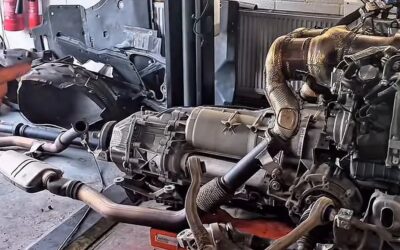
Customer Complaint and Recovery to Our Workshop
This case began with a call from a Vauxhall Mokka owner in Alfreton whose 1.6 CDTi had suddenly developed a loud rattle before cutting out on their driveway. They suspected a timing chain issue, as they had heard these engines can suffer from chain problems. The car would no longer start, and they didn’t want to risk cranking it again.
We arranged recovery to our workshop in Mansfield. When the car arrived, it had no drive, no oil pressure on the dash during cranking and a worrying metallic sound when rotated by hand. The owner asked the right question from the start: “Do I try to keep cranking it, or is that going to make things worse?”
They made the correct choice by stopping immediately. Continuing to crank these engines when a chain has failed can turn a repairable situation into a destroyed engine.
Initial Checks and Why We Stopped Cranking the Engine
When a 1.6 CDTi comes in with a rattle followed by a stall, the timing chain is often the first suspect. But these engines also have a second chain that many owners don’t know about: the oil pump chain. If this snaps, the oil pump stops instantly. Without oil pressure, serious damage can happen in seconds.
Before touching anything, we carried out the usual non-invasive checks:
- Oil level and condition.
- Manual rotation of the engine to feel for locking or uneven resistance.
- Visual inspection of the chain area through the top cover.
- Cranking by hand only, with the starter motor disconnected.
We stopped immediately after feeling a solid obstruction while turning the engine with a breaker bar. That resistance is a strong sign the chain system is jammed. Forcing it further can bend valves, crack pistons or damage the crankshaft.
This step-by-step approach protects the engine and stops avoidable damage. It also tells us whether the failure is likely repairable or heading towards a replacement engine.
Stripping the 1.6 CDTi: Finding the Snapped Oil Pump Chain
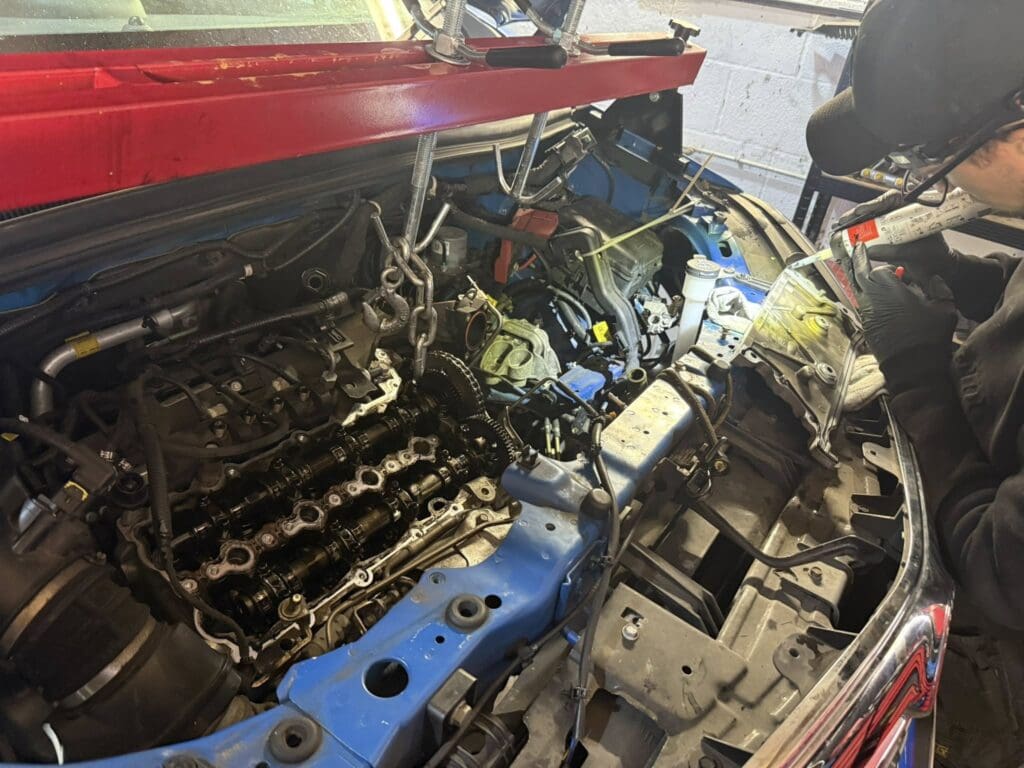
Once the auxiliary components were removed and the timing cover was off, the problem became obvious. The oil pump chain had snapped cleanly. The broken section had wrapped itself around the lower part of the timing chain, wedging itself between the sprockets.
This engine uses two chains:
- The main timing chain, which controls the camshafts and keeps the engine in sync.
- The oil pump chain, which drives the oil pump from the crankshaft.
The timing chain is more widely known, but the oil pump chain is just as important because the engine cannot run without it. When it breaks, oil pressure is lost instantly.
A full explanation of how the two chains differ is available in our oil pump chain vs timing chain guide.
How the Oil Pump Chain Jammed the Timing Chain
When the oil pump chain snapped, one section was pulled into the rotation of the lower sprocket. This jammed the timing chain, which is why the engine locked when the owner attempted the first restart.
The key details were:
- The oil pump chain had snapped at a weak link.
- The loose section got dragged into the timing chain path.
- The timing chain jumped slightly but had not broken.
- The crankshaft stopped abruptly, preventing further internal damage.
Had the owner kept trying to start the car, the timing chain could have jumped further, causing valve-to-piston contact. That would have meant a damaged cylinder head or even a full engine replacement.
Checking for Engine Damage Before Spending Money
Whenever a diesel suffers a chain failure or sudden engine stop, it’s essential to confirm whether the engine is still healthy before buying parts. There is no point fitting a new timing kit if the engine has already suffered fatal internal damage.
We carried out the following checks:
- Compression test once the chain was removed and valves were known to be closed correctly.
- Piston height check to confirm the crankshaft hadn’t twisted or bent a rod.
- Camshaft inspection to check for cracks or scoring.
- Valve clearance check to ensure none were bent.
The results were excellent. Compression was even across all cylinders, no valves were bent and the pistons sat at correct heights. This confirmed the engine could be saved.
Situations like this are the best-case scenario for a chain failure, and the reason stopping early made all the difference.
Replacing the Timing Chain, Oil Pump Chain and Tensioners
Once we confirmed the engine was structurally sound, we installed a complete timing kit and new oil pump chain. These engines benefit from fitting both at the same time because wear on one chain influences the other.
The repair included:
- New primary timing chain.
- New oil pump chain.
- New chain guides.
- New tensioners.
- Fresh crank bolt and sprocket hardware.
- Full oil and filter change.
- Reseal of the timing cover.
This brought the timing system back to factory condition. Because chain wear on these engines is often linked to oil quality, the owner agreed to reduce their service intervals in future to protect both chains. More details on chain wear can be found on our timing chain replacement page.
Clutch Replacement While the Gearbox Was Off
The owner also reported a high clutch bite point and occasional slipping in higher gears. Because the gearbox had to come off during the repair, this was the perfect time to fit a new clutch.
Replacing the clutch at this stage saved them a large amount of labour. Doing it later would have meant repeating much of the strip-down work.
We fitted a complete clutch kit and inspected the dual-mass flywheel for wear. The flywheel was still within tolerance, so only the clutch itself needed replacing. More information about this service is available on our clutch replacement page.
Results, Road Test and Customer Outcome
With the new timing kit and clutch fitted, the engine started cleanly and built oil pressure immediately. This is a key sign that the oil pump chain and tensioner system were installed correctly.
We carried out several tests:
- Cold start test for chain noise.
- Warm running inspection.
- Live data checks for camshaft correlation.
- Road test at different speeds and loads.
- Final inspection for leaks and correct tension.
The Mokka drove smoothly, pulled strongly and had no warning lights. The owner was relieved that the damage had been caught early and that the engine had not been ruined.
What to Do If Your 1.6 CDTi Makes a Sudden Rattle
These engines usually give at least a small warning before chain failure. But sometimes the symptoms come on quickly. Acting fast can be the difference between a repair and a replacement engine.
Common symptoms before failure include:
- Rattle on cold start.
- Louder tapping noise when idling.
- Oil light flickering on first start of the day.
- Loss of power or uneven running.
- Metallic noise during acceleration.
If your engine suddenly makes a loud, unfamiliar noise, stop immediately. The main reasons stopping early saved this engine were:
- The oil pump stopped, so running the engine would have destroyed bearings within seconds.
- The snapped chain was jammed in the timing system. More cranking would have bent valves.
- The engine locked before any cylinders collided with the valves.
- Early recovery allowed us to diagnose the issue without added damage.
FAQ
Is oil pump chain failure common on the 1.6 CDTi?
It’s not as common as timing chain wear, but it does happen. Poor servicing, thick oil and tensioner wear increase the risk.
Will my engine be ruined if the oil pump chain snaps?
Not always. If the driver stops immediately, there is a good chance the engine can be saved, as in this case.
Can both chains be replaced at the same time?
Yes. In fact, it’s often recommended because labour overlaps and both chains affect each other’s wear.
Is it worth replacing the clutch during major chain work?
If the gearbox is already off, fitting a new clutch can save a lot of labour later.
Book a Chain Inspection or Repair
If your Vauxhall Mokka, Astra, Insignia or any other 1.6 CDTi diesel develops a sudden rattle or cuts out unexpectedly, don’t ignore it. Call 01623 904724 or book an inspection online. Stopping early can save your engine, just as it did for this customer.
Need this looked at?
Describe the symptom and we’ll tell you whether it needs a diagnostic slot or a straight booking.
- 5.0 from 235 Google reviews
- Mon–Fri 08:30–18:00
- 2 Warsop Road, Mansfield Woodhouse