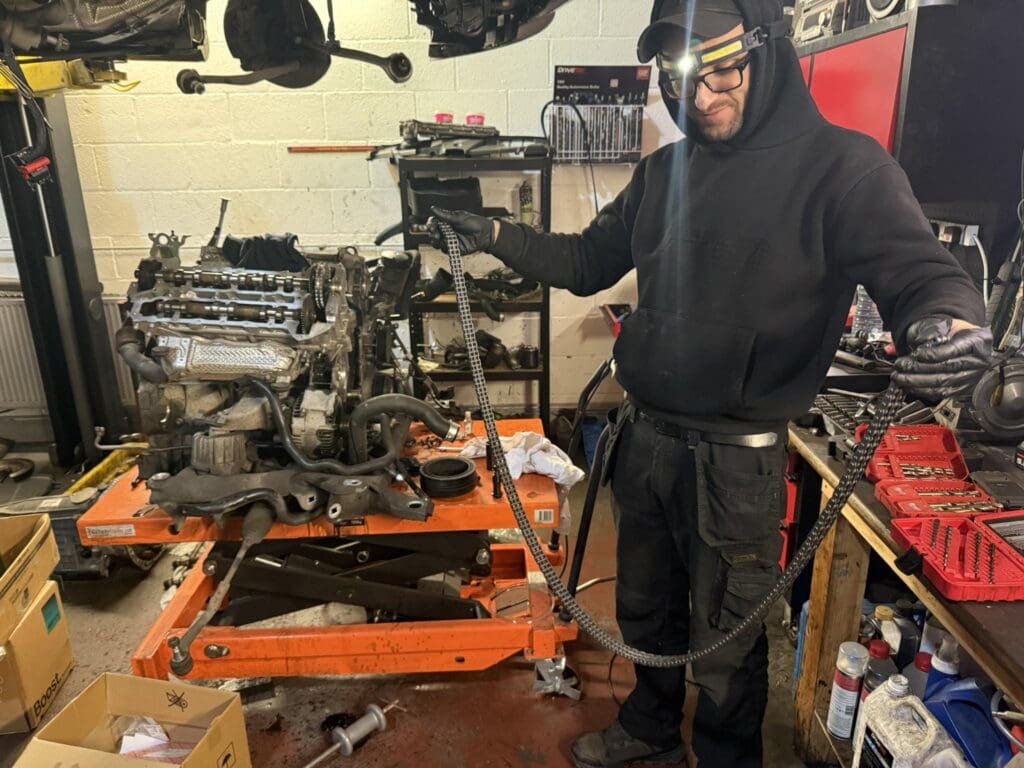
What Is a Timing Chain on a 3.0 Mercedes CRD?
The 3.0 CRD diesel engine used in many Mercedes models relies on a timing chain to keep the crankshaft and camshafts in sync. This includes popular cars such as the E-Class, C-Class, ML, GL and Sprinter. The chain works inside the engine, lubricated by oil, and plays a major role in how smoothly and efficiently the engine runs.
Unlike a timing belt, which needs replacement at set intervals, a chain is designed to last much longer. But the idea that a timing chain lasts forever is misleading. These engines use a long and complex chain layout, and the length of the system makes it more sensitive to wear, oil quality and driving habits.
Many drivers only hear about timing chains when they start to rattle or cause fault codes. Others find information online that ranges from helpful to confusing. This guide explains the design of the 3.0 CRD chain setup and what real-world owners should know.
Does a Mercedes Use a Timing Belt or a Timing Chain?
Almost every engine Mercedes-Benz designs itself drives its camshafts with a timing chain rather than a rubber cambelt, and the 3.0 V6 CRD is one of them. That means there is no scheduled belt change to plan for. The exceptions are models fitted with engines Mercedes did not design.
In practice this matters in three ways:
- There is no fixed replacement interval. A chain is designed to last the life of the engine, so nothing appears in the service schedule to remind you about it. Wear shows up as a noise or a fault code instead.
- Oil is the service item, not the chain. The chain, guides and tensioner are lubricated by engine oil, so oil quality and change intervals are what actually decide how long the system lasts.
- Renault-engined models are the exception. Vans and small cars built on Renault platforms — the Citan is the obvious one — use Renault engines, and those do run a rubber belt with a real replacement interval.
If you are not certain which your car has, the engine code settles it. The 3.0 V6 diesel covered by this guide is chain-driven, and we can confirm the engine code from your V5C or VIN plate in a couple of minutes when you book a timing chain inspection.
Why the Timing Chain Is So Long on These Engines
The Mercedes 3.0 V6 diesel uses a layout where the chain must travel a long distance from the crankshaft up to both cylinder heads. Instead of a short, simple run, the chain routes across several guides and tensioners. This is partly due to packaging and the shape of the V6 block.
The advantages of this design include smooth operation and strong performance. But the length of the system has some downsides:
- More chain to stretch over time.
- More guides and tensioners that can wear.
- More load placed on the tensioning system during cold starts.
- Greater sensitivity to oil condition and servicing habits.
A long timing chain is not a problem by itself. The issue appears when servicing is skipped or low-quality oil is used. Drivers who do mainly short trips or heavy stop-start journeys also tend to see wear sooner than those who cover steady motorway miles.
If you want to learn more about how timing chains wear in general, our main timing chain replacement guide gives a clear overview.
Common Wear Points and Weak Spots
On the 3.0 CRD, several areas can show wear as mileage builds. Some parts are more sensitive than others, especially when oil changes are stretched too far.
Timing Chain Stretch
Over time, the chain can lengthen slightly. This causes the timing between crank and cams to drift. The ECU often detects this before the driver hears anything obvious.
Guide Rail Wear
The chain runs across plastic or composite guide rails. When these wear, the chain loses support and can start tapping against metal. Heat and poor oil flow speed up this process.
Tensioner Fatigue
The tensioner keeps the chain tight. If the oil quality is poor or changes are missed, the tensioner can struggle to do its job. This leads to slack on cold starts and an early morning rattle.
Top End Sensitivity
The top of the V6 engine relies on fast oil pressure on startup. If the oil is old or too thick, the upper timing components take longer to receive lubrication, which increases wear.
A real example of this can be seen in our recent E350 repair, where chain wear was discovered during an engine-out oil leak job. You can read the full story in our real Mercedes timing chain case study.
Typical Symptoms of Timing Chain Wear
Most drivers first notice a sound or a slight change in how the car starts. Others may see a warning light or fault code long before they hear a rattle.
Early warning signs include:
- Rattle or tapping noise on cold start.
- Longer crank time before the engine fires.
- Engine management light relating to timing or cam correlation.
- Uneven idle, especially when warm.
- Loss of low-end pull compared with how the car used to feel.
Some drivers ignore the early signs because the noise fades once the car warms up. But this often means the tensioner is struggling on cold starts, which is one of the first stages of timing chain wear.
Servicing Habits That Help Your Timing Chain Last Longer
The timing chain on a Mercedes 3.0 CRD relies on clean oil and strong oil pressure. When servicing is skipped, the chain and guides run in oil that no longer offers the protection they need.
The following habits reduce chain wear noticeably:
- Regular oil changes using the correct grade.
- Shorter service intervals for cars doing lots of short trips.
- Allowing the engine to idle for a few seconds before driving off.
- Using quality filters to maintain clean oil flow.
On the other hand, bad servicing habits shorten chain life. These include:
- Leaving oil changes far beyond Mercedes schedules.
- Using cheap oil that breaks down too fast.
- Consistent short journeys where the oil never warms fully.
- Ignoring early timing noises or fault codes.
When to Book a Timing Chain Inspection in Mansfield
If your 3.0 CRD has covered high mileage or is showing early symptoms, it makes sense to have it inspected. You don’t need to wait for a loud rattle. In many cases, we diagnose chain wear before any major noise develops.
Typical situations where an inspection helps include:
- Cold start rattle that lasts more than one or two seconds.
- Any timing or camshaft correlation fault code.
- Oil servicing gaps or unknown service history.
- A previous repair where the timing chain wasn’t checked.
- Buying a used E-Class, C-Class or ML with the 3.0 diesel.
Some owners book a chain assessment at the same time as other big repairs. If the engine is already out for an oil cooler leak, turbo leak or vacuum pump issue, checking the chain is a smart move because the labour overlaps.
What We Check During a Timing Chain Assessment
A timing chain assessment at Star Garage Mansfield is a clear step-by-step process. It’s designed to give you accurate information, not guesswork.
We typically check the following:
- Live data readings for camshaft correlation.
- Chain tension and cold-start behaviour.
- Condition of guides and tensioners where visible.
- Any signs of upper timing noise or wear.
- Service history and oil quality.
- Associated issues such as stretched chain codes or rough idle.
If the chain is still healthy, we’ll tell you. If there is early wear, we’ll explain the options and help you plan the right repair. Many owners choose preventative replacement to avoid bigger issues later on, especially if they plan to keep the car long term.
FAQ
How long should a 3.0 Mercedes timing chain last?
There is no fixed mileage, but many last well beyond 150,000 miles with good servicing. Cars with poor service history can show wear earlier.
Does a cold start rattle always mean the timing chain is worn?
Not always, but it is one of the common early signs. A quick inspection helps confirm what’s causing the noise.
Can I keep driving if I have a timing chain fault code?
You can often still drive, but it’s best to get it checked sooner rather than later. Timing issues rarely fix themselves.
Is timing chain replacement cheaper if done with other engine repairs?
Yes. If the engine or top end is already stripped for another job, labour overlap can reduce the total cost.
Book a Timing Chain Check
If you drive a Mercedes with the 3.0 CRD engine and you’re unsure about timing chain noise, service history or early symptoms, we can help. Call 01623 904724 or request a timing chain inspection online. Our team will check the chain properly and give you clear, honest feedback.
Need this looked at?
Describe the symptom and we’ll tell you whether it needs a diagnostic slot or a straight booking.
- 5.0 from 235 Google reviews
- Mon–Fri 08:30–18:00
- 2 Warsop Road, Mansfield Woodhouse